Iron Supplements: Compare the Label and Plan the Follow-Up
The elemental iron amount tells you more than the salt name, but the right choice also depends on why your iron is low and whether you can tolerate it.
Compare iron supplements by the elemental iron listed on the Supplement Facts panel, not by the weight of ferrous sulfate, fumarate, or gluconate. These salts contain different proportions of iron, and a higher proportion doesn’t make one universally best. If you have confirmed deficiency, the useful next step is a plan that addresses its cause, side effects, and follow-up blood results. 1 2
The label number that matters
Ferrous sulfate, ferrous fumarate, and ferrous gluconate are names you’ll often see on iron products. They don’t contain equal amounts of iron at equal weights. Ferrous fumarate is about 33% elemental iron by weight, ferrous sulfate about 20%, and ferrous gluconate about 12%. Elemental iron is listed on the Supplement Facts panel, so you can compare that amount without calculating from the salt’s weight. 1
That distinction prevents a common mix-up: a product with more milligrams of an iron compound doesn’t necessarily provide more elemental iron than another product. The percentages also aren’t a dose recommendation. If someone has recommended an amount for you, check that you’re comparing it with the elemental iron on the label. 1
Tolerability can change the choice
Iron supplements can cause nausea and constipation, particularly at higher supplemental intakes. The NIH Office of Dietary Supplements notes that 45 mg a day or more may cause gastrointestinal effects. That isn’t a suggested treatment dose, and it doesn’t mean everyone below that amount will feel fine. 1
Other forms, including iron amino-acid chelates and polysaccharide-iron complexes, might cause fewer gastrointestinal effects than iron salts. That possibility doesn’t establish a gentlest product for everyone. If nausea or constipation makes a supplement difficult to take, tell the clinician managing your deficiency what product you’re using and how much elemental iron it contains. That gives you something concrete to discuss besides switching brands at random. 1
A digestive condition can make the decision more specific. Inflammatory bowel disease, for example, may involve both blood loss and difficulty with iron absorption. Research comparing two less-common oral formulations in people with inflammatory bowel disease doesn’t tell us which ordinary iron salt is best for people without it. 2 3
The cause matters as much as the bottle
Low iron stores and iron-deficiency anemia aren’t the same finding. Iron stores can fall before hemoglobin declines; iron-deficiency anemia develops when depleted stores are accompanied by a drop in hemoglobin. Ask whether your results show low stores, anemia, or both, and which results will be checked again to see whether the plan is working. 1
Heavy periods are one possible source of iron loss. Diet, other blood loss, and problems absorbing iron are other possibilities. Replacing iron may address the deficiency without resolving an ongoing reason it’s happening, so that reason belongs in the conversation too. 1 2
Pregnancy calls for its own discussion rather than a choice based on a general supplement label. Studies show that iron supplementation can reduce iron-deficiency anemia during pregnancy, although professional groups differ on routine screening and supplementation for pregnant people without symptoms. If you’re pregnant and have been told your iron is low, ask how your test results affect your prenatal care plan. 1
Know what you’re checking next
Before settling on a product, you can pin down three decisions: How much elemental iron is intended? What might be causing the deficiency? Which blood results will be reviewed, and when? Ferritin relates to iron stores, while hemoglobin helps show whether anemia is present. The results that were abnormal at the start help make follow-up more meaningful. 1
Mention any side effects at that review, rather than judging the plan only by whether you finished a bottle. Also mention calcium supplements: experts recommend taking calcium and iron supplements at different times because calcium may interfere with iron absorption. 1
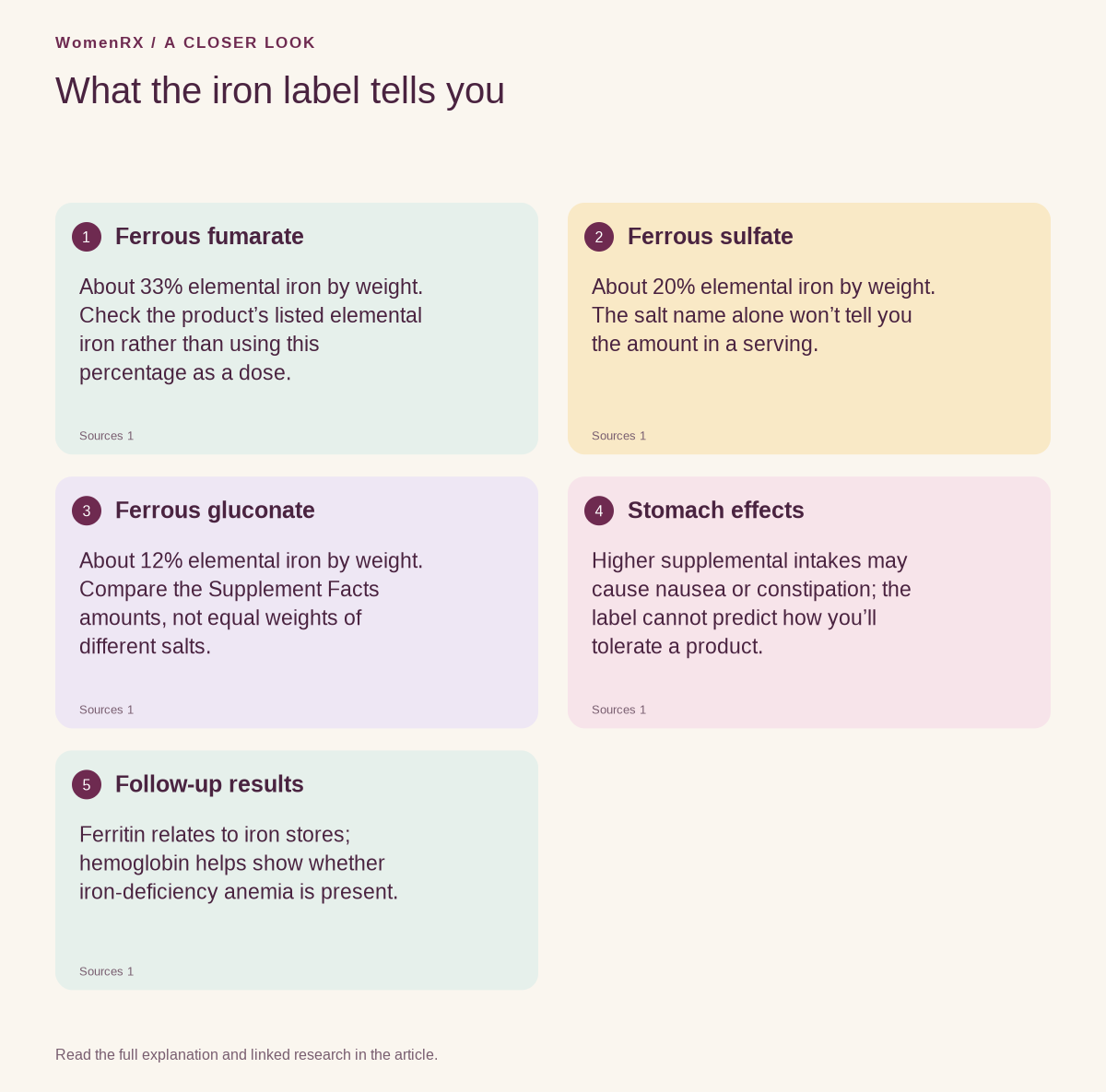
What the iron label tells you
Ferrous fumarate: About 33% elemental iron by weight. Check the product’s listed elemental iron rather than using this percentage as a dose.1
Ferrous sulfate: About 20% elemental iron by weight. The salt name alone won’t tell you the amount in a serving.1
Ferrous gluconate: About 12% elemental iron by weight. Compare the Supplement Facts amounts, not equal weights of different salts.1
Stomach effects: Higher supplemental intakes may cause nausea or constipation; the label cannot predict how you’ll tolerate a product.1
Follow-up results: Ferritin relates to iron stores; hemoglobin helps show whether iron-deficiency anemia is present.1
Read the figure as text
Compare the elemental iron amount first, then consider what the label cannot tell you about tolerability or your test results.- Ferrous fumarate: About 33% elemental iron by weight. Check the product’s listed elemental iron rather than using this percentage as a dose.1
- Ferrous sulfate: About 20% elemental iron by weight. The salt name alone won’t tell you the amount in a serving.1
- Ferrous gluconate: About 12% elemental iron by weight. Compare the Supplement Facts amounts, not equal weights of different salts.1
- Stomach effects: Higher supplemental intakes may cause nausea or constipation; the label cannot predict how you’ll tolerate a product.1
- Follow-up results: Ferritin relates to iron stores; hemoglobin helps show whether iron-deficiency anemia is present.1
Sources you can check
- Iron - Health Professional Fact SheetAccessed 2026-09-25Return to first citation
- Iron: MedlinePlusAccessed 2026-09-25Return to first citation
- Comparison of Two Oral Iron Formulations for Iron Deficiency and Iron Deficiency Anemia in Inflammatory Bowel Disease: A Prospective Study.Guimarães A, Leal T, Carvalho T, Mendes S, Gonçalves A, Leal C, Santos A, Arroja B, Rebelo A, Damasceno E Costa J, Neves JC, Gonçalves B, Rodrigues Â, Vasconcelos H, Gonçalves R, S... · GE Portuguese journal of gastroenterology · 2025Return to first citation