Choosing Iron Treatment Starts With the Cause
The right iron supplement depends on whether iron deficiency is confirmed, what’s causing it, and how your body responds.
Iron-deficiency anemia is not the only kind of anemia, so treatment should start with blood tests and a look for the cause. A blood count can identify anemia; ferritin helps assess iron stores, though inflammation can affect the result. If iron deficiency is confirmed, a clinician can choose an oral iron plan based on elemental iron, tolerability, life stage, and follow-up blood work. 1 3

First confirm that low iron is the problem
Feeling tired or run-down can happen with anemia, but symptoms alone can’t tell you whether you have iron-deficiency anemia. Anemia has several causes, including blood loss, reduced production of red blood cells, and faster-than-normal destruction of them. Iron deficiency is one cause, but deficiencies such as low vitamin B12 or folate and chronic inflammation can also contribute. 1 3
A complete blood count checks hemoglobin and other blood-cell measures. Hemoglobin can show anemia, but it doesn’t establish that low iron is the reason. Ferritin reflects the body’s iron stores and is often considered alongside the blood count. Inflammation can raise ferritin, so a result that looks adequate may need context rather than a quick conclusion. 1
Look for what’s draining or limiting iron
If testing points to iron deficiency, the next question is why. Heavy menstrual bleeding can lead to iron loss. Pregnancy raises iron needs as the body supports expanding blood volume and red blood cell production. If you’re pregnant, or recently gave birth and had substantial bleeding, tell your clinician about the timing and amount of blood loss. 1 2
Blood loss from the digestive tract is another possibility. Some medicines, including nonsteroidal anti-inflammatory drugs such as ibuprofen or aspirin, may be relevant. Iron deficiency can also be linked to conditions that affect absorption, including celiac disease and inflammatory bowel disease, or to gastrointestinal surgery. Diet can contribute too, but it shouldn’t be assumed to explain the result without considering other possibilities. 1 2
An example of a useful question is, “What might explain this result in my situation?” You can mention heavy periods, pregnancy or recent delivery, blood donation, digestive symptoms, past gastrointestinal surgery, and regular medicines. These details help frame the cause assessment; they don’t diagnose it on their own. 1 2
Compare the amount of iron, not just the salt name
When oral iron is chosen, common forms include ferrous sulfate, ferrous fumarate, and ferrous gluconate. They contain different proportions of elemental iron: about 20% for ferrous sulfate, 33% for ferrous fumarate, and 12% for ferrous gluconate. The Supplement Facts panel lists elemental iron, which makes it more useful for comparing the amount provided than the salt name alone. 1
That comparison doesn’t identify a single best product or treatment plan. Different formulations can cause stomach upset, nausea, or constipation, and the amount and schedule need to fit the reason for treatment and the person taking it. High supplemental intakes are more likely to cause gastrointestinal side effects, but don’t use a general nutrition limit to set your own treatment dose. 1
The evidence on schedules is not one-size-fits-all. In a randomized trial of 200 adults with anemia, daily and alternate-day ferrous sulfate produced no statistically significant difference in average hemoglobin change after eight weeks. The trial excluded pregnant participants and people with several other conditions, so it doesn’t settle what schedule is best for every person. An observational study in premenopausal women found more gastrointestinal side effects with twice-daily treatment than with daily single-dose or alternate-day treatment, but its one-month design and specific iron formulation limit how broadly to apply that result. 5 4
Tell the prescriber or pharmacist about medicines and supplements. Iron taken at the same time as levothyroxine can reduce absorption of the thyroid medicine; NIH notes that some levothyroxine product labels advise separating the two. Calcium may also interfere with iron absorption, although the effect is not definitive. 1
Follow-up checks whether the plan is working
A clinician may use repeat blood work to see whether hemoglobin and iron measures are improving. Oral-iron studies commonly measured hemoglobin and ferritin over time, but the studies here don’t establish one follow-up schedule for everyone. If results aren’t improving as expected, that’s a reason to revisit the plan and the original explanation, including ongoing blood loss, absorption problems, or whether another cause of anemia is involved. 4 5 1
Pregnancy deserves its own conversation. Iron needs rise during pregnancy, and guidance differs on routine screening and preventive supplementation for pregnant people without symptoms. That disagreement is about routine prevention, not a reason to ignore confirmed anemia or iron deficiency. Ask how your results and pregnancy stage affect the plan. 1
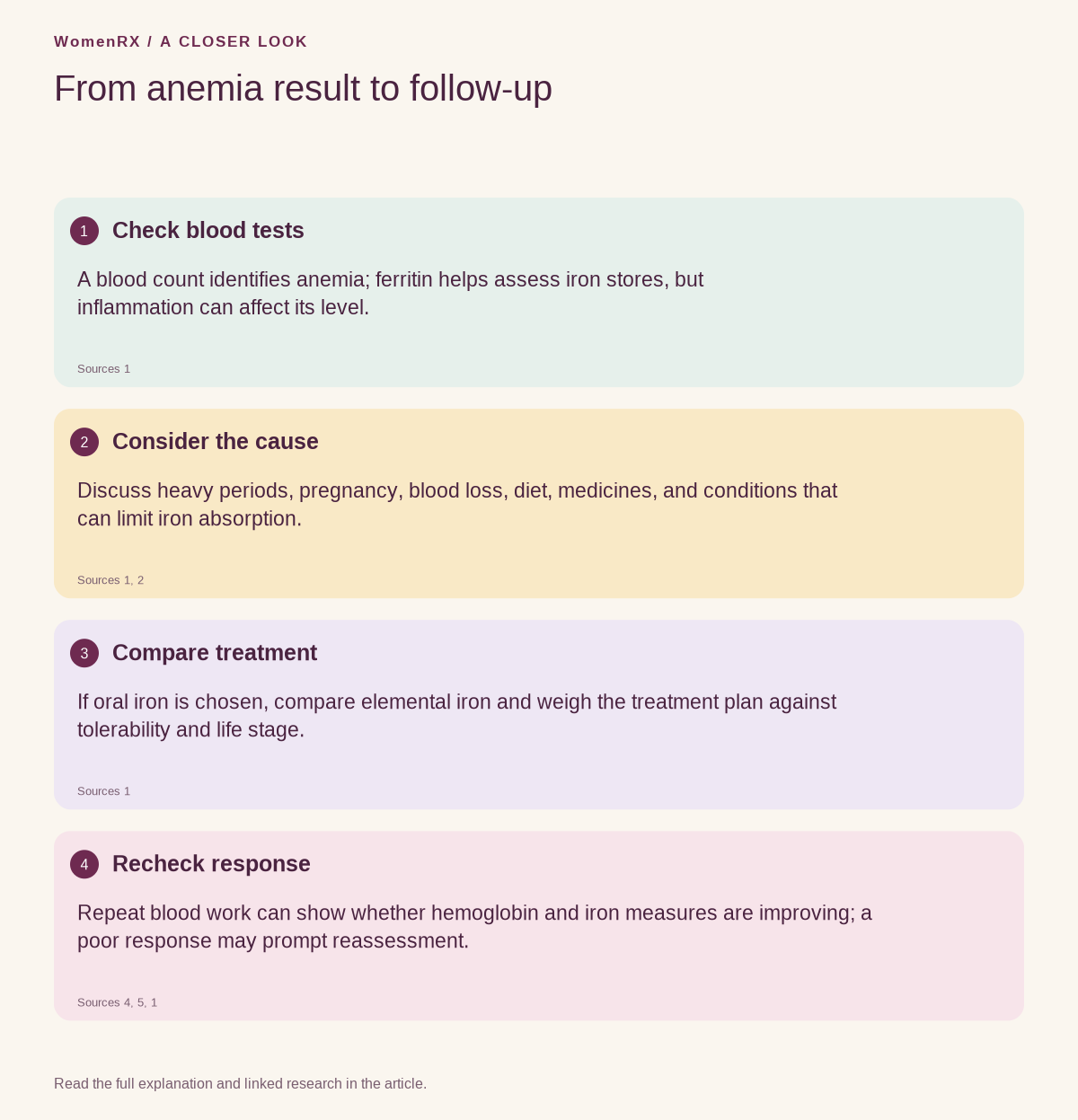
From anemia result to follow-up
Check blood tests: A blood count identifies anemia; ferritin helps assess iron stores, but inflammation can affect its level.1
Consider the cause: Discuss heavy periods, pregnancy, blood loss, diet, medicines, and conditions that can limit iron absorption.12
Compare treatment: If oral iron is chosen, compare elemental iron and weigh the treatment plan against tolerability and life stage.1
Recheck response: Repeat blood work can show whether hemoglobin and iron measures are improving; a poor response may prompt reassessment.451
Read the figure as text
A practical sequence for separating anemia from iron deficiency, considering the cause, and checking whether treatment is helping.- Check blood tests: A blood count identifies anemia; ferritin helps assess iron stores, but inflammation can affect its level.1
- Consider the cause: Discuss heavy periods, pregnancy, blood loss, diet, medicines, and conditions that can limit iron absorption.12
- Compare treatment: If oral iron is chosen, compare elemental iron and weigh the treatment plan against tolerability and life stage.1
- Recheck response: Repeat blood work can show whether hemoglobin and iron measures are improving; a poor response may prompt reassessment.451
More questions, answered
Is ferrous sulfate always the best choice?
No single form is best for everyone. Ferrous sulfate, fumarate, and gluconate contain different proportions of elemental iron, and tolerability also matters. Compare the elemental iron amount on the label, then discuss the appropriate product and plan with your clinician. 1
How should I store iron supplements?
Keep iron supplements out of children’s reach. A serious overdose can be dangerous, and iron-containing supplements are a major cause of fatal poisoning in young children. 1
Sources you can check
- Iron - Health Professional Fact SheetAccessed 2026-09-25Return to first citation
- Iron deficiency anaemia - NHSAccessed 2026-09-25Return to first citation
- Anemia | MedlinePlusAccessed 2026-09-25Return to first citation
- Comparative analysis of oral iron therapy regimens in premenopausal women with iron deficiency anemia.Caştur L, Torun C. · Scientific reports · 2024Return to first citation
- Alternate day versus daily oral iron for treatment of iron deficiency anemia: a randomized controlled trial.Pasupathy E, Kandasamy R, Thomas K, Basheer A. · Scientific reports · 2023Return to first citation