Iron Deficiency: Symptoms, Blood Tests, and Next Steps
Fatigue can have many causes, so blood tests and a look at why iron may be low matter more than symptoms alone.
Iron deficiency means your body’s iron stores are low; anemia means your blood has too little hemoglobin. You can have low iron before you develop anemia, and symptoms such as fatigue aren’t specific enough to diagnose it. A blood count and ferritin test can help clarify what’s happening, while questions about menstrual bleeding, pregnancy, diet, and other possible sources of iron loss help guide what to do next. 3 5
What symptoms can, and can’t, tell you
Iron deficiency may not cause noticeable symptoms at first. If it progresses to iron-deficiency anemia, symptoms can include fatigue, shortness of breath, and trouble with memory or concentration. These symptoms can also have other causes, so they’re a reason to consider testing, not proof that your iron is low. 3
Heavy menstrual bleeding raises the chance of iron deficiency because blood loss also means iron loss. But a period that’s changed or feels unusually heavy deserves attention in its own right, rather than being treated as the whole explanation for fatigue. 1 2
Low iron isn’t the same as anemia
Iron deficiency describes depleted iron stores. Anemia describes a problem with the blood’s oxygen-carrying capacity, commonly assessed using hemoglobin. They can occur together, but they don’t have to: research in adolescent girls defined iron deficiency using ferritin regardless of hemoglobin level. In other words, a blood count that doesn’t show anemia may not answer whether iron stores are low. 5
What blood tests can show
A complete blood count (CBC) includes hemoglobin and other blood-cell measurements. It can help show whether you’re anemic, but it doesn’t by itself establish that low iron is the cause. 4 5
A ferritin test is used to assess iron status and is often considered alongside the blood count. Ferritin cutoffs depend on the definition being used: one study of adolescent girls defined deficiency as ferritin below 15 micrograms per liter, while a primary-care chart review used below 50 micrograms per liter to identify patients for its analysis. Those research definitions aren’t interchangeable instructions for diagnosing yourself. Ask how your result fits the lab’s range, your symptoms, and the rest of your blood work. 5 6
Depending on the results, your clinician may also consider other iron measures, such as serum iron or transferrin saturation. These measures don’t always move in step with ferritin. In a US analysis of 1,484 nonpregnant women ages 18-44, serum iron and transferrin saturation varied across menstrual-cycle phases, while ferritin and hemoglobin remained stable. Mention if your blood was drawn during your period, particularly if the results seem unclear. 7
Look for the reason, not just the result
For someone who menstruates, it helps to discuss how much bleeding you have and whether your pattern has changed. Heavy bleeding is a known risk factor for iron deficiency. Diet can matter too, and conditions that affect iron absorption are another possible factor. Blood loss, diet, and absorption are all potential causes; the right follow-up depends on your situation and test results. 1 2 3
Pregnancy is a different context because iron needs rise as the body supports pregnancy. Guidance on routine screening and supplementation for pregnant people without symptoms differs: ACOG recommends anemia screening during pregnancy, while the US Preventive Services Task Force says evidence is insufficient to judge the benefits and harms of routine screening in asymptomatic pregnant people. If you’re pregnant, discuss your results and supplements with your prenatal care team rather than starting extra iron on your own. 2
After menopause, menstrual bleeding is no longer an ongoing explanation for low iron. If tests show deficiency, ask what other causes fit, including diet, absorption problems, or another source of blood loss. Iron supplements can cause side effects, and too much iron can be harmful, so it’s useful to know the reason for low levels and the appropriate plan before taking one. 1 3
A useful next conversation
You might ask:
- Does my blood count show anemia, or is my hemoglobin in range?
- What does my ferritin result mean alongside the other results?
- Could menstrual bleeding, pregnancy, diet, or absorption help explain it?
- If my iron is low, what follow-up will check the cause as well as the level?
Those questions help separate “I may have low iron” from “I know what’s causing it and what needs attention.”
From symptoms to the cause
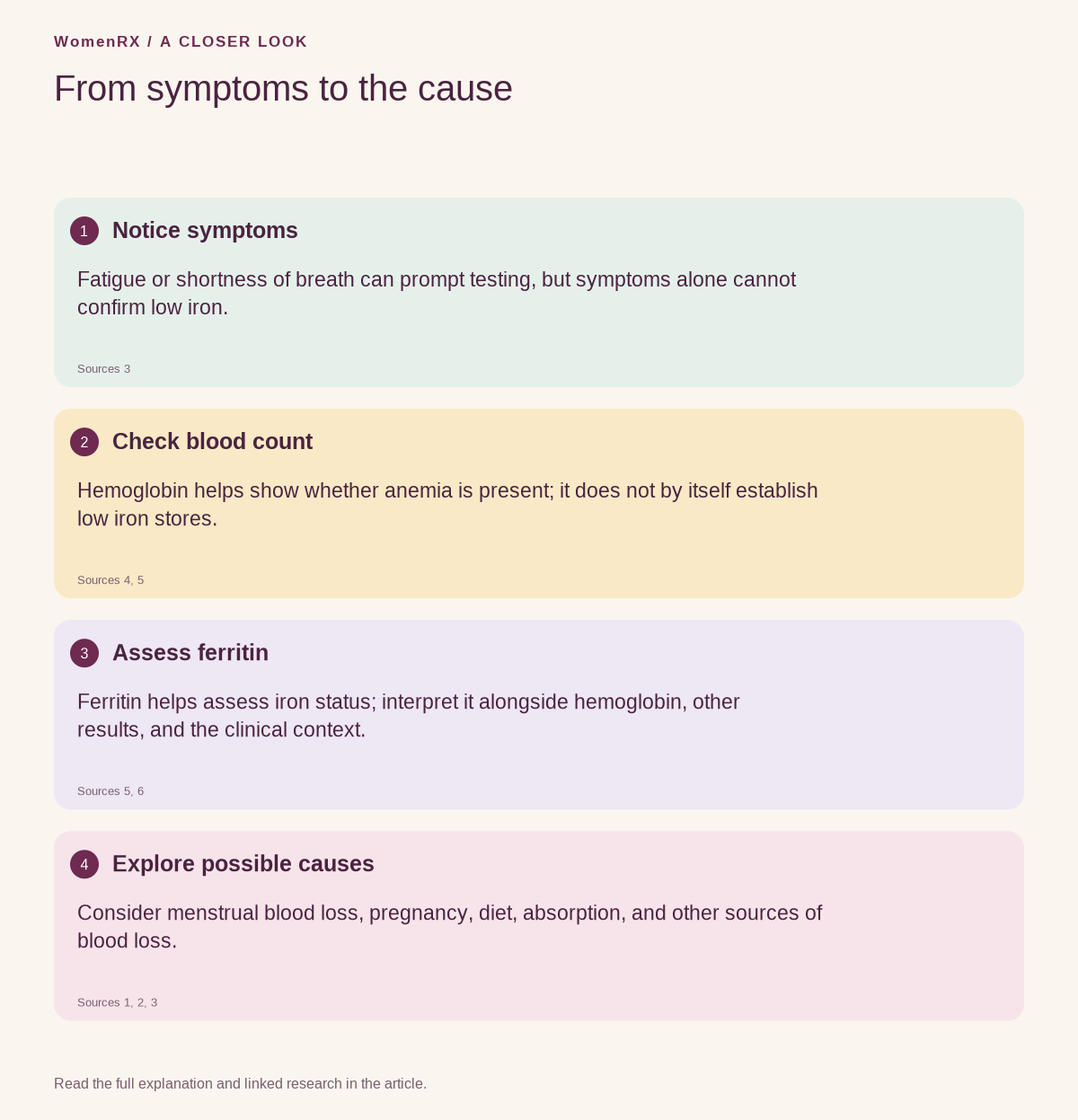
Notice symptoms: Fatigue or shortness of breath can prompt testing, but symptoms alone cannot confirm low iron.3
Check blood count: Hemoglobin helps show whether anemia is present; it does not by itself establish low iron stores.45
Assess ferritin: Ferritin helps assess iron status; interpret it alongside hemoglobin, other results, and the clinical context.56
Explore possible causes: Consider menstrual blood loss, pregnancy, diet, absorption, and other sources of blood loss.123
Read the figure as text
A simple path separates possible symptoms from blood-test findings and the questions that help explain low iron.- Notice symptoms: Fatigue or shortness of breath can prompt testing, but symptoms alone cannot confirm low iron.3
- Check blood count: Hemoglobin helps show whether anemia is present; it does not by itself establish low iron stores.45
- Assess ferritin: Ferritin helps assess iron status; interpret it alongside hemoglobin, other results, and the clinical context.56
- Explore possible causes: Consider menstrual blood loss, pregnancy, diet, absorption, and other sources of blood loss.123
More questions, answered
Can ferritin be low if my hemoglobin is normal?
Yes. Iron deficiency can be defined by low ferritin even when hemoglobin does not meet the definition of anemia. A normal blood count alone may not settle whether your iron stores are low. 5
Does an iron test need to be done on a certain day of my cycle?
One US analysis found that serum iron and transferrin saturation varied across cycle phases, while ferritin and hemoglobin were stable. If results are hard to interpret, mention when the test was drawn and ask how that affects the specific tests you had. 7
Sources you can check
- Menstruation | Period | MedlinePlusAccessed 2026-09-25Return to first citation
- Iron - Health Professional Fact SheetAccessed 2026-09-25Return to first citation
- Iron: MedlinePlusAccessed 2026-09-25Return to first citation
- Blood | MedlinePlusAccessed 2026-09-25Return to first citation
- Screening for iron deficiency in young women: the predictive validity of a five-item screening instrument (IRON-5).Vinge F, Stubbendorff A, Bolmsjö BB, Jakobsson U, Milos Nymberg V, Wolff M. · Scandinavian journal of primary health care · 2026Return to first citation
- Disparities in Discussion of Heavy Menstrual Bleeding in Patients With Iron Deficiency.Patel NN, Samuelson Bannow B. · Journal of primary care & community health · 2026Return to first citation
- Cyclical fluctuations of iron biomarkers in women: Diagnostic implications for iron deficiency.Aguree S, Owora A, Silveyra P. · Practical laboratory medicine · 2025Return to first citation