How to Read Ferritin, Hemoglobin, and Iron Tests
Ferritin reflects stored iron, while hemoglobin shows whether anemia has developed, so one result can be low even when the other is normal.
Ferritin is the main blood test used to estimate iron stores; hemoglobin measures whether you have anemia. Low ferritin can signal iron deficiency before hemoglobin falls, so a normal blood count does not rule it out. Inflammation can push ferritin upward and make it harder to interpret, and no single result explains why iron is low. 1
Two tests, two different questions
A blood count and a ferritin test look at different parts of the iron picture. Hemoglobin is the oxygen-carrying protein in red blood cells. A low hemoglobin level indicates anemia, but anemia has causes other than iron deficiency. Ferritin is a marker of the iron your body has stored. It can fall before hemoglobin does. 1
That means iron deficiency and iron-deficiency anemia aren’t interchangeable. Iron stores may be depleted while hemoglobin is still in the lab’s normal range. If only hemoglobin was checked, that earlier stage may be missed. Conversely, low hemoglobin alone doesn’t show that low iron is the reason. 1 A systematic review and individual-participant meta-analysis in Cambodian females of reproductive age also found that hemoglobin was a limited predictor of iron stores, particularly in the pregnant subgroup. Those findings illustrate why a blood count is not a substitute for measuring ferritin. 3
What each result can tell you
Ferritin: A low result generally points toward depleted iron stores. The NIH Office of Dietary Supplements says a value below 30 micrograms per liter suggests iron deficiency, but a threshold isn’t a stand-alone diagnosis for every person or situation. Ferritin can rise with inflammation or infection, so a result that looks normal may not settle the question when inflammation is present. 1
Hemoglobin and the rest of the blood count: Hemoglobin helps identify anemia. Other blood-count measures, including hematocrit and mean corpuscular volume (MCV), can add context; iron-deficiency anemia often involves smaller red blood cells. But early iron deficiency may not yet change hemoglobin, and anemia can have other causes. 1
Other iron studies: A clinician may look at transferrin saturation alongside ferritin and the blood count. Transferrin is the main protein that transports iron in the blood, and its saturation can decline as iron deficiency progresses, sometimes while hemoglobin remains normal. These results help fill in the picture when the first tests don’t agree or inflammation complicates ferritin. 1
Why the numbers need context
A ferritin result should be read alongside the lab’s reference range, your blood count, and relevant health context, rather than as an isolated pass-or-fail number. Inflammation may raise ferritin, potentially obscuring low stores. Pregnancy also changes how results are interpreted: blood volume expands, which can lower hemoglobin through dilution, while iron needs rise. Pregnancy uses trimester-specific criteria for anemia, so a general adult reference range may not answer the question on its own. 1 4
Heavy menstrual bleeding is one possible source of iron loss, and pregnancy is a time of increased iron need. Neither context proves why a particular result is abnormal. Blood loss, inadequate intake, and problems absorbing iron are among the possible contributors to deficiency. If you still have periods, heavy bleeding is relevant history at any age, but the lab result itself cannot identify the cause. 1 2
Putting a set of results together
For example, low ferritin with normal hemoglobin can fit iron deficiency before anemia has developed. Low hemoglobin with low ferritin can fit iron-deficiency anemia, although the full clinical picture still matters. Low hemoglobin with ferritin that isn’t low calls for more careful interpretation, especially if inflammation is present or another cause of anemia is possible. 1
If you’re reviewing results after fatigue, heavy periods, or during pregnancy, the useful next question is not just “Is this number normal?” Ask whether ferritin was measured, whether the blood count shows anemia, and whether inflammation or pregnancy could affect interpretation. Then ask what might explain the pattern in your circumstances. A lab pattern can show that iron stores are low; it cannot, by itself, tell you where the iron went or why.
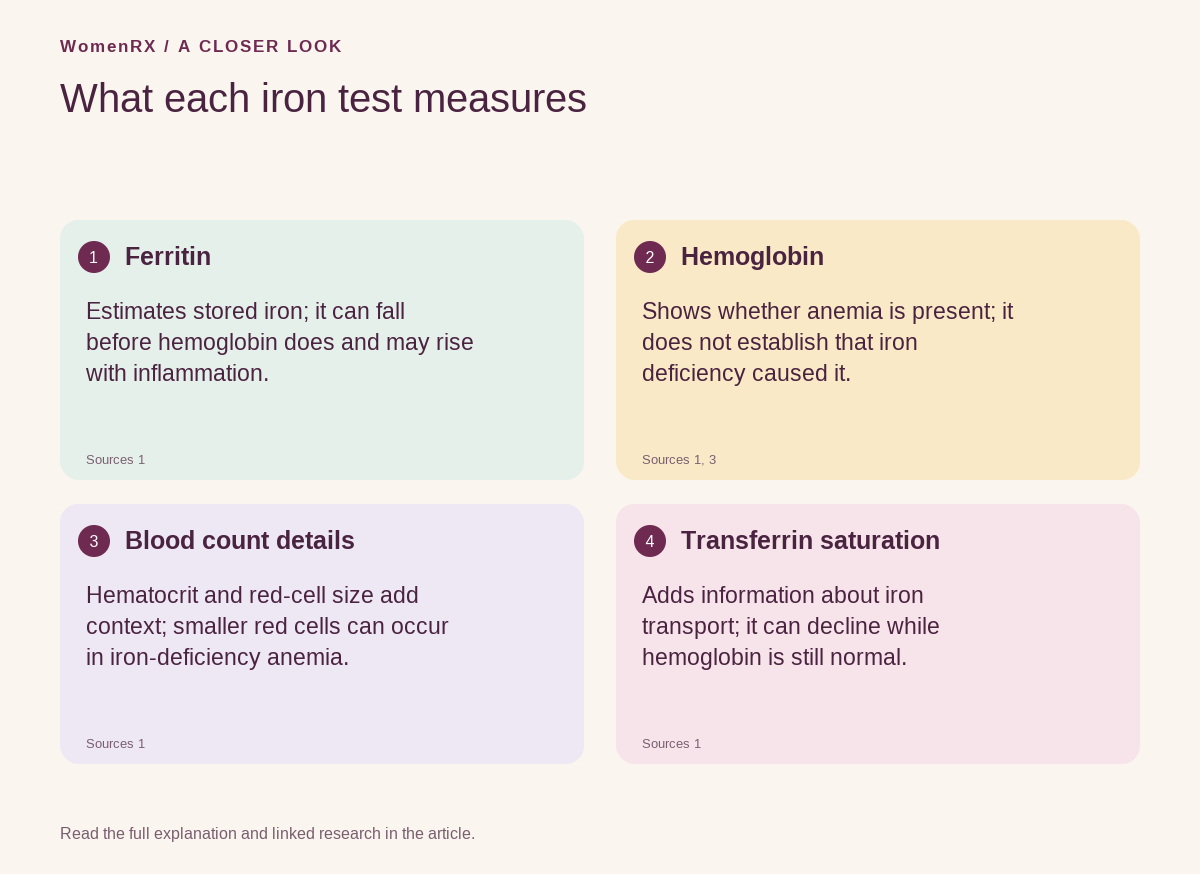
What each iron test measures
Ferritin: Estimates stored iron; it can fall before hemoglobin does and may rise with inflammation.1
Hemoglobin: Shows whether anemia is present; it does not establish that iron deficiency caused it.13
Blood count details: Hematocrit and red-cell size add context; smaller red cells can occur in iron-deficiency anemia.1
Transferrin saturation: Adds information about iron transport; it can decline while hemoglobin is still normal.1
Read the figure as text
Ferritin, hemoglobin, and transferrin saturation describe different parts of iron status. Read them together, especially when pregnancy or inflammation affects interpretation.- Ferritin: Estimates stored iron; it can fall before hemoglobin does and may rise with inflammation.1
- Hemoglobin: Shows whether anemia is present; it does not establish that iron deficiency caused it.13
- Blood count details: Hematocrit and red-cell size add context; smaller red cells can occur in iron-deficiency anemia.1
- Transferrin saturation: Adds information about iron transport; it can decline while hemoglobin is still normal.1
More questions, answered
Can ferritin be low if my hemoglobin is normal?
Yes. Ferritin can fall as iron stores are depleted, before hemoglobin declines enough to indicate anemia. 1
Does a normal ferritin rule out iron deficiency?
Not in every situation. Inflammation or infection can raise ferritin, making the result harder to interpret alongside symptoms and other tests. 1
Sources you can check
- Iron - Health Professional Fact SheetAccessed 2026-09-25Return to first citation
- Iron: MedlinePlusAccessed 2026-09-25Return to first citation
- Assessing the Discriminatory Ability of Hemoglobin Concentration to Predict Iron Stores in Cambodian Females: A Systematic Review and Individual Participant Data Meta-Analysis.Pei LX, Farrell CC, Mlewa SC, Sauer C, Sejane K, Kirby NV, McKendry J, Charles C, Fischer JA, Green TJ, Kroeun H, Makurat J, Rappaport AI, Whitfield KC, Wieringa FT, Daniel AI, Kar... · Advances in nutrition (Bethesda, Md.) · 2026Return to first citation
- Ferritin as a diagnostic point-of-care marker in iron deficiency anemia: a narrative review and clinical implications.Dimen JN, Sunoqrot M, Hobbs C, Cherayil E, Sharma D, Ahmadzia HK. · Annals of translational medicine · 2026Return to first citation