Ferritin, Blood Iron, and Hemoglobin: What Each Test Shows
Ferritin reflects stored iron, while serum iron and hemoglobin answer different questions, so one “normal” result may not tell the whole story.
Ferritin is a clue to your iron stores; serum iron measures iron circulating in your blood, and hemoglobin is the concentration of oxygen-carrying protein in your blood. Low stores can show up before hemoglobin falls. Inflammation can raise ferritin, though, so results are best read together with a blood count, other iron measures, symptoms, and life stage. 1
Three tests, three different questions
Ferritin is a protein that stores iron, and a ferritin blood test is used as a measure of your body’s iron stores. It can fall as those stores are used up, before anemia develops. The NIH Office of Dietary Supplements says a ferritin below 30 micrograms per liter suggests iron deficiency and below 10 suggests iron-deficiency anemia. Those values are clues, not a universal rule for interpreting every result: inflammation can push ferritin upward and make the number look more reassuring than the underlying iron picture. 1
Serum iron measures iron circulating in the blood. It is not a direct measure of how much iron is stored in your body. A result in the lab’s reference range, by itself, cannot establish that your stores are adequate. Iron travels in the blood attached to transferrin. Transferrin saturation can decline during iron-deficient erythropoiesis, even while hemoglobin is still in range. 1
Hemoglobin is the oxygen-carrying protein inside red blood cells. It helps show whether anemia is present, but it is not a sensitive early measure of depleted iron stores. Iron deficiency can progress from low stores, to reduced iron supply for making red blood cells, and then to iron-deficiency anemia. During the middle stage, hemoglobin may still be normal. And anemia can have causes besides iron deficiency, including other nutrient deficiencies and inflammation. 1
Why the results can seem to disagree
A low ferritin with normal hemoglobin can fit an early stage of iron depletion: stores have fallen, but hemoglobin has not yet declined. By contrast, a low serum iron with a normal or elevated ferritin may need a closer look at inflammation and other iron measures rather than being read as proof that stores are full or empty. 1
Inflammation can raise ferritin and also change how iron is distributed, leaving less available in circulation for making red blood cells. In a cross-sectional study of older adults with anemia of inflammation, the patient group had higher average ferritin and lower average serum iron and hemoglobin than healthy controls. That study illustrates why the tests can point in different directions; it does not set a diagnostic threshold for an individual. 12
A complete blood count adds information about hemoglobin and red blood cell features such as size. Clinicians may consider those results alongside ferritin, serum iron, transferrin saturation, and the clinical picture. No single value explains every pattern, and a lab’s reference range is only one part of interpreting your result. 1
What your life stage adds
If you menstruate, blood loss is one possible contributor to low iron stores. Heavy menstrual bleeding raises the risk of iron deficiency, so the amount and pattern of bleeding can matter when results are reviewed. 1
Pregnancy changes iron needs and blood measurements: maternal red blood cell production increases, and plasma volume expands. A hemoglobin result therefore belongs in the context of pregnancy stage, while ferritin and other iron measures can help address the separate question of iron stores. The NIH fact sheet describes anemia screening during pregnancy, but it does not provide a single ferritin cutoff that applies to every pregnant person. 1
A useful way to read the report
Start by separating the questions: Are iron stores low? Look at ferritin, while keeping inflammation in mind. Is iron available in circulation? Serum iron and transferrin saturation provide related information. Has anemia developed? Hemoglobin and the rest of the blood count help answer that, but they do not identify iron deficiency on their own. 1
If the results seem mixed, the useful next step is to understand how the full set of numbers fits together, including symptoms, menstrual bleeding, pregnancy, and conditions that may involve inflammation. Avoid treating one normal result, especially serum iron or hemoglobin, as a stand-alone all-clear on iron stores.
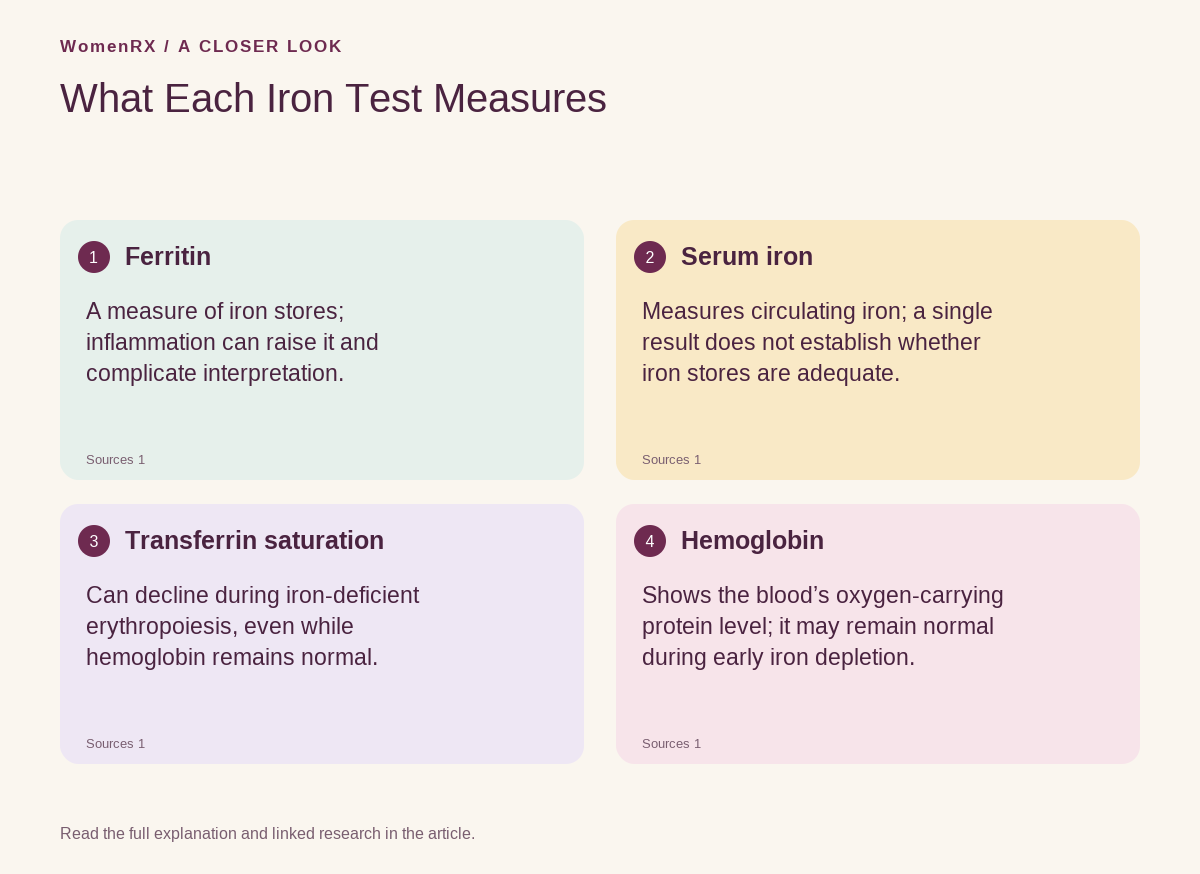
What Each Iron Test Measures
Ferritin: A measure of iron stores; inflammation can raise it and complicate interpretation.1
Serum iron: Measures circulating iron; a single result does not establish whether iron stores are adequate.1
Transferrin saturation: Can decline during iron-deficient erythropoiesis, even while hemoglobin remains normal.1
Hemoglobin: Shows the blood’s oxygen-carrying protein level; it may remain normal during early iron depletion.1
Read the figure as text
These tests look at stored iron, iron in circulation, and the blood’s oxygen-carrying capacity. Read together, they offer more context than any one result alone.- Ferritin: A measure of iron stores; inflammation can raise it and complicate interpretation.1
- Serum iron: Measures circulating iron; a single result does not establish whether iron stores are adequate.1
- Transferrin saturation: Can decline during iron-deficient erythropoiesis, even while hemoglobin remains normal.1
- Hemoglobin: Shows the blood’s oxygen-carrying protein level; it may remain normal during early iron depletion.1
More questions, answered
Can you have low iron stores without anemia?
Yes. Iron stores can be depleted before hemoglobin falls, so a normal hemoglobin does not rule out an earlier stage of iron deficiency. 1
Can inflammation make ferritin look normal or high?
Yes. Inflammation can raise ferritin, which may make it harder to interpret as a measure of iron stores on its own. Other iron measures and the blood count may help clarify the pattern. 1
Sources you can check
- Iron - Health Professional Fact SheetAccessed 2026-09-25Return to first citation
- Serum hepcidin measurement is related to clinical parameters and interferon-gamma in anemia of inflammation.Maciel RO, Mendonça PDS, Mota AGM, Wong DVT, Lima Júnior RCP, Pinheiro RF, Magalhães SMM. · Einstein (Sao Paulo, Brazil) · 2026Return to first citation