Heavy Periods and Iron: What to Test and Why
Heavy bleeding can drain iron stores before hemoglobin falls, so checking iron and addressing the bleeding are two different parts of care.
Heavy periods can lead to iron deficiency, with or without anemia. A blood test for hemoglobin can check for anemia, while ferritin gives information about stored iron; hemoglobin alone may not catch early iron depletion. Iron replacement may address a deficiency, but it won’t explain or stop heavy bleeding, so ask about evaluating its cause too. 13
Start with what the bleeding is doing to your life
A period may be heavy if you need to change a pad or tampon every one to two hours, empty a menstrual cup more often than its instructions recommend, or find that bleeding affects your daily life. Feeling tired or short of breath often can also be a reason to bring it up. These clues don’t diagnose iron deficiency, but they help describe the problem clearly. 1
Bleeding patterns can shift when periods first begin, after pregnancy, and as menopause approaches. Causes can also include conditions such as fibroids or adenomyosis, some medicines, or other health issues. A change at one of these life stages doesn’t mean you should dismiss bleeding that is persistent or affecting you. 1
Iron stores can fall before anemia appears
Your body uses iron to make hemoglobin, the protein in red blood cells that carries oxygen. Ongoing blood loss can use up stored iron. Iron deficiency develops in stages: stores can be depleted before hemoglobin falls enough to meet the definition of anemia. That’s why a hemoglobin result by itself may not tell the whole story. 23
A useful testing conversation may include:
- Hemoglobin: A low result can point to anemia, but hemoglobin and hematocrit aren’t sensitive or specific measures of iron deficiency on their own.
- Ferritin: This blood test reflects iron stores. Inflammation can affect ferritin, so a clinician may interpret it alongside other results and your health history.
- Other tests, if needed: The right evaluation depends on your bleeding pattern, symptoms, and possible causes. There isn’t one test that explains every case of heavy bleeding. 13
If you have a result showing low iron or anemia, ask what the result means in your situation and whether additional testing is needed. Tiredness, dizziness, feeling cold, headaches, and shortness of breath can occur with anemia, but symptoms alone can’t confirm it. 2
Replacing iron isn’t the same as treating bleeding
Iron supplements are commonly used to treat low iron or iron-deficiency anemia, but they don’t identify why the bleeding is heavy or reduce the bleeding itself. If heavy periods continue, iron stores may remain difficult to restore. The two questions to keep together are: Do I have iron deficiency or anemia? and What could be causing this bleeding, and what options fit me? 14
Heavy-period treatment may involve medical or surgical options, depending on the cause and individual circumstances. A review of research on heavy menstrual bleeding describes hormonal approaches that can reduce bleeding, as well as iron treatment for associated deficiency or anemia. These approaches address different parts of the problem; what is appropriate varies from person to person. 5
When the bleeding pattern needs its own evaluation
Bring up bleeding that affects daily life, has been heavy for some time, or comes with severe period pain. Bleeding between periods or after sex also deserves evaluation rather than being treated as a question of iron alone. 1
For adolescents, heavy bleeding can sometimes be a sign of an underlying bleeding disorder. A detailed menstrual history and evaluation for causes matter alongside checking for iron deficiency or anemia. 6
You could say: “My bleeding is affecting me, and I’m wondering about iron deficiency. Can we check hemoglobin and ferritin, and also talk about what may be causing the bleeding?” If you know how often you change period products or how bleeding affects work, school, sleep, or daily activities, those details can make the conversation more specific.
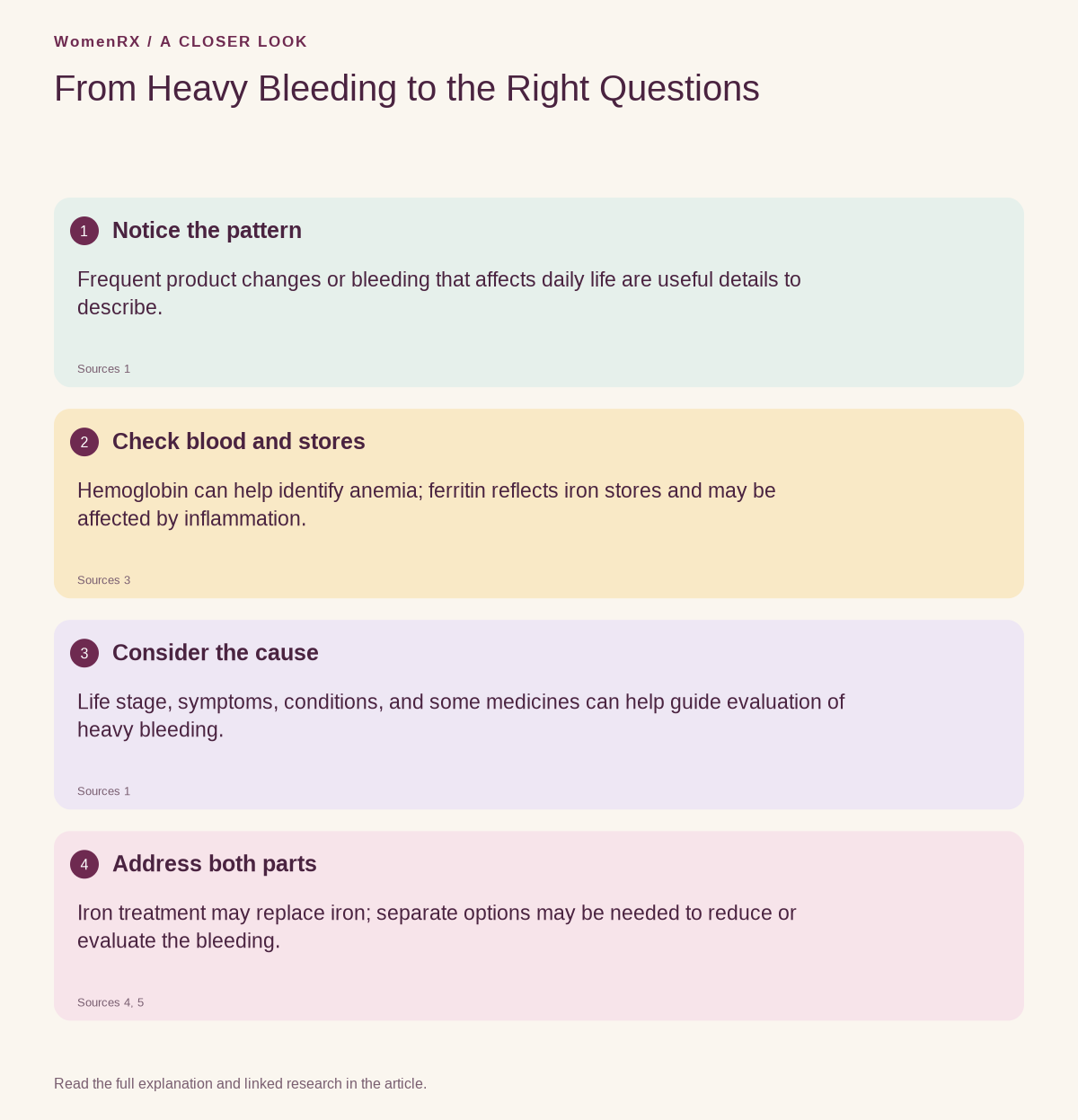
From Heavy Bleeding to the Right Questions
Notice the pattern: Frequent product changes or bleeding that affects daily life are useful details to describe.1
Check blood and stores: Hemoglobin can help identify anemia; ferritin reflects iron stores and may be affected by inflammation.3
Consider the cause: Life stage, symptoms, conditions, and some medicines can help guide evaluation of heavy bleeding.1
Address both parts: Iron treatment may replace iron; separate options may be needed to reduce or evaluate the bleeding.45
Read the figure as text
Heavy bleeding can prompt two connected but separate lines of evaluation: checking iron status and looking into the bleeding itself.- Notice the pattern: Frequent product changes or bleeding that affects daily life are useful details to describe.1
- Check blood and stores: Hemoglobin can help identify anemia; ferritin reflects iron stores and may be affected by inflammation.3
- Consider the cause: Life stage, symptoms, conditions, and some medicines can help guide evaluation of heavy bleeding.1
- Address both parts: Iron treatment may replace iron; separate options may be needed to reduce or evaluate the bleeding.45
Sources you can check
- Heavy periods - NHSAccessed 2026-09-25Return to first citation
- Anemia | MedlinePlusAccessed 2026-09-25Return to first citation
- Iron - Health Professional Fact SheetAccessed 2026-09-25Return to first citation
- Iron: MedlinePlusAccessed 2026-09-25Return to first citation
- A scoping review on heavy menstrual bleeding and anemia: A less explored phenomenon.Pandey G, Yadav K, Kaur R, Bairwa M, Khanam A, Nair N. · Journal of family medicine and primary care · 2026Return to first citation
- Call to action: identifying an underlying bleeding disorder in adolescents with heavy menstrual bleeding.Gupta S, Castaman G, Funkhouser K, Lewandowska M, Weyand AC, Di Michele S, Fulghesu AM, Gaudreau H, Shapiro AD. · Research and practice in thrombosis and haemostasis · 2026Return to first citation