Heavy periods and low iron: when testing makes sense
Heavy bleeding raises the chance of iron deficiency, but symptoms alone can’t confirm it; blood tests help distinguish low iron stores from anemia.
If your periods are heavy, affect daily life, or come with ongoing fatigue or shortness of breath, ask whether testing for iron deficiency is appropriate. Hemoglobin or hematocrit testing can help identify anemia, while ferritin gives information about iron stores and may be low before hemoglobin falls. Don’t start iron just because you feel tired: the cause and the right treatment depend on your results and life stage. 1 2 3
Heavy bleeding is a reason to consider testing, not a diagnosis
Menstrual blood loss is one way the body loses iron, so people with heavy periods have a greater risk of iron deficiency. Bleeding may be worth discussing if it disrupts your daily life or you need to change a pad or tampon every one to two hours. Fatigue and shortness of breath can also happen with anemia, but neither symptom proves that iron is the cause. 1 2 3
Iron deficiency can develop in stages. Iron stores may fall before hemoglobin does, so someone can have low iron without anemia. That’s why a normal hemoglobin result by itself may not tell the whole story. 1
What the blood tests can tell you
A clinician may use hemoglobin or hematocrit testing alongside a ferritin test. Hemoglobin and hematocrit help assess anemia; ferritin reflects stored iron and can show depleted stores earlier. The NIH Office of Dietary Supplements says a ferritin value below 30 micrograms per liter suggests iron deficiency. It also cautions that inflammation can raise ferritin, so clinicians may interpret it alongside other results and your health history. A single number doesn’t always settle the question. 1
Testing is especially worth discussing when heavy bleeding continues, you have symptoms such as persistent fatigue or breathlessness, or you’ve previously been told your iron is low. In a small study of 57 women, two menstrual-bleeding screening tools were explored as ways to identify iron deficiency. Their results don’t make a bleeding questionnaire a substitute for blood tests, and the study wasn’t large enough to establish a general testing rule. 4
Check the cause as well as the iron level
If tests show iron deficiency, the next question is why. Heavy periods can be the explanation, but they aren’t the only possibility: low dietary intake, problems absorbing iron, and blood loss from elsewhere can also contribute. It’s useful to describe your bleeding pattern and mention changes, bleeding between periods, or other symptoms. Treating low iron may replenish stores, but ongoing heavy bleeding can keep causing iron loss. 1 2 3
Heavy periods can have different causes, including conditions that affect the uterus or ovaries and some medicines. A clinician may consider whether the bleeding itself needs evaluation or treatment, rather than treating iron results as the whole problem. 2
Iron supplements can help when low iron is confirmed
Iron supplements are commonly used to treat iron deficiency and iron-deficiency anemia. The right plan depends on your test results and circumstances; an over-the-counter product’s amount isn’t automatically the right amount for you. Iron can cause nausea, constipation, stomach pain, or other digestive problems, particularly at higher supplemental intakes. Taking iron “just in case” can expose you to those effects without establishing that iron is what you need. 1 3
Ask how your results will be followed up and when follow-up testing is appropriate for your results and treatment plan. Follow-up matters because symptoms alone can’t show whether iron stores have recovered. 1
Pregnancy, postpartum, and menopause change the context
Pregnancy changes iron requirements, and U.S. guidance on routine screening or supplementation for people without symptoms is not completely uniform. The NIH fact sheet describes differing recommendations from professional organizations, so pregnancy-related testing and supplements belong in prenatal care rather than being treated as the same decision as taking iron for heavy periods. Lactation has a different dietary iron recommendation from pregnancy; that intake recommendation is not a treatment dose. 1
If you’re recently postpartum, tell your care team about your pregnancy and birth history and any current symptoms or bleeding. Pregnancy and lactation recommendations don’t, by themselves, determine whether you need testing after birth. 1
After periods have stopped, ongoing menstrual loss is no longer an explanation for low iron. Iron deficiency can have other causes, including blood loss or difficulty absorbing iron, so it’s worth asking what should be evaluated rather than assuming the cause is diet. 1 3
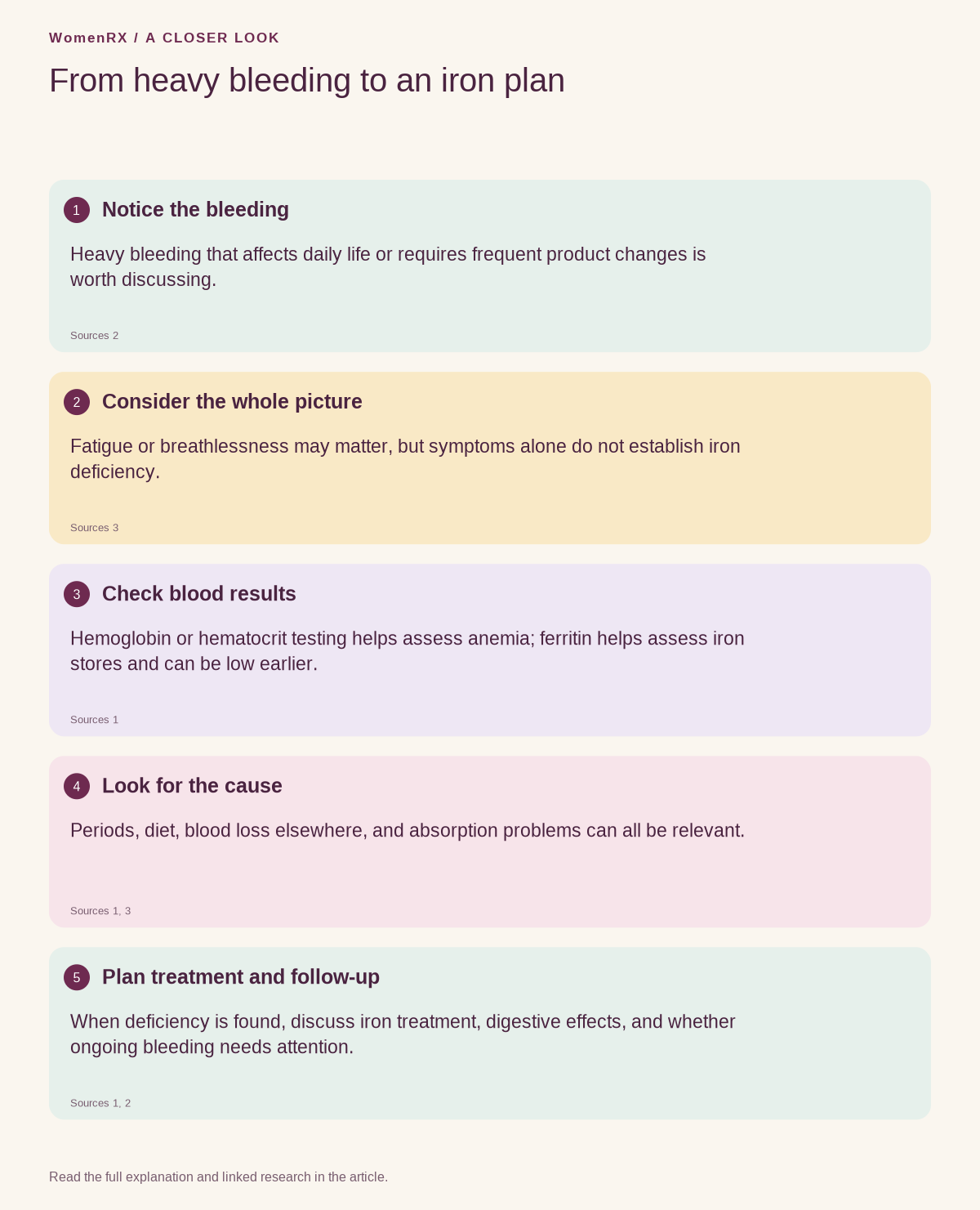
From heavy bleeding to an iron plan
Notice the bleeding: Heavy bleeding that affects daily life or requires frequent product changes is worth discussing.2
Consider the whole picture: Fatigue or breathlessness may matter, but symptoms alone do not establish iron deficiency.3
Check blood results: Hemoglobin or hematocrit testing helps assess anemia; ferritin helps assess iron stores and can be low earlier.1
Look for the cause: Periods, diet, blood loss elsewhere, and absorption problems can all be relevant.13
Plan treatment and follow-up: When deficiency is found, discuss iron treatment, digestive effects, and whether ongoing bleeding needs attention.12
Read the figure as text
A simple route from possible risk to testing and follow-up, without treating symptoms as proof of iron deficiency.- Notice the bleeding: Heavy bleeding that affects daily life or requires frequent product changes is worth discussing.2
- Consider the whole picture: Fatigue or breathlessness may matter, but symptoms alone do not establish iron deficiency.3
- Check blood results: Hemoglobin or hematocrit testing helps assess anemia; ferritin helps assess iron stores and can be low earlier.1
- Look for the cause: Periods, diet, blood loss elsewhere, and absorption problems can all be relevant.13
- Plan treatment and follow-up: When deficiency is found, discuss iron treatment, digestive effects, and whether ongoing bleeding needs attention.12
More questions, answered
Can I be iron deficient if my hemoglobin is normal?
Yes. Iron stores can become depleted before hemoglobin falls, so ferritin may provide useful information even when hemoglobin testing doesn’t show anemia. 1
What if iron supplements upset my stomach?
Nausea, constipation, and stomach pain are recognized side effects. Tell the clinician managing your treatment; the best next step depends on your results and the product you’re taking. 1
Sources you can check
- Iron - Health Professional Fact SheetAccessed 2026-09-25Return to first citation
- Heavy periods - NHSAccessed 2026-09-25Return to first citation
- Iron: MedlinePlusAccessed 2026-09-25Return to first citation
- Usefulness of the Heavy Menstrual Bleeding Diagnostic Tools SAMANTA Questionnaire and Heavy Menstrual Bleeding-Visual Analog Scale Tool for Iron Deficiency Screening: An Exploratory Analysis from the COLIBRI Study.Perelló-Capó J, Estadella-Tarriel J, Gich-Saladich I, Llurba-Olivé E, Calaf-Alsina J. · Women's health reports (New Rochelle, N.Y.) · 2025Return to first citation