Low Iron, Anemia, and Finding the Cause
Low iron stores can show up before anemia does, and the reason they’re low matters as much as replacing them.
Iron deficiency means your body’s iron stores are low; iron-deficiency anemia means the shortage has also lowered hemoglobin, the protein in red blood cells that carries oxygen. Blood loss, low intake, poor absorption, and increased needs can all contribute. A blood count and iron tests help confirm the pattern, while your menstrual history, life stage, diet, and health history help point toward its source. 1 2
Two findings, not one
Anemia is a broad term for too little hemoglobin or too few healthy red blood cells. Iron deficiency describes low iron stores. The two often occur together, but they aren’t interchangeable: iron stores can fall before hemoglobin does, so someone may have iron deficiency without anemia. Iron-deficiency anemia develops when the shortage becomes severe enough to reduce hemoglobin. 1 2
A complete blood count helps show whether anemia is present. Ferritin, a measure of stored iron, helps assess iron deficiency. Ferritin needs context, though: inflammation can raise it, making iron stores look less depleted than they are. Clinicians may use more than one iron measure and consider inflammation and the rest of the blood count rather than reading a single result in isolation. 2
Follow the possible sources
Once tests support iron deficiency, the next question is what could be lowering iron. Often more than one factor is involved.
- Blood loss: Heavy menstrual bleeding is a common possibility during the cycling years. Frequent blood donation can also lower iron stores. Blood loss from the digestive tract is another possible source, even when menstrual bleeding could seem like an explanation. 2 3
- Increased needs: Iron needs rise during pregnancy as the body makes more red blood cells and supports the fetus and placenta. 2
- Not enough iron coming in: A restricted or low-iron diet may contribute. Plant foods and fortified foods provide nonheme iron, which is less readily absorbed than heme iron from meat and seafood. This doesn’t mean a plant-based diet causes anemia by itself; it’s one part of the overall picture. 2
- Trouble absorbing iron: Conditions such as celiac disease and inflammatory bowel disease, or certain gastrointestinal surgeries, can interfere with iron absorption. Inflammation can also affect how iron is stored and made available to the body. 2 3
Let life stage guide the questions
If you menstruate, the amount and pattern of bleeding matter, not just whether you have periods. Heavy or prolonged bleeding may be an important source of iron loss. In a study of premenopausal Dutch blood donors, measured menstrual blood loss was associated with hemoglobin and ferritin, though the donor population means the results don’t describe every woman. 4
During pregnancy, iron requirements increase. That makes pregnancy relevant when interpreting low iron, but it doesn’t by itself establish that iron deficiency is the only cause of anemia. 2
After menopause, ongoing iron-deficiency anemia shouldn’t be attributed to menstrual loss. A review recommends gastrointestinal evaluation for men and postmenopausal women with iron-deficiency anemia, reflecting the need to look for other sources of blood loss or causes. The right evaluation depends on the person’s circumstances and findings. 3
Why finding the source changes the next step
Replacing iron may restore what’s missing, but it won’t necessarily stop ongoing blood loss or correct an absorption problem. A review of iron-deficiency anemia emphasizes investigating underlying causes and identifies celiac disease and Helicobacter pylori infection as possible targets for testing. 3
For example, if someone has heavy periods and low iron, menstrual blood loss may be a plausible contributor. If iron deficiency continues or returns, or if the bleeding history doesn’t seem to account for it, other causes may need attention too. The point isn’t to assume the rarest explanation; it’s to avoid treating a likely contributor as the whole story.
A useful discussion starts with the pattern: what the blood count and iron tests show, whether inflammation could affect ferritin, what bleeding has occurred, and whether diet, pregnancy, digestive symptoms, a known gut condition, or prior surgery could matter. Treatment can then address both the low iron and the source when one is found. 2 3
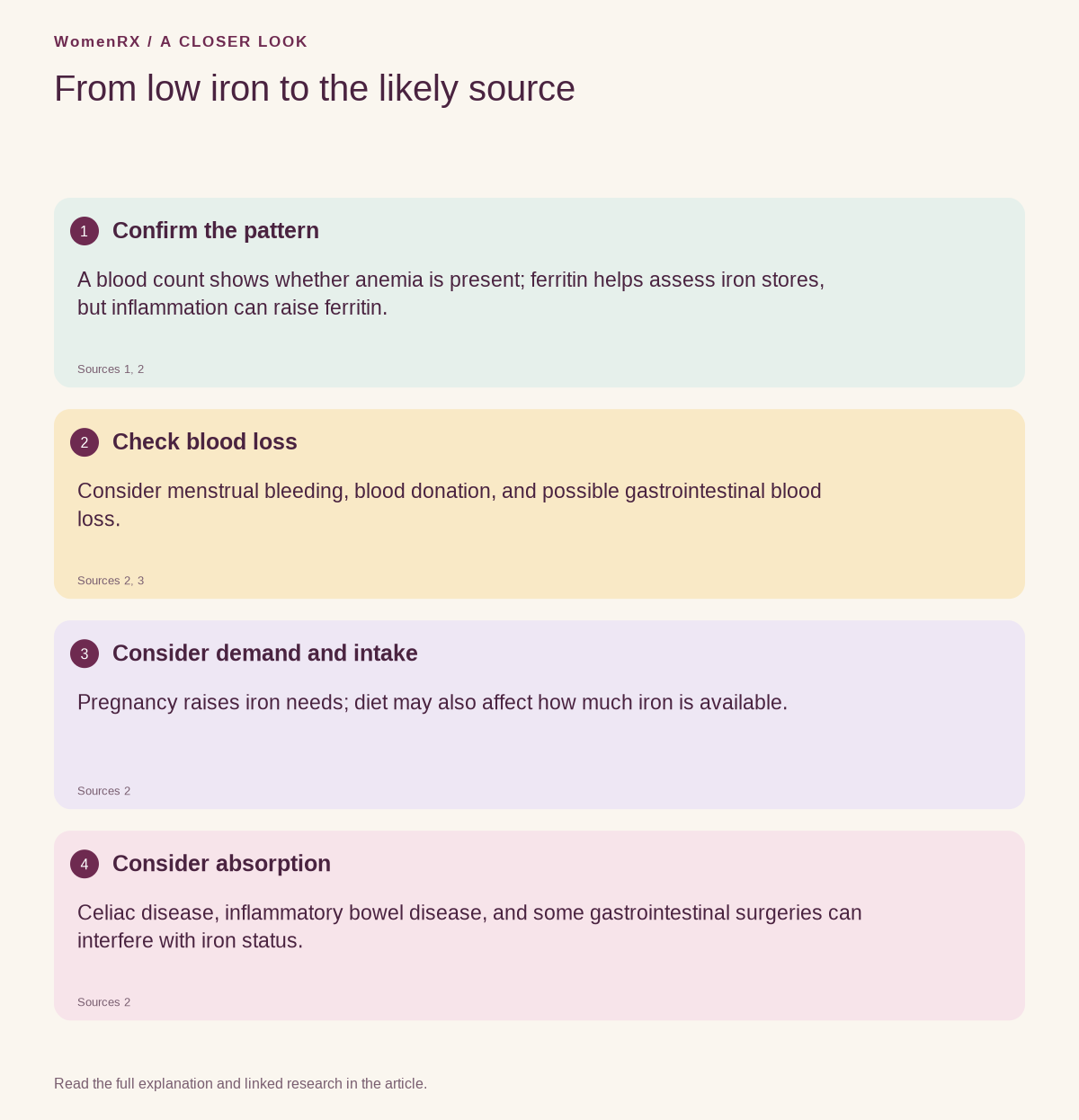
From low iron to the likely source
Confirm the pattern: A blood count shows whether anemia is present; ferritin helps assess iron stores, but inflammation can raise ferritin.12
Check blood loss: Consider menstrual bleeding, blood donation, and possible gastrointestinal blood loss.23
Consider demand and intake: Pregnancy raises iron needs; diet may also affect how much iron is available.2
Consider absorption: Celiac disease, inflammatory bowel disease, and some gastrointestinal surgeries can interfere with iron status.2
Read the figure as text
A practical map from confirming the blood-test pattern to considering causes in the context of life stage and health history.- Confirm the pattern: A blood count shows whether anemia is present; ferritin helps assess iron stores, but inflammation can raise ferritin.12
- Check blood loss: Consider menstrual bleeding, blood donation, and possible gastrointestinal blood loss.23
- Consider demand and intake: Pregnancy raises iron needs; diet may also affect how much iron is available.2
- Consider absorption: Celiac disease, inflammatory bowel disease, and some gastrointestinal surgeries can interfere with iron status.2
More questions, answered
Can ferritin be low before hemoglobin is low?
Yes. Iron stores can become depleted before hemoglobin falls enough to meet criteria for anemia, so low ferritin and anemia are related but distinct findings. 2
Does a low-iron result automatically mean I should take iron?
Not by itself. Iron tests need to be interpreted with the blood count and relevant health context, and identifying why iron is low can change the plan. 2 3
Sources you can check
- Anemia | MedlinePlusAccessed 2026-09-25Return to first citation
- Iron - Health Professional Fact SheetAccessed 2026-09-25Return to first citation
- Iron Deficiency Anemia: Evaluation and Management.Latimer K, Baci G, Layne M. · American family physician · 2025Return to first citation
- Menstrual blood loss is an independent determinant of hemoglobin and ferritin levels in premenopausal blood donors.Ekroos S, Karregat J, Toffol E, Castrén J, Arvas M, van den Hurk K. · Acta obstetricia et gynecologica Scandinavica · 2024Return to first citation