Iron-Deficiency Anemia: Find the Cause, Then Treat It
Blood tests can show whether anemia and low iron occur together, but the next question is why your iron is low.
A blood count can show anemia, while ferritin and other iron tests help establish whether iron deficiency is the cause. Treatment replaces iron, often with oral tablets, but it also needs to address what depleted your iron in the first place. Heavy periods, pregnancy, diet, and bleeding from the digestive tract call for different conversations and follow-up. 278
Feeling worn out or short of breath can prompt a blood test, but symptoms alone can’t tell you whether you have iron-deficiency anemia. Anemia has several possible causes, and iron deficiency can begin before your hemoglobin falls. That’s why finding low iron and finding its cause are two connected parts of the same workup. 48
What the blood tests can tell you
A complete blood count, or CBC, checks for anemia. Hemoglobin is part of that picture: it carries oxygen in your blood. A low result doesn’t, by itself, establish that iron deficiency is responsible. Other conditions, including vitamin B12 or folate deficiency, can also cause anemia. 248
Ferritin helps answer a different question. It reflects your body’s stored iron and can fall before anemia develops. Clinicians may also use transferrin saturation alongside ferritin when evaluating iron deficiency. If you have an infection or inflammatory condition, ferritin can be higher than your iron stores alone would suggest, so a single result may not settle the question. 78
A useful distinction when you see your results is low iron without anemia versus iron-deficiency anemia. Both deserve an explanation, but they’re not the same finding. Ask which results establish the diagnosis and whether anything in your health history makes them harder to interpret. 8
The cause isn’t always your period
Heavy menstrual bleeding is one possible source of iron loss during cycling years. If your periods have become heavier or are difficult to manage, say so rather than treating them as background information. Iron can replace what’s missing, while treatment for heavy periods may address continuing blood loss. 2
Pregnancy is a different context. Iron needs and intake are part of the conversation, and a pregnancy review of randomized trials found that oral iron can be limited by stomach-related side effects or slow iron replenishment. In many of the reviewed trials, intravenous iron restored blood measures faster. The largest trials, though, did not consistently show better major outcomes for mothers or babies. That’s a reason to discuss the tradeoff in light of your results and how much time remains before delivery, not to assume an infusion is better for every pregnancy. 26
If you no longer have periods, menstrual loss shouldn’t be the default explanation for new iron-deficiency anemia. Bleeding in the stomach or intestines is another possible cause at any life stage. Medicines such as ibuprofen and aspirin can contribute to that bleeding; an ulcer is another example. If the reason for anemia isn’t clear, further testing may be needed. 2
Diet can contribute, too, but a discussion of food shouldn’t end the search when the cause remains unexplained. Celiac disease is one condition clinicians may consider in unexplained iron-deficiency anemia, even when digestive symptoms aren’t the reason you sought care. 25
Choosing iron treatment and checking that it worked
Oral iron tablets are a common treatment once iron-deficiency anemia has been identified. Ferrous sulfate and ferrous fumarate are examples. Oral iron may cause side effects, and the form or plan may need adjusting if taking it is difficult. Don’t assume that continuing an over-the-counter iron product indefinitely is the answer to persistent fatigue: first establish whether iron deficiency is present and what might be causing it. 123
Intravenous iron is another route, not a substitute for investigating the cause. Its clearest comparison in these sources is in pregnancy, where trials often found faster improvement in hemoglobin or ferritin than with oral iron, without a consistent improvement in major maternal or newborn outcomes in the largest studies. If oral iron isn’t working for you, the useful conversation is both why and what to try next. 6
Follow-up blood tests show whether treatment is moving your results in the right direction; they don’t replace the cause-finding step. For example, if iron levels rise but heavy bleeding continues, replacing iron and reducing ongoing loss are separate issues to address. Repeat testing over the following months is part of the treatment approach described in clinical guidance. 2
Three questions can keep that conversation focused: Which tests show iron deficiency, and do I also have anemia? What might explain the low iron in my situation? When will we check whether the treatment is working? The answers should fit your results and your life, rather than assuming every woman loses iron for the same reason. 278
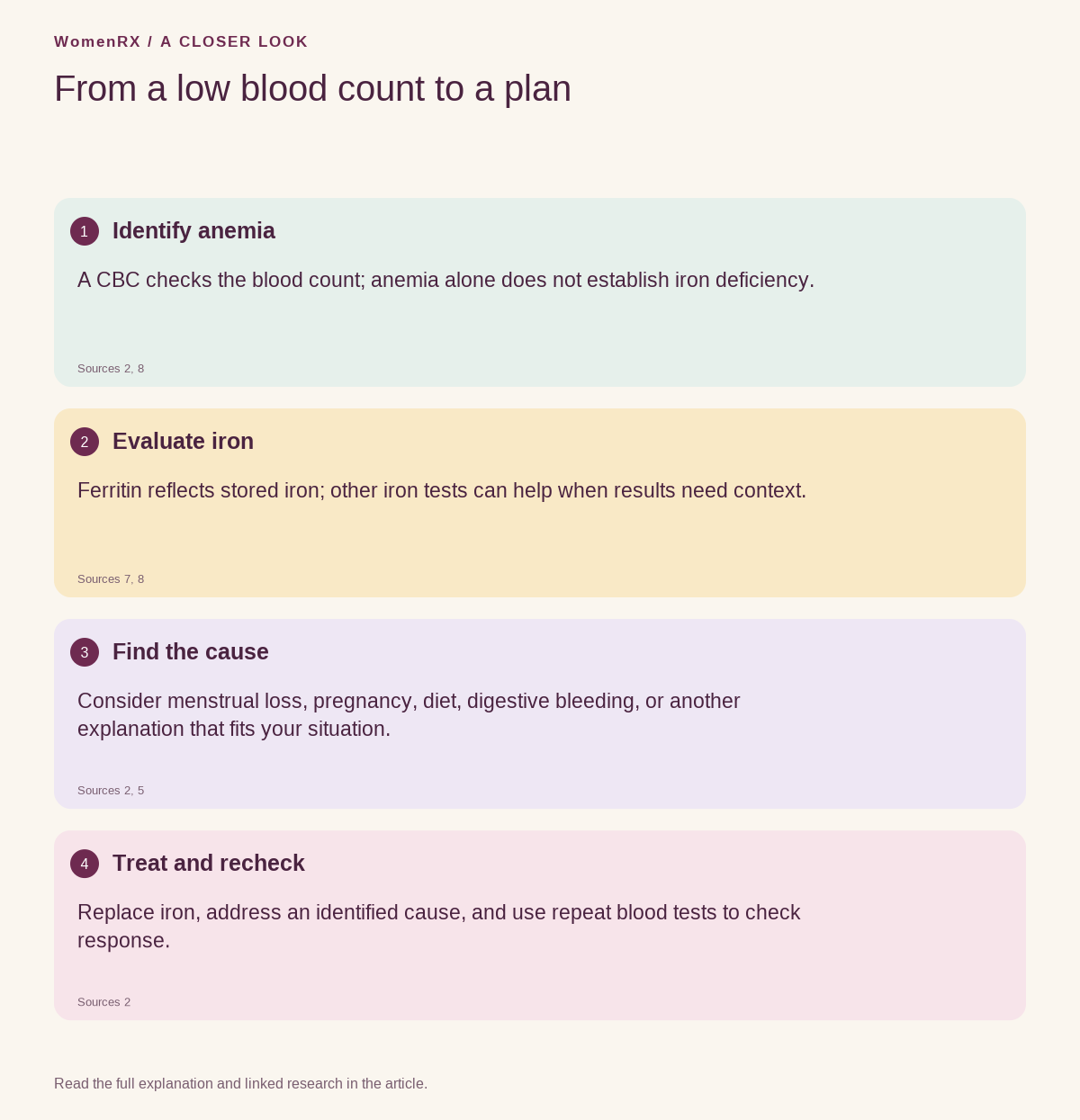
From a low blood count to a plan
Identify anemia: A CBC checks the blood count; anemia alone does not establish iron deficiency.28
Evaluate iron: Ferritin reflects stored iron; other iron tests can help when results need context.78
Find the cause: Consider menstrual loss, pregnancy, diet, digestive bleeding, or another explanation that fits your situation.25
Treat and recheck: Replace iron, address an identified cause, and use repeat blood tests to check response.2
Read the figure as text
The steps answer different questions: whether anemia is present, whether iron is low, why it became low, and whether treatment is working.- Identify anemia: A CBC checks the blood count; anemia alone does not establish iron deficiency.28
- Evaluate iron: Ferritin reflects stored iron; other iron tests can help when results need context.78
- Find the cause: Consider menstrual loss, pregnancy, diet, digestive bleeding, or another explanation that fits your situation.25
- Treat and recheck: Replace iron, address an identified cause, and use repeat blood tests to check response.2
More questions, answered
Can I have low iron without being anemic?
Yes. Iron stores can fall before hemoglobin does. Ferritin can help identify low iron status at that earlier stage, so ask what your results show rather than treating “low iron” and “anemia” as interchangeable. 8
Does a low blood count mean I should take iron?
Not necessarily. A blood count can identify anemia, but anemia has causes other than iron deficiency. Iron tests and your health history help determine whether iron treatment fits. 248
Sources you can check
- Ferrous fumarate: a medicine to treat iron deficiency anaemia (low iron levels) - NHSAccessed 2026-09-25Return to first citation
- Iron deficiency anaemia - NHSAccessed 2026-09-25Return to first citation
- Ferrous sulfate: medicine for iron deficiency anaemia - NHSAccessed 2026-09-25Return to first citation
- Anemia | MedlinePlusAccessed 2026-09-25Return to first citation
- Primary care physicians are under-testing for celiac disease in patients with iron deficiency anemia: Results of a national survey.Spencer M, Lenhart A, Baker J, Dickens J, Weissman A, Read AJ, Saini S, Saini SD. · PloS one · 2017Return to first citation
- Intravenous and Oral Iron Strategies for Iron-Deficiency Anemia in Pregnancy: A Systematic Review of Randomized Controlled Trials From a Hematology Perspective.Guerra Toro HI, Jaramillo AP, Pazmino G, Caceres VM. · Cureus · 2026Return to first citation
- Clinical management of iron deficiency anemia in adults: Systemic review on advances in diagnosis and treatment.De Franceschi L, Iolascon A, Taher A, Cappellini MD. · European journal of internal medicine · 2017Return to first citation
- Iron - Health Professional Fact SheetAccessed 2026-09-25Return to first citation