How to Choose an Iron Supplement: Dose, Form, and Tolerance
Compare iron tablets by the elemental iron they provide, not just the salt name or the largest number on the label.
If testing or your clinician points to iron deficiency, compare the listed iron amount with the amount in your treatment plan. Ferrous sulfate, fumarate, and gluconate contain different proportions of elemental iron, so the salt weight alone can mislead. The best fit also depends on side effects, your circumstances, and how your blood tests respond. 1
Start with the reason for taking iron
Iron deficiency can begin before anemia shows up on a hemoglobin test. Ferritin reflects iron stores and may fall early, although inflammation can affect its result. Clinicians may consider ferritin alongside hemoglobin and other measures to assess iron status. Symptoms such as fatigue can have different causes, so symptoms alone don’t tell you whether an iron tablet is the right choice. 12
Heavy periods can contribute to low iron. Pregnancy, postpartum recovery, and menopause are different situations, though: a tablet choice should fit your test results and the plan for that stage, rather than being based only on a life-stage label. If you’re pregnant and iron-deficiency anemia has been diagnosed, a small trial found that several oral formulations improved blood measures similarly, but side effects differed. After pregnancy, confirm whether iron deficiency was diagnosed and how a proposed supplement fits your postpartum treatment plan. If you’re postmenopausal and tests show low iron, menstrual bleeding may not explain it; blood loss, diet, and absorption problems are among the possible causes to consider. 23
Compare the iron amount, not just the salt
On the Supplement Facts panel, find the listed amount of iron and compare it with the amount in your plan. The salt’s weight is not the same as the amount of elemental iron it supplies. By weight, ferrous fumarate is about 33% elemental iron, ferrous sulfate about 20%, and ferrous gluconate about 12%. The listed iron amount lets you compare products without calculating from those percentages. 1
A higher number isn’t automatically a better choice. Higher supplemental iron amounts can cause gastrointestinal effects such as nausea and constipation. If the listed amount doesn’t match your plan, check with your clinician or pharmacist before choosing a different product. 1
Treat formulation as a tradeoff
Ferrous salts are common options, but they differ in elemental iron content. Other forms are available, too. Some alternatives might cause fewer gastrointestinal effects, but that possibility doesn’t establish that they’re more effective or a better fit for everyone. 1
One small trial helps illustrate the tradeoff. Among 57 women with low iron stores who completed 12 weeks of supplementation, ferritin increased by 109% with ferrous sulfate, while the iron polymaltose complex group had a 7% change that wasn’t statistically significant. The polymaltose group had a lower reported symptom rate, while sulfate caused more and more severe gastrointestinal symptoms. The trial included athletes and premenopausal and postmenopausal women, and compared particular regimens, so it doesn’t establish a universal best tablet. 4
Pregnancy research offers a separate example. In a randomized trial of 120 pregnant women with iron-deficiency anemia, four tested preparations improved hemoglobin and other blood measures similarly; adverse effects were more common in the ferrous fumarate group. That result can inform a conversation, but it doesn’t mean every pregnant person will respond the same way or tolerate each form similarly. 3
If a product is hard to tolerate, tell your clinician or pharmacist what’s happening. Ask whether the amount, formulation, or treatment plan should be reconsidered rather than switching or stopping on your own. A form that causes fewer symptoms may be easier to take, while test results help show whether the plan is addressing the deficiency. 14
Make follow-up part of the selection
Before starting, ask what the supplement is intended to treat and what blood tests will be used to check your response. Hemoglobin helps assess anemia; ferritin provides information about iron stores, though inflammation can affect it. Your clinician may use more than one measure when interpreting results. 1
Also mention other supplements you take. Calcium can interfere with iron absorption, so ask whether your iron and calcium supplements should be taken at different times. Most of all, match the product’s listed iron amount and formulation to the plan you were given. Don’t start a therapeutic iron supplement just because you feel tired or because one form has a higher number on the label. 12
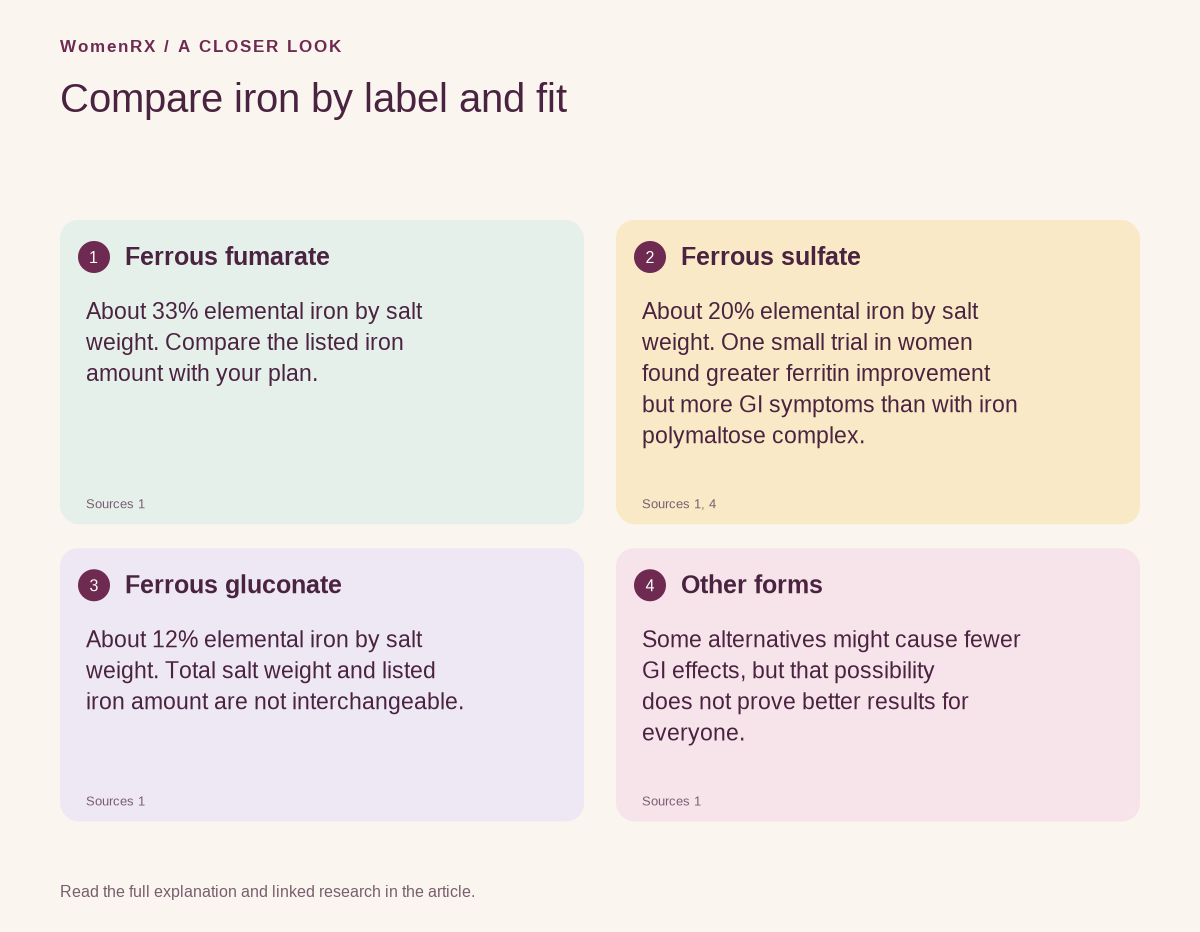
Compare iron by label and fit
Ferrous fumarate: About 33% elemental iron by salt weight. Compare the listed iron amount with your plan.1
Ferrous sulfate: About 20% elemental iron by salt weight. One small trial in women found greater ferritin improvement but more GI symptoms than with iron polymaltose complex.14
Ferrous gluconate: About 12% elemental iron by salt weight. Total salt weight and listed iron amount are not interchangeable.1
Other forms: Some alternatives might cause fewer GI effects, but that possibility does not prove better results for everyone.1
Read the figure as text
Salt names indicate different elemental-iron proportions, but the listed amount, treatment plan, and tolerability matter more than a product ranking.- Ferrous fumarate: About 33% elemental iron by salt weight. Compare the listed iron amount with your plan.1
- Ferrous sulfate: About 20% elemental iron by salt weight. One small trial in women found greater ferritin improvement but more GI symptoms than with iron polymaltose complex.14
- Ferrous gluconate: About 12% elemental iron by salt weight. Total salt weight and listed iron amount are not interchangeable.1
- Other forms: Some alternatives might cause fewer GI effects, but that possibility does not prove better results for everyone.1
More questions, answered
Does ferrous fumarate contain more elemental iron than ferrous gluconate?
By weight, yes: ferrous fumarate is about 33% elemental iron and ferrous gluconate about 12%. For choosing between tablets, compare the listed iron amount with your plan rather than comparing salt weights. 1
Can I take an iron supplement with calcium?
Calcium supplements can interfere with iron absorption. Ask your clinician or pharmacist whether to take them at different times. 1
Sources you can check
- Iron - Health Professional Fact SheetAccessed 2026-09-25Return to first citation
- Iron: MedlinePlusAccessed 2026-09-25Return to first citation
- A randomized controlled trial comparing the efficacy, tolerability, and cost of oral iron preparations in iron-deficiency anemia in pregnancy.Gamad N, Saha PK, Sharma P, Suri V, Chakrabarti A, Saha L. · The journal of obstetrics and gynaecology research · 2021Return to first citation
- Oral ferrous sulphate supplementation has greater efficacy, but lower tolerance than iron (III)-hydroxide polymaltose complexes in exercising women with low iron stores.McKay AK, Broome S, Tee N, Yim KL, Sim M, Peeling P, Burke LM. · Clinical nutrition (Edinburgh, Scotland) · 2026Return to first citation