Can Food Provide Enough Iron, or Do You Need a Supplement?
Food can help you meet your iron needs, but confirmed deficiency may need more than a change in meals.
Many people can get enough iron through a varied diet, including plant-based diets, when meals regularly include iron-rich foods. Pairing plant sources with vitamin C can help absorption. But iron needs rise during pregnancy, and heavy periods or absorption problems can contribute to deficiency. If testing shows low iron or anemia, food changes may support care but aren’t a reliable stand-alone treatment. 2 3
Iron on the plate: amount isn’t the whole story
You don’t have to eat meat to get iron. Beans, lentils, tofu, nuts, vegetables, and iron-fortified breads and cereals all provide non-heme iron. Meat and seafood provide heme iron, which the body absorbs more readily. Animal foods can also help your body absorb some non-heme iron in the same meal, but they aren’t required for a plant-based diet. 2
Iron content and absorbed iron aren’t quite the same thing. In a US reference table, a serving of lentils, tofu, or cooked spinach provides about 3 milligrams of iron, while a serving of fortified cereal can provide 18 milligrams. Those figures describe the amount in the food, not how much your body will absorb. Absorption varies with the kind of iron and the rest of the meal. 2
Make plant-based iron easier to use
A practical pairing is a plant source of iron alongside a food rich in vitamin C. For example, you could add tomatoes or bell peppers to beans, have fruit with iron-fortified cereal, or serve broccoli with tofu. Vitamin C helps increase absorption of non-heme iron. 1 2
Phytate, found in foods such as beans and grains, can reduce non-heme iron absorption. That doesn’t mean you need to avoid these nutritious foods: the NIH notes that the effects of absorption enhancers and inhibitors tend to be smaller in a typical Western diet and often have little effect on a person’s iron status. Think about pairing foods, not eliminating staples. 2
The overall pattern matters more than making every meal perfect. A diet that includes iron-rich foods regularly, plus vitamin C sources, is a reasonable foundation. For vegetarian diets, the recommended iron intake is higher because non-heme iron is less readily absorbed. 2
Needs change across life stages
For women ages 19 to 50, the recommended dietary allowance (RDA) is 18 milligrams of iron a day; during pregnancy, it’s 27 milligrams. For women 51 and older, it’s 8 milligrams. These are population-level planning references, not a test of whether an individual has iron deficiency. 2
Pregnancy raises iron needs as the body makes more red blood cells and supports the fetus and placenta. A food plan can contribute iron, but the higher need makes it especially useful to discuss iron intake and any test results during pregnancy rather than assuming meals alone will cover the situation. 2
Heavy periods can also raise the chance of low iron. Diet isn’t the only possible reason: blood loss and problems absorbing iron, including some digestive conditions, can contribute too. So can low iron intake. If iron is low, the cause matters alongside the food plan. 2 3
When food changes may not be enough
Iron deficiency can develop before anemia. Iron stores may fall while hemoglobin remains in the usual range; anemia occurs later, when iron stores are exhausted and hemoglobin declines. This is one reason that simply looking at how much iron you eat, or waiting for more obvious symptoms, can miss the bigger picture. 2
A small randomized trial offers a useful but limited comparison. It followed 75 young adult women in New Zealand with mild iron deficiency but without anemia for 16 weeks. The diet group received individual counseling and increased flesh foods and heme iron, vitamin C, and foods cooked using cast-iron cookware, while reducing phytate and calcium intake. The supplement group received an iron supplement, and a third group received placebo. Compared with placebo, ferritin rose 26% in the diet group, a result that was not statistically significant, and 59% in the supplement group, which was statistically significant. This trial suggests an intensive dietary approach may help some people, but it does not establish the effect of a vegetarian or vegan intervention, show that diet reliably treats deficiency, or study anemia. 4
If a blood test shows iron deficiency or iron-deficiency anemia, food can still be part of the plan, but treatment may involve iron supplements. Don’t assume a supplement is harmless or that more is better: too much iron can cause problems, and some people are at risk of iron overload. The right next step depends on the test results and why your iron is low. 2 3
If you’re choosing a food-first approach, start with the foods you already eat: add beans, lentils, tofu, fortified grains, nuts, or seafood if you eat it, and pair plant sources with a vitamin C food. If you have heavy periods, known digestive absorption problems, or a test showing low iron, don’t rely on menu changes alone to answer whether you need treatment. 2 3
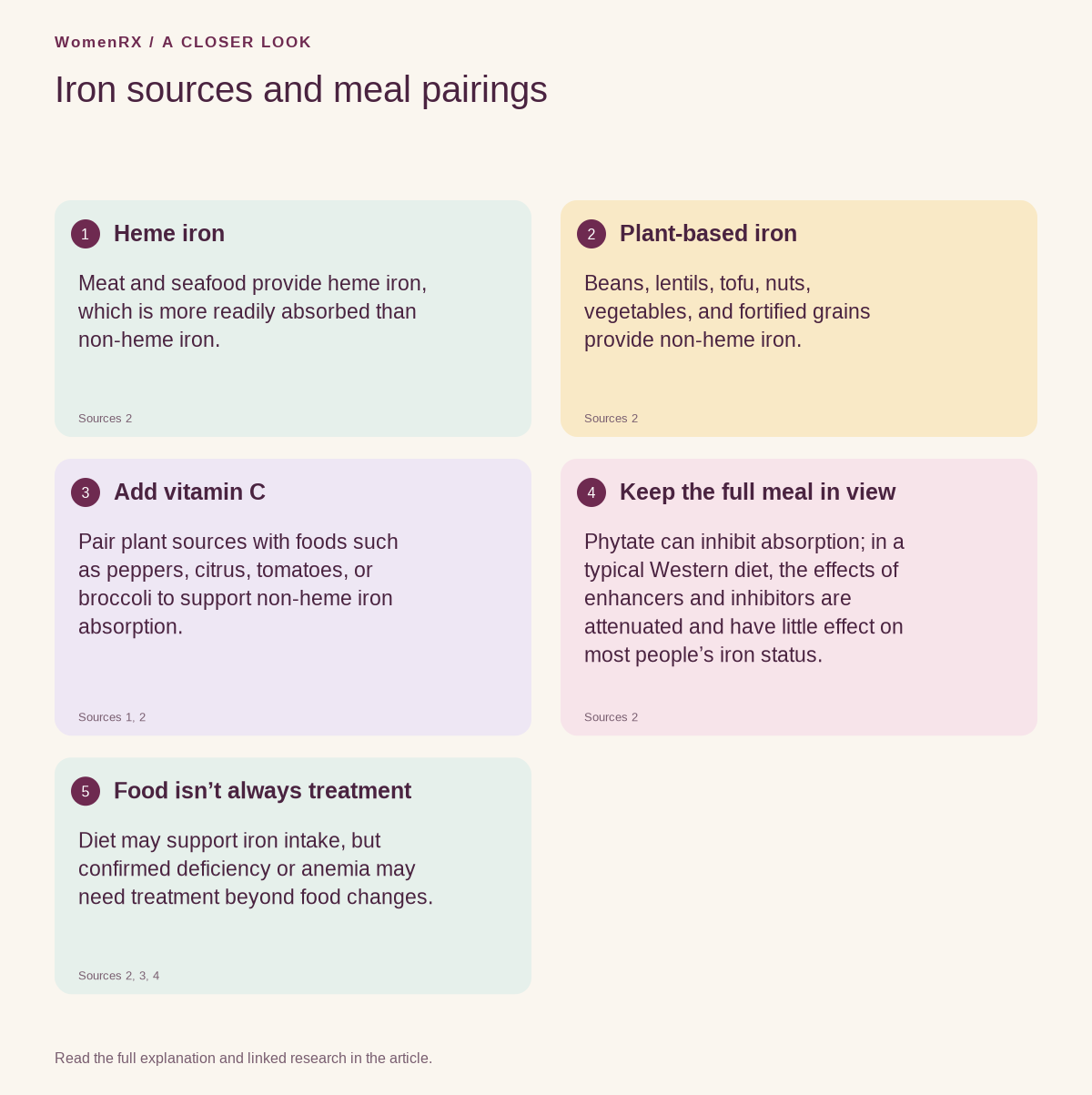
Iron sources and meal pairings
Heme iron: Meat and seafood provide heme iron, which is more readily absorbed than non-heme iron.2
Plant-based iron: Beans, lentils, tofu, nuts, vegetables, and fortified grains provide non-heme iron.2
Add vitamin C: Pair plant sources with foods such as peppers, citrus, tomatoes, or broccoli to support non-heme iron absorption.12
Keep the full meal in view: Phytate can inhibit absorption; in a typical Western diet, the effects of enhancers and inhibitors are attenuated and have little effect on most people’s iron status.2
Food isn’t always treatment: Diet may support iron intake, but confirmed deficiency or anemia may need treatment beyond food changes.234
Read the figure as text
Compare the kind of iron in common foods with meal factors that can affect absorption, while keeping food strategies distinct from treatment for confirmed deficiency.- Heme iron: Meat and seafood provide heme iron, which is more readily absorbed than non-heme iron.2
- Plant-based iron: Beans, lentils, tofu, nuts, vegetables, and fortified grains provide non-heme iron.2
- Add vitamin C: Pair plant sources with foods such as peppers, citrus, tomatoes, or broccoli to support non-heme iron absorption.12
- Keep the full meal in view: Phytate can inhibit absorption; in a typical Western diet, the effects of enhancers and inhibitors are attenuated and have little effect on most people’s iron status.2
- Food isn’t always treatment: Diet may support iron intake, but confirmed deficiency or anemia may need treatment beyond food changes.234
Sources you can check
- Vitamin C - Health Professional Fact SheetAccessed 2026-09-25Return to first citation
- Iron - Health Professional Fact SheetAccessed 2026-09-25Return to first citation
- Iron: MedlinePlusAccessed 2026-09-25Return to first citation
- Can dietary treatment of non-anemic iron deficiency improve iron status?Heath AL, Skeaff CM, O'Brien SM, Williams SM, Gibson RS. · Journal of the American College of Nutrition · 2001Return to first citation