Can Food Provide Enough Zinc?
Food can provide zinc, but your usual sources, absorption, and life stage all shape the picture.
Many foods provide zinc, including meat, seafood, eggs, dairy, beans, nuts, and whole grains. Zinc from plant foods is less bioavailable, so a food-first estimate should consider both what you eat and the mix of sources. Needs also rise during pregnancy and breastfeeding. An intake estimate can guide a supplement discussion, but it doesn’t diagnose zinc deficiency. 1
Look at your usual sources, not a diet label
Zinc comes from more than one kind of food. Meat, fish and other seafood, eggs, and dairy are sources; beans, nuts, and whole grains contain zinc too. The difference is absorption: zinc from these plant foods is less bioavailable than zinc from animal foods because they contain phytates. That doesn’t mean a plant-forward diet can’t include zinc. It does mean that simply counting foods that contain zinc may not tell the whole story. 1
For example, if beans, nuts, and whole grains make up most of your regular zinc-containing foods, that’s useful context when estimating intake. If you also eat animal foods, those contribute zinc with higher bioavailability. Neither example tells you whether you personally have a deficiency.
A practical first step is to note the zinc-containing foods you typically eat and look up their amounts in USDA FoodData Central. Compare a rough estimate with the reference value for your age and life stage. These reference values help plan and assess intake for healthy people; they aren’t a diagnosis. The NIH reference describes adult recommendations as ranging from 8 to 12 mg a day, with the value varying by age, sex, and life stage. 1
Pregnancy and breastfeeding raise the reference amount
During pregnancy, the recommended zinc intake is 3 mg a day higher than the recommendation for a nonpregnant woman in the same age group. During lactation, it is 4 mg higher. These are changes in recommended intake, not proof that everyone in either life stage needs a separate zinc supplement. 1
A U.S. analysis of 2001-2014 data found that 11% of pregnant women had total zinc intake from food and supplements below the Estimated Average Requirement. That population estimate shows that some intakes may be low; it does not identify which individual is deficient or establish that supplementation benefits everyone. 1
Research on zinc supplements in pregnancy also doesn’t support treating them as a universal fix: routine supplementation does not appear to reduce low birthweight, stillbirth, or neonatal death, though it might lower the risk of preterm birth. If you’re pregnant, discuss any new supplement with your pregnancy care provider before taking it. 12
For breastfeeding, studies are mixed on whether eating zinc-rich foods increases zinc in breast milk, and evidence is conflicting on whether supplements do so. So a supplement shouldn’t be assumed to raise breast-milk zinc. 1
An intake estimate isn’t a deficiency test
A food record or nutrient database can help estimate what you consume, but it can’t establish your zinc status. Serum zinc doesn’t always correspond to dietary or supplemental intake, and results can vary with factors such as the time of the blood draw, infection, and illness-related changes. Clinicians also consider possible risk factors, including inadequate calorie intake, chronic alcohol use, and digestive conditions that affect absorption. 1
That distinction helps make the next step more specific. If you’re unsure about your intake, start with your usual foods and the reference that applies to your age and life stage. If you’re pregnant or breastfeeding, eat few zinc-containing foods, or have a digestive condition that may affect absorption, include that context when discussing whether a supplement makes sense. A diet pattern alone doesn’t settle the question.
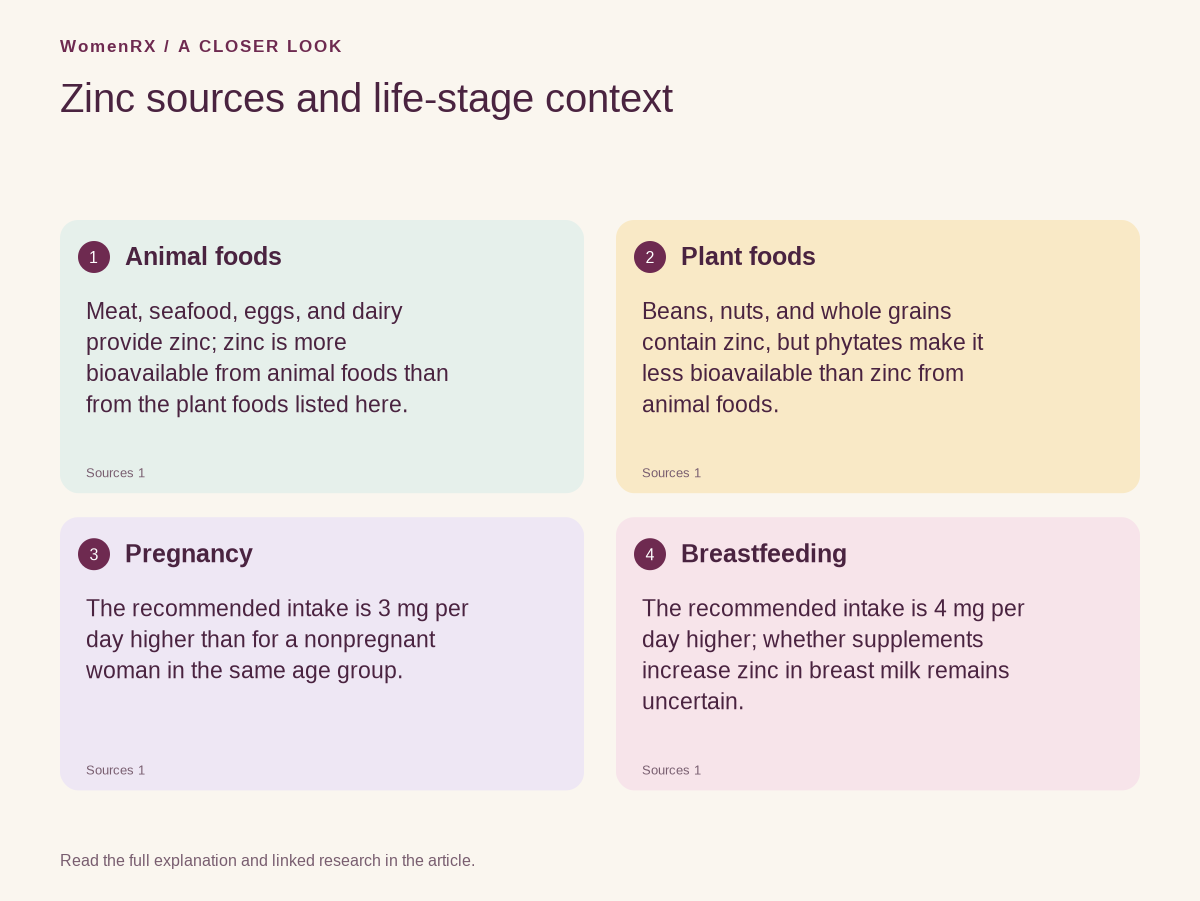
Zinc sources and life-stage context
Animal foods: Meat, seafood, eggs, and dairy provide zinc; zinc is more bioavailable from animal foods than from the plant foods listed here.1
Plant foods: Beans, nuts, and whole grains contain zinc, but phytates make it less bioavailable than zinc from animal foods.1
Pregnancy: The recommended intake is 3 mg per day higher than for a nonpregnant woman in the same age group.1
Breastfeeding: The recommended intake is 4 mg per day higher; whether supplements increase zinc in breast milk remains uncertain.1
Read the figure as text
Compare common food sources with the life-stage adjustments that matter when estimating zinc intake.- Animal foods: Meat, seafood, eggs, and dairy provide zinc; zinc is more bioavailable from animal foods than from the plant foods listed here.1
- Plant foods: Beans, nuts, and whole grains contain zinc, but phytates make it less bioavailable than zinc from animal foods.1
- Pregnancy: The recommended intake is 3 mg per day higher than for a nonpregnant woman in the same age group.1
- Breastfeeding: The recommended intake is 4 mg per day higher; whether supplements increase zinc in breast milk remains uncertain.1
More questions, answered
Does eating plant-based mean I need a zinc supplement?
Not by itself. Beans, nuts, and whole grains contain zinc, though it’s less bioavailable from these foods than from animal foods. Your usual intake and life stage matter more than the diet label alone. 1
Can a blood test tell me whether my diet provides enough zinc?
A serum zinc result doesn’t always track dietary intake and can be affected by factors such as infection and the time of the blood draw. It needs to be interpreted alongside the broader health picture. 1
Sources you can check
- Zinc - Health Professional Fact SheetAccessed 2026-09-25Return to first citation
- Pregnancy and Medicines | MedlinePlusAccessed 2026-09-25Return to first citation