Zinc After 40: What Changes, and What Doesn’t
For most women, turning 40 or reaching menopause doesn’t change the recommended amount of zinc.
The recommended dietary allowance for women age 19 and older is 8 mg of zinc a day, with no separate higher target for women over 40 or after menopause. Pregnancy and breastfeeding have different recommendations. Supplementation may be worth discussing when diet or a health condition raises the chance of low zinc, but menopause alone isn’t evidence that you need a supplement. 1
The recommendation doesn’t rise at 40 or menopause
For healthy women, the recommended dietary allowance (RDA) is 8 mg of zinc a day from all sources starting at age 19. The adult recommendation does not increase at 40, with menopause, or after menopause. Pregnancy and breastfeeding are exceptions: the RDA is 11 mg during pregnancy and 12 mg during lactation. 1
An RDA is a daily intake target, not a supplement dose. If food already provides enough, there’s no age-based reason to add a zinc pill. And the fact that zinc has important roles in the body doesn’t mean taking extra will improve health when you aren’t deficient.
Diet and health matter more than the birthday
Some circumstances can make adequate zinc intake less certain. People following vegetarian or vegan diets may have lower zinc intake and absorption: beans, nuts, and whole grains contain zinc, but phytates in these foods can reduce how much the body absorbs. People with gastrointestinal disorders or a history of certain bariatric surgeries may also be at higher risk of inadequacy. These are diet- and health-related considerations, not effects of menopause itself. 1
You can check your usual food pattern before reaching for a supplement. For example, the NIH lists about 2.2 mg of zinc in an ounce of roasted pumpkin seeds, 1.3 mg in a half-cup of cooked lentils, and 2.8 mg in a serving of breakfast cereal fortified with 25% of the Daily Value. Meat, seafood, eggs, and dairy are also sources; zinc from animal foods is generally more bioavailable than zinc from plant foods. 1
These examples can help you spot sources, but they aren’t a personalized meal plan. If you eat mostly plant-based foods, preparation methods such as soaking beans, grains, or seeds before cooking may reduce phytate’s effect on zinc absorption. 1
What the menopause research can tell you
Two reports describe small postmenopausal supplementation research involving 51 women ages 44 to 76. Both describe eight weeks of zinc supplementation at 50 mg a day; the abstracts don’t establish that the reports involved independent participant groups, so they shouldn’t be counted as two separate groups of women. 23
One report describes changes in vitamin D status after supplementation; another reports increased folate and a decrease in homocysteine in an between-group analysis. Separately, the first report found that zinc intake and plasma zinc levels were inversely correlated with leptin levels. That association does not show that supplementation changed leptin. These findings may be worth further study, but they don’t establish that postmenopausal women need more zinc, or that supplementation improves symptoms or meaningful health outcomes. The research was small and short, and the reported markers are not the same as proof of a practical benefit you would notice. 23
The 50 mg daily amount used in this research is a study regimen, not a recommendation to copy. The adult RDA is 8 mg a day, and the study reports don’t show that taking extra zinc is beneficial for women whose intake is already adequate. 123
Look for an intake or absorption issue beyond age
If you’re over 40 and generally eat a varied diet, age or menopause alone doesn’t make a zinc supplement worthwhile. Consider your individual circumstances if you eat a highly restrictive diet, have a condition that can affect absorption, or have had relevant gastrointestinal surgery. In those cases, the useful question is whether your intake or zinc status may be inadequate, not whether menopause automatically raises your needs. 1
If you already use supplements, look at the elemental zinc amount on the Supplement Facts panel and count zinc from combination products too. The NIH notes that taking a supplement containing 25 mg or more of iron at the same time as zinc can reduce zinc absorption. 1
use food and your health context to judge whether you might be falling short. Don’t treat being over 40 or postmenopausal as a reason, by itself, to start zinc.
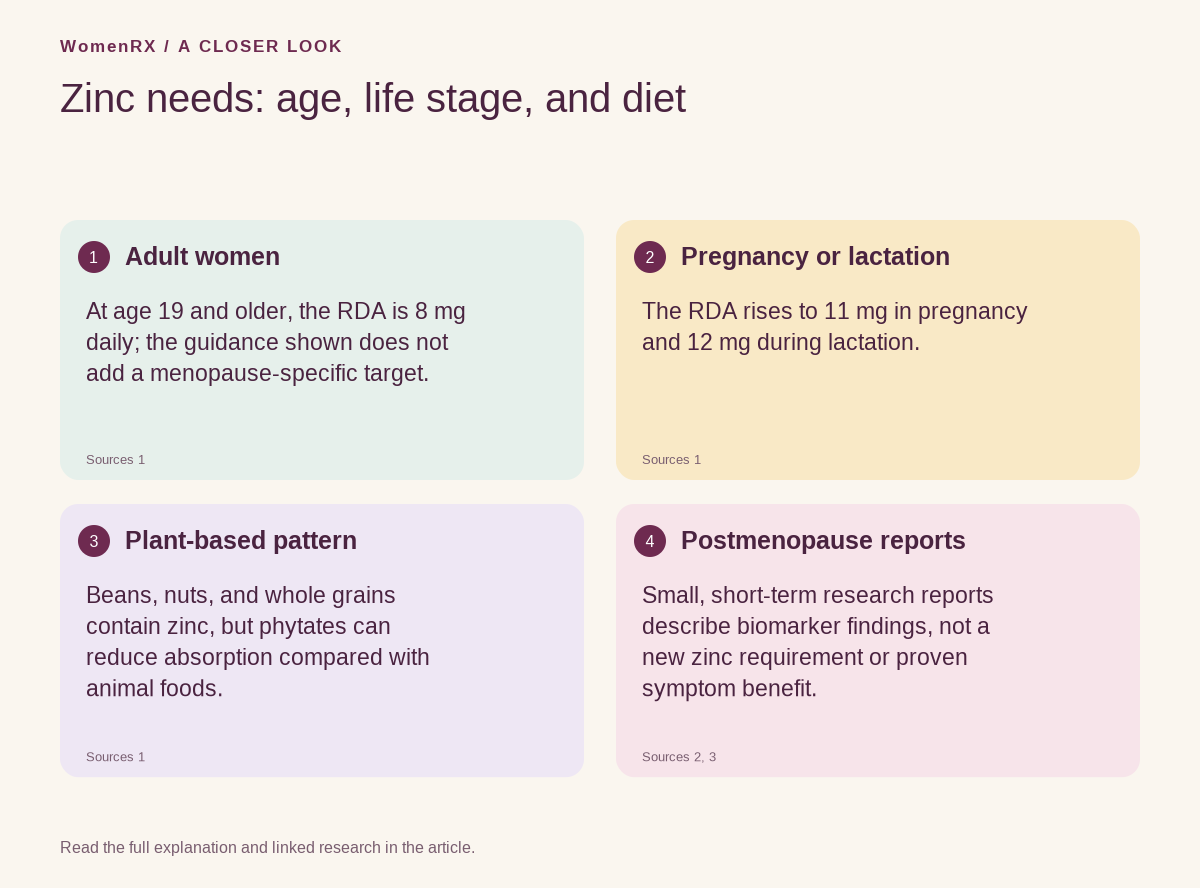
Zinc needs: age, life stage, and diet
Adult women: At age 19 and older, the RDA is 8 mg daily; the guidance shown does not add a menopause-specific target.1
Pregnancy or lactation: The RDA rises to 11 mg in pregnancy and 12 mg during lactation.1
Plant-based pattern: Beans, nuts, and whole grains contain zinc, but phytates can reduce absorption compared with animal foods.1
Postmenopause reports: Small, short-term research reports describe biomarker findings, not a new zinc requirement or proven symptom benefit.23
Read the figure as text
Compare the unchanged adult recommendation with life stages that have different targets and diet patterns that can affect zinc absorption.- Adult women: At age 19 and older, the RDA is 8 mg daily; the guidance shown does not add a menopause-specific target.1
- Pregnancy or lactation: The RDA rises to 11 mg in pregnancy and 12 mg during lactation.1
- Plant-based pattern: Beans, nuts, and whole grains contain zinc, but phytates can reduce absorption compared with animal foods.1
- Postmenopause reports: Small, short-term research reports describe biomarker findings, not a new zinc requirement or proven symptom benefit.23
More questions, answered
Do plant-based diets automatically mean I need a zinc supplement?
No. Plant-based diets can provide zinc, though phytates in legumes and whole grains reduce absorption compared with many animal foods. Food choices and preparation, such as soaking beans or grains, can help; a supplement isn’t automatic. 1
Does zinc supplementation treat menopause symptoms?
The small postmenopausal research described changes in blood markers, not evidence that zinc treats common menopause symptoms. Those findings don’t establish a symptom benefit or a need for extra zinc after menopause. 23
Sources you can check
- Zinc - Health Professional Fact SheetAccessed 2026-09-25Return to first citation
- Effectiveness of eight-week zinc supplementation on vitamin D3 status and leptin levels in a population of postmenopausal women: a double-blind randomized trial.Vázquez-Lorente H, Molina-López J, Herrera-Quintana L, Gamarra-Morales Y, López-González B, Planells E. · Journal of trace elements in medicine and biology : organ of the Society for Minerals and Trace Elements (GMS) · 2021Return to first citation
- Effect of zinc supplementation on circulating concentrations of homocysteine, vitamin B12, and folate in a postmenopausal population.Vázquez-Lorente H, Herrera-Quintana L, Molina-López J, Gamarra Y, Planells E. · Journal of trace elements in medicine and biology : organ of the Society for Minerals and Trace Elements (GMS) · 2022Return to first citation