How Much Zinc Do Women Need Each Day?
Your zinc target depends on life stage, and the amount on a supplement label is only one part of your total intake.
For women ages 19 and older, the recommended dietary allowance (RDA) is 8 mg of zinc daily; it rises to 11 mg during pregnancy and 12 mg while breastfeeding. These are targets for zinc from food and supplements combined, not supplement doses. Check the Supplement Facts panel for elemental zinc, add overlapping supplements and zinc lozenges, and keep total daily intake below the adult upper limit of 40 mg unless zinc is being used under medical care. 1
Start with the life-stage target
For most women ages 19 and older, the recommended dietary allowance (RDA) for zinc is 8 mg a day. It is 11 mg during pregnancy and 12 mg while breastfeeding. For ages 14-18, the RDAs are 9 mg, 12 mg during pregnancy, and 13 mg while breastfeeding. These amounts include zinc from food, fortified foods, and supplements. 1
An RDA is a daily intake target intended to meet the needs of nearly all healthy people in a group. It is not a dose you need to take as a pill. A separate number on food and supplement labels, the Daily Value (DV), is 11 mg for adults and children ages 4 and older. The DV helps you compare products; it does not replace the RDA for your age or life stage. 1
Estimate what food is contributing
Zinc comes from a mix of foods. For example, 3 ounces of roasted bottom sirloin beef has 3.8 mg, while a half-cup of boiled lentils has 1.3 mg and an ounce of roasted pumpkin seeds has 2.2 mg. Some breakfast cereals are fortified, so check the label rather than assuming the amount. Oysters are exceptionally rich in zinc, but ordinary meals can contribute smaller amounts across the day. 1
Plant foods such as beans, nuts, seeds, and whole grains contain zinc, but phytates in these foods can reduce how much the body absorbs. This is relevant if you eat vegetarian or vegan meals most of the time: the listed milligrams still help you estimate intake, but they do not tell the whole story about absorption. Soaking beans, grains, and seeds before cooking is one food-preparation approach that may improve zinc availability. 1
A rough food check can help you spot patterns, but it cannot diagnose a deficiency. Blood zinc measurements also have limits and can vary with factors such as time of day, infection, and illness. 1
Read the supplement panel for elemental zinc
The Supplement Facts panel lists the amount of elemental zinc, not the total weight of the zinc compound used in the product. A label might name zinc gluconate, zinc sulfate, or another form; for comparing your intake with the RDA or upper limit, use the stated zinc amount. 1
Then add up the zinc in supplements you use together. A multivitamin or prenatal and a standalone zinc tablet can both contribute. Some cold lozenges also contain zinc, so check those products when estimating intake. For example, if a multivitamin already supplies zinc, adding a separate product may bring your total closer to the upper limit than you expect. 1
Some denture adhesives contain zinc. Excessive, chronic use can cause zinc toxicity, so don't treat the amount listed for an adhesive as a simple daily dietary intake to add to your food and supplement total. 1
During pregnancy, zinc needs are higher, but that does not mean every pregnant person needs an extra zinc supplement. In a US study of pregnant women ages 20-40, 10.9% had total usual intake below the Estimated Average Requirement (EAR), while 7.1% exceeded the upper limit. These are population estimates from a study using data collected from 2001 to 2014, not a way to determine your personal status. They do show why it makes sense to check both for shortfalls and for overlapping products. 2
During breastfeeding, the RDA is 4 mg higher than for nonpregnant adults in the same age group. Guidance sets a higher intake target, but research on whether more zinc in a mother’s diet or supplements raises zinc in breast milk has been mixed. 1
Keep total intake below the upper limit
For adults, including during pregnancy and breastfeeding, the tolerable upper intake level (UL) is 40 mg a day from food and supplements combined. For ages 14-18, including pregnancy and breastfeeding, it is 34 mg. The UL is not a target; it is the highest daily intake unlikely to cause harm for healthy people. 1
High intake can cause nausea, dizziness, headache, stomach upset, vomiting, or loss of appetite. Taking 50 mg or more daily for weeks can interfere with copper absorption and may affect immune function and HDL cholesterol. That 50 mg finding is not a safe alternative threshold: the adult UL is lower, at 40 mg. 1
One specific overlap to check is iron: taking a supplement containing 25 mg or more of elemental iron at the same time as a zinc supplement can reduce zinc absorption. Zinc can also interact with quinolone and tetracycline antibiotics and with penicillamine. If you use one of these medicines, ask your pharmacist or prescriber how to handle the timing rather than guessing. 1
When a closer look makes sense
A restrictive diet, digestive condition that affects absorption, or history of bariatric surgery can make zinc intake or absorption harder to assess. Pregnancy and breastfeeding change the reference target, but they do not by themselves prove you need a separate supplement. Start by checking regular meals and every supplement label, including a prenatal or multivitamin. If you are considering a high-dose product or taking zinc for a diagnosed problem, get advice on the amount and duration; treatment doses are a different situation from routine nutrition targets. 1
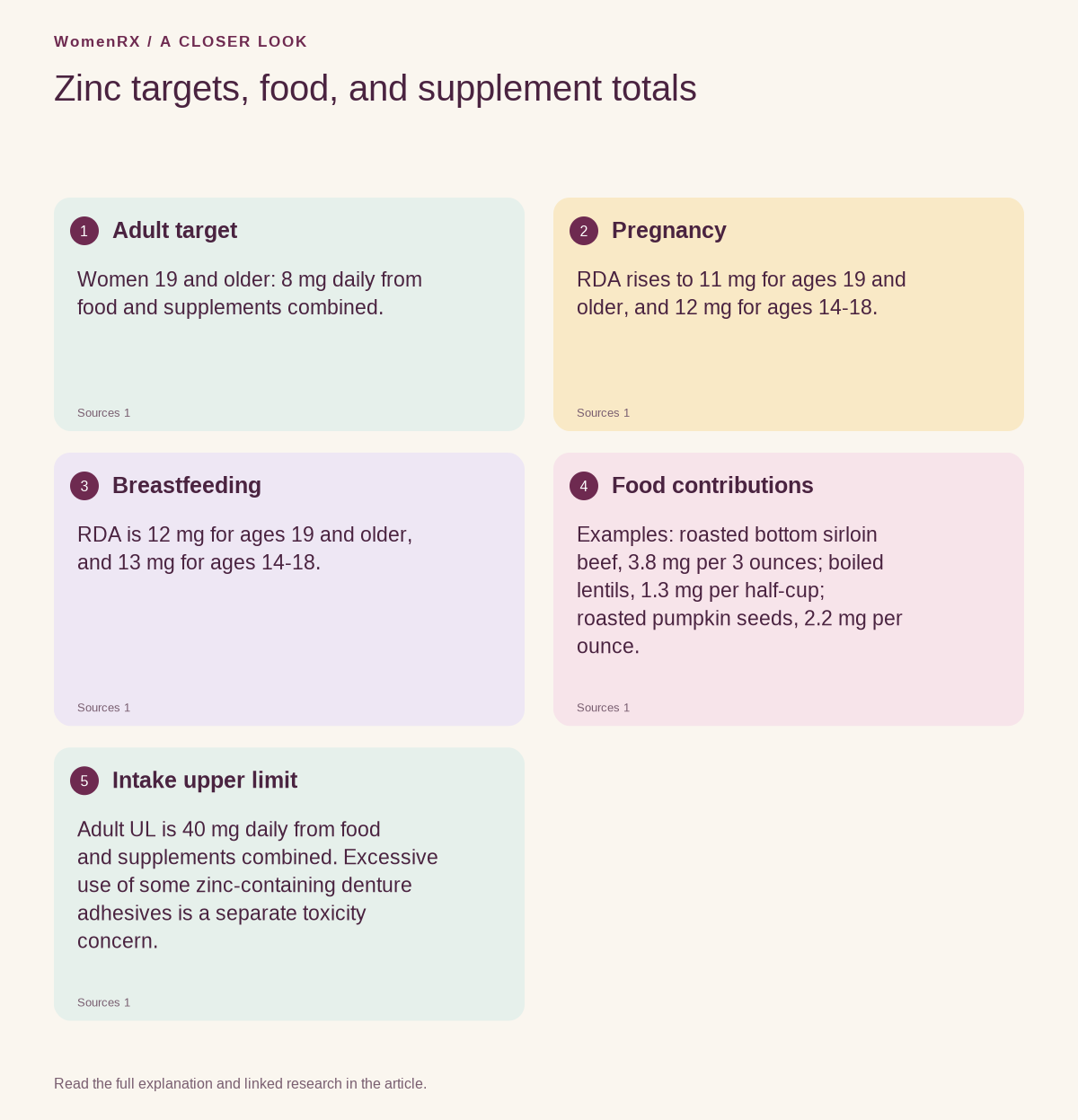
Zinc targets, food, and supplement totals
Adult target: Women 19 and older: 8 mg daily from food and supplements combined.1
Pregnancy: RDA rises to 11 mg for ages 19 and older, and 12 mg for ages 14-18.1
Breastfeeding: RDA is 12 mg for ages 19 and older, and 13 mg for ages 14-18.1
Food contributions: Examples: roasted bottom sirloin beef, 3.8 mg per 3 ounces; boiled lentils, 1.3 mg per half-cup; roasted pumpkin seeds, 2.2 mg per ounce.1
Intake upper limit: Adult UL is 40 mg daily from food and supplements combined. Excessive use of some zinc-containing denture adhesives is a separate toxicity concern.1
Read the figure as text
Compare life-stage intake targets with food examples, label amounts, and the upper limit. The RDA is a total-intake target, not a dose to take as a supplement.- Adult target: Women 19 and older: 8 mg daily from food and supplements combined.1
- Pregnancy: RDA rises to 11 mg for ages 19 and older, and 12 mg for ages 14-18.1
- Breastfeeding: RDA is 12 mg for ages 19 and older, and 13 mg for ages 14-18.1
- Food contributions: Examples: roasted bottom sirloin beef, 3.8 mg per 3 ounces; boiled lentils, 1.3 mg per half-cup; roasted pumpkin seeds, 2.2 mg per ounce.1
- Intake upper limit: Adult UL is 40 mg daily from food and supplements combined. Excessive use of some zinc-containing denture adhesives is a separate toxicity concern.1
More questions, answered
Does a supplement labeled 100% Daily Value mean it meets my pregnancy target?
Not necessarily. The adult Daily Value is 11 mg, while the RDA is 11 mg for pregnancy at age 19 and older but 12 mg for pregnant teens. Also check whether other foods or supplements contribute zinc. 1
Should I take zinc just because I follow a vegan diet?
Not automatically. Plant-based diets can provide zinc, though phytates can lower absorption. Review the foods you regularly eat and the zinc in any multivitamin or other supplement before adding a separate product. 1
Sources you can check
- Zinc - Health Professional Fact SheetAccessed 2026-09-25Return to first citation
- Estimation of Total Usual Dietary Intakes of Pregnant Women in the United States.Bailey RL, Pac SG, Fulgoni VL, Reidy KC, Catalano PM. · JAMA network open · 2019Return to first citation