When Might Estrogen Treatment Start to Help? What We Know by Symptom and Route
Estrogen can help different menopause symptoms, but studies don’t give one dependable countdown for every symptom, product, or person.
There isn’t one reliable timeline for estrogen treatment. Systemic estrogen can reduce hot flashes, but the cited trial results don’t tell you when an individual should first notice relief or compare onset by route. For vaginal symptoms, a small study found improvement at 12 weeks; that’s a measurement point, not proof that relief starts then. 2 3
First, match the treatment to the symptom
“Estrogen treatment” can mean different things. Systemic menopausal hormone therapy is used for symptoms such as hot flashes and night sweats. Vaginal estrogen is a local option for genitourinary symptoms, including vaginal dryness and discomfort with sex, even when hot flashes aren’t part of the picture. 4
That distinction matters when you’re judging whether treatment is helping. A change in hot flashes is not the same outcome as less dryness or pain, and evidence about one route or symptom can’t automatically predict the timing of another. Research has not established a single response schedule that applies to every estrogen product and treatment goal.
Hot flashes: benefit is supported, but not a personal countdown
A secondary analysis of two large randomized trials found that conjugated equine estrogen reduced vasomotor symptoms among postmenopausal participants. In the trial that included estrogen plus medroxyprogesterone acetate, the degree of symptom reduction differed by age group. The results support symptom benefit in the populations studied, but they don’t say how soon a particular person will notice relief or establish a comparison of time to relief across oral and transdermal routes. 3
So if you’re taking systemic estrogen for hot flashes, the useful question is whether their frequency, intensity, or disruption to sleep is changing, rather than whether you have reached a universal “it should work by now” date. That is a way to assess your own goal, not a validated response test. If the change is unclear, ask whether the treatment goal and route still fit your symptoms and plan.
Vaginal symptoms: studies assess improvement over weeks
For vaginal dryness, pain with sex, or related genitourinary symptoms, vaginal estrogen is a different treatment approach from systemic therapy for hot flashes. A systematic review of randomized trials in postmenopausal women found that vaginal estrogen may improve dryness, pain with sex, and some other symptom outcomes in the short term. The studies varied in their treatments and measures, and most lasted 12 weeks or less. 1
One 12-week pilot trial compared vaginal estrogen cream with vaginal hyaluronic acid in women with genitourinary syndrome of menopause. At week 12, participants in both groups had improved symptom scores, with no observed difference between groups on the main symptom measure. Because symptoms were assessed at follow-up, this result doesn’t pinpoint when improvement began. 2
That makes 12 weeks a study assessment point, not a guaranteed wait or a promise that every person will improve by then. If vaginal symptoms are your main concern, assess those symptoms specifically rather than using hot flashes or sleep as a stand-in. Persistent symptoms are a reason to revisit whether the diagnosis, treatment choice, and plan fit what you’re experiencing.
Perimenopause and after menopause
The studies summarized here mainly involved postmenopausal women. They don’t establish a separate time-to-benefit estimate for perimenopause, when symptoms and menstrual patterns may still change. 1 2 For either stage, the clearest comparison is between the symptom you’re treating and the change you actually want: fewer or less disruptive hot flashes, or less vaginal dryness and discomfort.
A short note before treatment and a follow-up comparison can make that change easier to judge. For example, you might record how often hot flashes interrupt sleep, or whether vaginal dryness makes everyday activities or sex uncomfortable. Those notes won’t predict when estrogen should work, but they can help you describe whether the treatment is meeting its goal.
Questions that make a review more useful
If you’re unsure whether treatment is helping, ask: “Which symptom is this treatment meant to improve?” “Is this route intended to treat that symptom?” and “What change should we use to decide whether the plan is working?” If you’re using vaginal estrogen, ask when your specific plan should be reviewed; the 12-week measurement in a study is not a personalized instruction. Estrogen choice also depends on the treatment goal and individual circumstances, so a review can address whether the plan still makes sense for you. 4
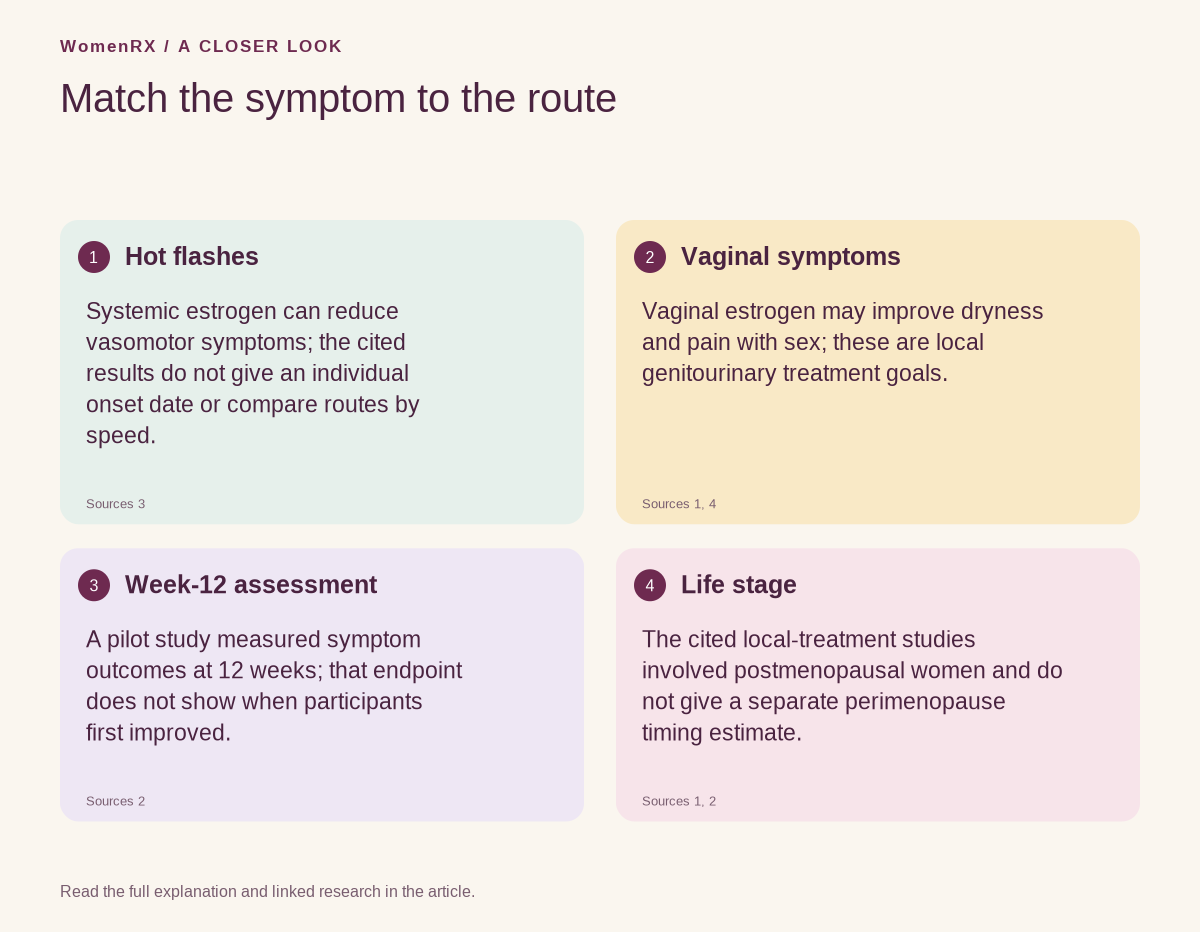
Match the symptom to the route
Hot flashes: Systemic estrogen can reduce vasomotor symptoms; the cited results do not give an individual onset date or compare routes by speed.3
Vaginal symptoms: Vaginal estrogen may improve dryness and pain with sex; these are local genitourinary treatment goals.14
Week-12 assessment: A pilot study measured symptom outcomes at 12 weeks; that endpoint does not show when participants first improved.2
Life stage: The cited local-treatment studies involved postmenopausal women and do not give a separate perimenopause timing estimate.12
Read the figure as text
Different treatment goals have different evidence. A study follow-up point can show whether symptoms changed, but it does not necessarily tell you when relief began.- Hot flashes: Systemic estrogen can reduce vasomotor symptoms; the cited results do not give an individual onset date or compare routes by speed.3
- Vaginal symptoms: Vaginal estrogen may improve dryness and pain with sex; these are local genitourinary treatment goals.14
- Week-12 assessment: A pilot study measured symptom outcomes at 12 weeks; that endpoint does not show when participants first improved.2
- Life stage: The cited local-treatment studies involved postmenopausal women and do not give a separate perimenopause timing estimate.12
More questions, answered
Does vaginal estrogen work for hot flashes?
Vaginal estrogen is used for genitourinary symptoms such as vaginal dryness and discomfort. Systemic hormone therapy is the approach discussed for vasomotor symptoms such as hot flashes. 4
Does estrogen work faster as a patch than as a pill?
The cited findings don’t compare how quickly hot flashes improve with oral versus transdermal estrogen. They support symptom benefit for the treatments studied, not a route-specific time to first relief. 3
Sources you can check
- Hormonal Treatments and Vaginal Moisturizers for Genitourinary Syndrome of Menopause : A Systematic Review.Danan ER, Sowerby C, Ullman KE, Ensrud K, Forte ML, Zerzan N, Anthony M, Kalinowski C, Abdi HI, Friedman JK, Landsteiner A, Greer N, Nardos R, Fok C, Dahm P, Butler M, Wilt TJ, Die... · Annals of internal medicine · 2024Return to first citation
- A randomized, pilot trial comparing vaginal hyaluronic acid to vaginal estrogen for the treatment of genitourinary syndrome of menopause.Agrawal S, Agrawal S, LaPier Z, Nagpal S, Oot A, Friedman S, Hade EM, Nachtigall L, Brucker BM, Escobar C. · Menopause (New York, N.Y.) · 2024Return to first citation
- Menopausal Hormone Therapy and Cardiovascular Diseases in Women With Vasomotor Symptoms: A Secondary Analysis of the Women's Health Initiative Randomized Clinical Trials.Rossouw JE, Aragaki AK, Manson JE, Szmuilowicz ED, Harrington LB, Johnson KC, Allison M, Haring B, Saquib N, Shadyab AH, Rexrode KM, Liu L, Mouton CP, LaCroix AZ. · JAMA internal medicine · 2025Return to first citation
- Current recommendations: what is the clinician to do?Manson JE. · Fertility and sterility · 2014Return to first citation