Vitamin E Supplements: Side Effects and Medication Risks
The main concern with high-dose vitamin E is bleeding, especially when you take a blood thinner or antiplatelet medicine.
Vitamin E from food hasn’t been found to cause the same adverse effects as high-dose supplements. Supplemental vitamin E can interfere with clotting, so check the label and review it with your care team if you take an anticoagulant or antiplatelet medicine. If you notice unexpected bleeding, seek prompt medical advice rather than changing a prescribed blood thinner yourself. 12
Start with the dose on the label
Look for the amount of vitamin E per serving, usually listed in milligrams (mg), and check how many servings you take. Count vitamin E from a standalone supplement as well as a multivitamin, prenatal vitamin, or other product. The U.S. adult recommended dietary allowance is 15 mg per day, including during pregnancy; it’s 19 mg per day while breastfeeding. These are intake recommendations, not a reason to add a supplement if you already get enough. 1
For adults, the U.S. tolerable upper intake level is 1,000 mg per day of supplemental alpha-tocopherol. That limit is not a recommended dose or a guarantee that a lower amount is safe with every medicine. The NIH fact sheet notes that the amount needed to cause a clinically important interaction with blood-thinning medicines isn’t known, though effects are considered more likely above 400 IU per day. 1
When bleeding risk matters most
Vitamin E can inhibit platelets and interfere with vitamin K-dependent clotting factors. Large supplemental doses taken with anticoagulant or antiplatelet medicines may increase bleeding risk. Warfarin is a named example; aspirin is an antiplatelet medicine. The NIH also notes that low vitamin K intake may add to this concern. 12
If you take one of these medicines, show your prescriber or pharmacist the supplement label and the full list of products you use. Don’t stop, skip, or change a prescribed anticoagulant because you’re worried about vitamin E. If you notice unexpected bleeding, contact the clinician managing your medicine promptly rather than trying to adjust it yourself. 1
Other medicine combinations to mention
The NIH describes a specific interaction involving simvastatin and niacin: a combination of vitamin E, vitamin C, selenium, and beta-carotene blunted the rise in HDL cholesterol among people receiving that treatment. This finding concerns the combination, not vitamin E alone, so include all antioxidant ingredients when you review supplements. 1
Antioxidant supplements during chemotherapy or radiation are another situation to discuss with your cancer care team. Oncologists generally advise against them because they might reduce treatment effectiveness, but a systematic review has questioned that concern and more research is needed. Don’t start or stop a supplement during treatment without discussing it with the team overseeing your care. 1
Pregnancy, breastfeeding, and procedures
The recommended daily intake remains 15 mg during pregnancy and rises to 19 mg while breastfeeding; neither figure makes a high-dose supplement necessary. If you’re pregnant or breastfeeding, review a standalone vitamin E product alongside your prenatal or other supplements, especially if you take medicine that affects clotting. 1
If you have a planned procedure, include vitamin E on the list of supplements you share with the surgical team and ask whether they want you to change it. Don’t set your own stop date or change a prescribed blood thinner.
Food and supplements aren’t the same exposure
The NIH reports no adverse effects from vitamin E in food. The concern is chiefly high-dose supplementation, which can affect clotting and has been linked to increased hemorrhagic stroke risk in two clinical trials. One involved Finnish male smokers taking 50 mg daily for an average of six years; the other involved male U.S. physicians taking 400 IU every other day for eight years. Those study populations don’t establish an individual woman’s risk, but they help explain why high-dose products deserve a careful review. 1
A practical next step is to bring the bottle or a clear photo of its label to a medication review. That makes it easier to check the amount, serving size, and overlapping ingredients without changing a prescription on your own.
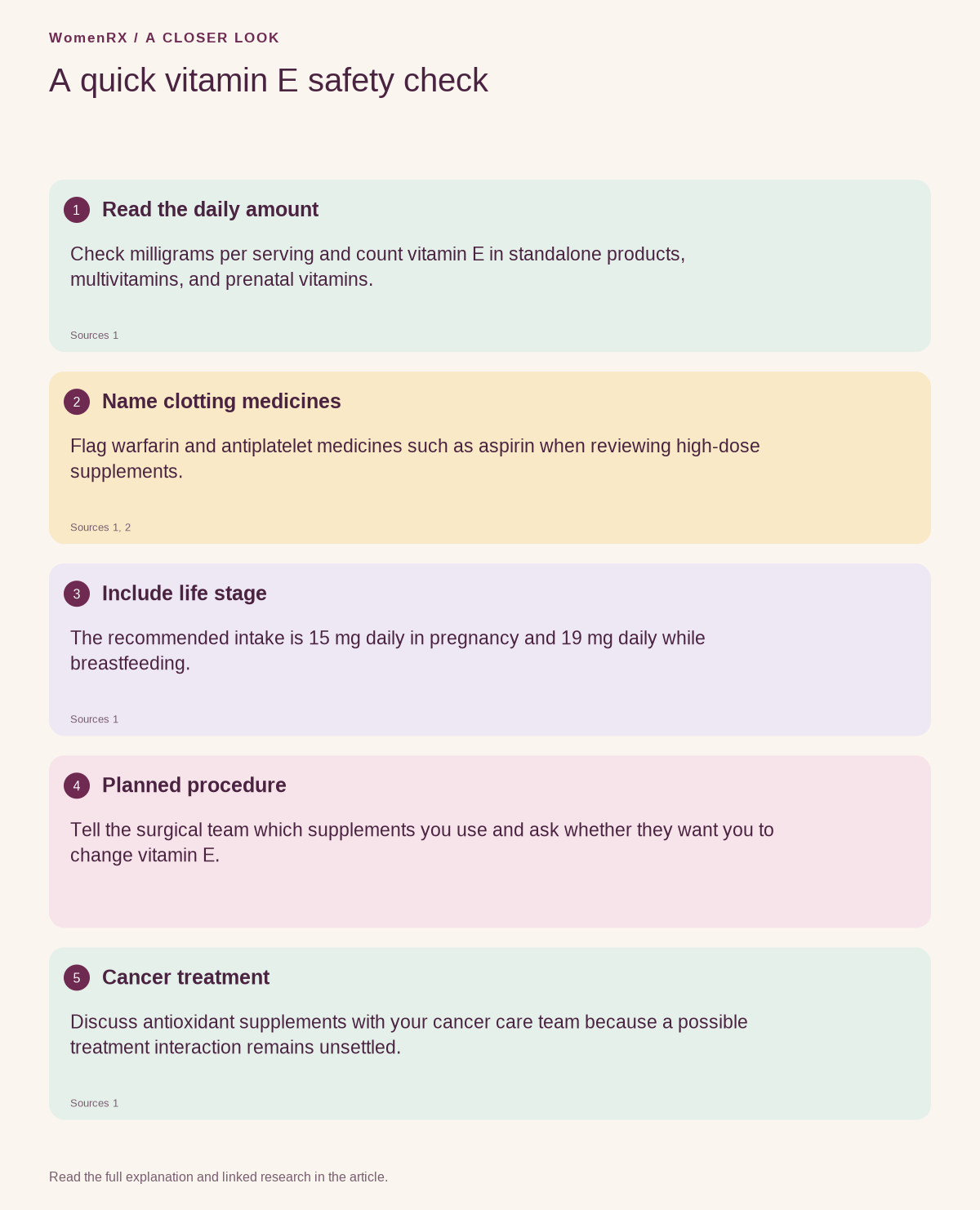
A quick vitamin E safety check
Read the daily amount: Check milligrams per serving and count vitamin E in standalone products, multivitamins, and prenatal vitamins.1
Name clotting medicines: Flag warfarin and antiplatelet medicines such as aspirin when reviewing high-dose supplements.12
Include life stage: The recommended intake is 15 mg daily in pregnancy and 19 mg daily while breastfeeding.1
Planned procedure: Tell the surgical team which supplements you use and ask whether they want you to change vitamin E.
Cancer treatment: Discuss antioxidant supplements with your cancer care team because a possible treatment interaction remains unsettled.1
Read the figure as text
Use these prompts to make a supplement review more specific, particularly if you take a medicine that affects clotting or are pregnant, breastfeeding, or preparing for a procedure.- Read the daily amount: Check milligrams per serving and count vitamin E in standalone products, multivitamins, and prenatal vitamins.1
- Name clotting medicines: Flag warfarin and antiplatelet medicines such as aspirin when reviewing high-dose supplements.12
- Include life stage: The recommended intake is 15 mg daily in pregnancy and 19 mg daily while breastfeeding.1
- Planned procedure: Tell the surgical team which supplements you use and ask whether they want you to change vitamin E.
- Cancer treatment: Discuss antioxidant supplements with your cancer care team because a possible treatment interaction remains unsettled.1
More questions, answered
Should I avoid vitamin E in food if I take warfarin?
The NIH reports no adverse effects from vitamin E in food; its bleeding concern focuses on large supplemental doses taken with anticoagulant or antiplatelet medicines. If you take warfarin, review vitamin E supplements with the prescriber managing it. 1
Does the upper limit mean that amount is safe with a blood thinner?
No. The U.S. upper limit is a general intake ceiling, not a personal safety guarantee. The NIH says the dose that causes a clinically important interaction is unknown, and an EFSA assessment excluded people taking anticoagulant or antiplatelet medicines from its upper-limit target population. 12
Sources you can check
- Vitamin E - Health Professional Fact SheetAccessed 2026-09-25Return to first citation
- Scientific opinion on the tolerable upper intake level for vitamin E.EFSA Panel on Nutrition, Novel Foods and Food Allergens (NDA), Turck D, Bohn T, Castenmiller J, de Henauw S, Hirsch-Ernst KI, Knutsen HK, Maciuk A, Mangelsdorf I, McArdle HJ, Penti... · EFSA journal. European Food Safety Authority · 2024Return to first citation