Vitamin E: Daily Needs, Supplements, and Bleeding Risks
Most adults need 15 mg of vitamin E a day, and food can provide it without a high-dose supplement.
For most adult women, the recommended intake is 15 mg of vitamin E daily; it’s also 15 mg during pregnancy and 19 mg while breastfeeding. These are intake goals, not doses to add on top of food. Many vitamin E-only supplements provide much more than 15 mg, and high-dose products deserve a medicine-interaction check, especially if you take a blood thinner. 1 2
Start with the amount you get from food
For women age 14 and older, the recommended dietary allowance (RDA) for vitamin E is 15 mg of alpha-tocopherol a day. The RDA is an intake goal for nearly all healthy people, not a supplement dose that you need to take in addition to your diet. 1
Nuts, seeds, vegetable oils, and some leafy greens contribute vitamin E. For example, an ounce of dry-roasted sunflower seeds provides 7.4 mg, an ounce of almonds provides 6.8 mg, and half a cup of boiled spinach provides 1.9 mg. Several foods across the day can add up; you don’t have to get the full amount from one food. 1
Why a supplement label may be a surprise
Many vitamin E-only supplements provide at least 67 mg, substantially more than the 15 mg RDA. A product’s amount isn’t a signal that you need that much. Check the Supplement Facts panel for the amount in milligrams, and count vitamin E from other supplements or fortified products too. 1
The adult upper limit is 1,000 mg a day for supplemental alpha-tocopherol. That’s a maximum limit, not a recommended amount or a guarantee that a high dose is right for you. The evidence behind safety at very high intakes is limited, and concern about the upper limit includes possible bleeding effects. 1
For most people, the practical starting point is food rather than a standalone high-dose pill. The fact sheet reports that trials have not shown routine vitamin E supplements prevent cardiovascular disease. One large trial in nearly 40,000 healthy women age 45 and older found no significant difference in overall cardiovascular events or all-cause mortality between women assigned vitamin E and those assigned placebo. That trial tested a high-dose regimen for prevention, not whether someone with a diagnosed deficiency needs treatment. 1
When bleeding and medicines enter the picture
High doses of vitamin E may interfere with blood clotting. MedlinePlus warns that supplements may be harmful for people taking blood thinners and other medicines. If you take a blood thinner, ask a pharmacist or prescriber to check a standalone vitamin E product against your full medication list before adding it. Don’t stop a prescribed medicine on your own. 1 2 3
There is a reason to take the concern seriously, but it’s worth being precise about what research shows. Two clinical trials reported increased hemorrhagic stroke risk among male participants taking vitamin E. In one of those trials, most participants were also taking aspirin, so the finding may suggest a bleeding tendency, but it doesn’t establish the size of any risk for women. 1
Food sources aren’t known to cause these adverse effects. A review is especially useful if you take a blood thinner or are considering a high-dose product. People with liver disease, cystic fibrosis, or Crohn’s disease may need extra vitamin E, according to MedlinePlus; that’s a reason to get individualized guidance, not to guess at a dose. 1 2
Pregnancy and breastfeeding have different targets
The RDA stays at 15 mg a day during pregnancy and rises to 19 mg a day while breastfeeding. These are total daily intake goals, not instructions to take 15 mg or 19 mg in a separate supplement. 1
If you’re pregnant, don’t add a regular or standalone vitamin product based only on its label. Pregnancy guidance distinguishes prenatal vitamins from regular vitamins, which may contain too much or too little of what you need. Bring any extra vitamin E product into the discussion about your prenatal plan, particularly if you take medicine that affects clotting. The intake targets themselves don’t show that high-dose vitamin E supplements improve pregnancy or breastfeeding outcomes. 1 3
A useful rule of thumb: check what you already get from food and your prenatal or multivitamin, then treat a separate high-dose vitamin E product as a medicine-interaction question, not as routine insurance.
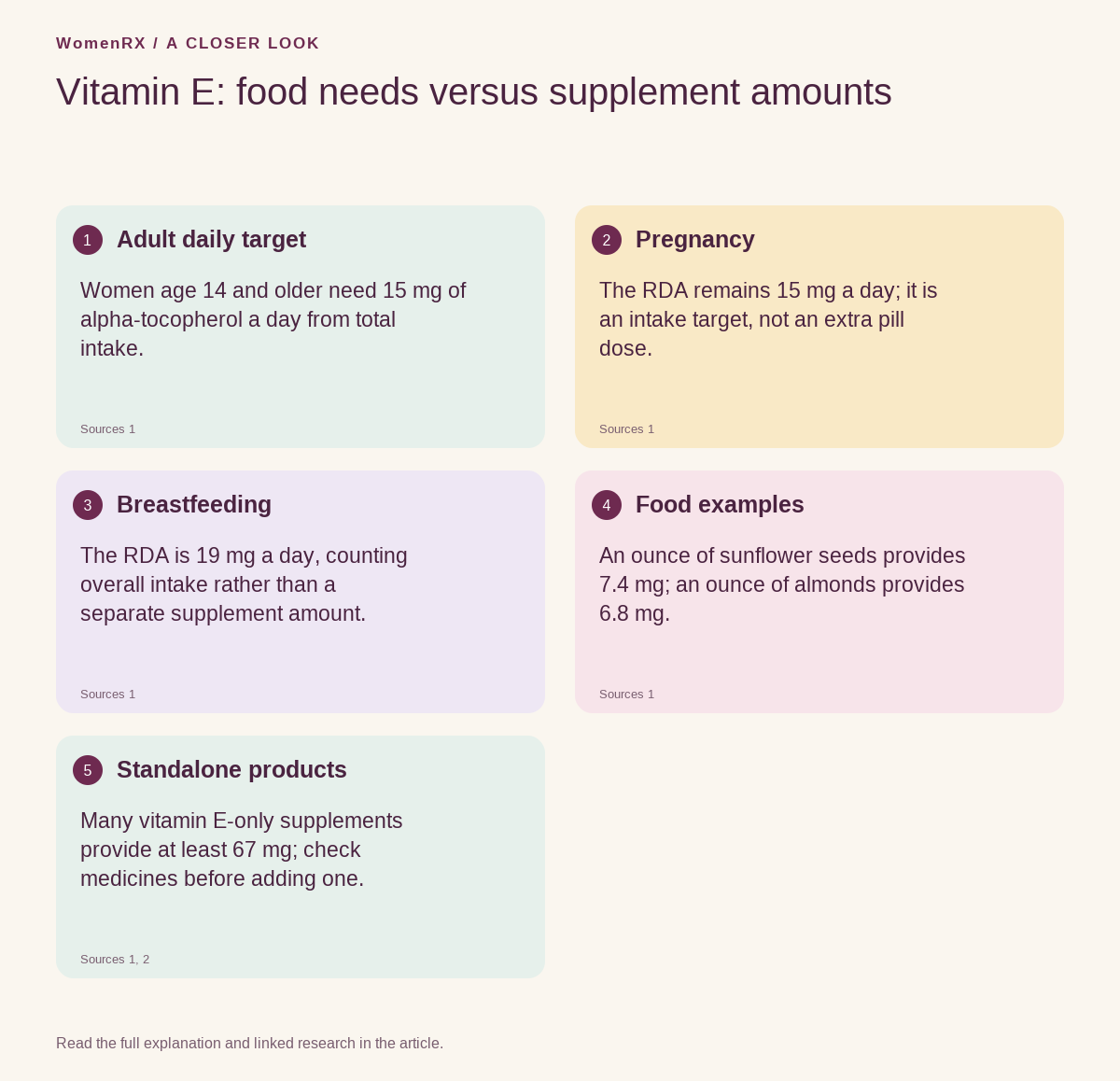
Vitamin E: food needs versus supplement amounts
Adult daily target: Women age 14 and older need 15 mg of alpha-tocopherol a day from total intake.1
Pregnancy: The RDA remains 15 mg a day; it is an intake target, not an extra pill dose.1
Breastfeeding: The RDA is 19 mg a day, counting overall intake rather than a separate supplement amount.1
Food examples: An ounce of sunflower seeds provides 7.4 mg; an ounce of almonds provides 6.8 mg.1
Standalone products: Many vitamin E-only supplements provide at least 67 mg; check medicines before adding one.12
Read the figure as text
Compare the daily intake targets with example food sources and the larger amounts common in standalone supplements.- Adult daily target: Women age 14 and older need 15 mg of alpha-tocopherol a day from total intake.1
- Pregnancy: The RDA remains 15 mg a day; it is an intake target, not an extra pill dose.1
- Breastfeeding: The RDA is 19 mg a day, counting overall intake rather than a separate supplement amount.1
- Food examples: An ounce of sunflower seeds provides 7.4 mg; an ounce of almonds provides 6.8 mg.1
- Standalone products: Many vitamin E-only supplements provide at least 67 mg; check medicines before adding one.12
More questions, answered
Can vitamin E from food raise bleeding risk?
The NIH Office of Dietary Supplements reports no adverse effects from consuming vitamin E in food. The bleeding concern is about high doses of supplements, not ordinary food sources. 1
Does the upper limit mean that amount is safe to take?
No. The adult upper limit of 1,000 mg a day is a maximum limit, not a target or a recommended dose. The safety data at very high intakes are limited. 1
Sources you can check
- Vitamin E - Health Professional Fact SheetAccessed 2026-09-25Return to first citation
- Vitamin E: MedlinePlusAccessed 2026-09-25Return to first citation
- Pregnancy and Medicines | MedlinePlusAccessed 2026-09-25Return to first citation