Vitamin D Supplements: When to Consider One and How to Choose
Whether a vitamin D supplement makes sense depends on your intake, health risks, and sometimes a blood test, not on a promise that more is better.
Vitamin D helps your body absorb calcium, which supports bone health. A supplement may be worth discussing if you have factors such as difficulty absorbing nutrients or take a medicine that can affect vitamin D. A 25-hydroxyvitamin D blood test measures your level. Before choosing a dose, review your food, supplement labels, health history, and exact medicines with your clinician. 12
Start with what you already get
Vitamin D comes from food, supplements, and production in the skin after sun exposure. Few foods naturally contain much vitamin D; fortified foods such as milk, cereal, and yogurt can contribute, as can foods such as egg yolks and saltwater fish. Check labels to see whether a food is fortified. 12
Before adding a pill, look at the vitamin D in your multivitamin and any stand-alone supplement, as well as fortified foods you eat regularly. That gives you a fuller picture than the amount on one bottle alone. The recommended daily amount depends on age and life stage. For example, MedlinePlus lists 600 IU per day during pregnancy and breastfeeding and 800 IU per day for adults 71 and older. These are recommended daily intake amounts, not automatic instructions to take that much as a separate supplement. 12
When a test or tailored advice may help
A blood test called 25-hydroxyvitamin D measures vitamin D in your body. It may be worth asking about if your health history includes difficulty absorbing nutrients, a condition affecting your liver or kidneys, or medicines that can interfere with vitamin D. Older adults and people with dark skin are also identified as having higher deficiency risk. Obesity or previous gastric bypass surgery may be reasons to ask whether testing or additional vitamin D is appropriate. 12
Low intake, poor absorption, limited sun exposure, changes in how the liver or kidneys process vitamin D, and some medicines can all contribute to deficiency. Severe deficiency can cause bone pain and muscle weakness, but those symptoms alone cannot establish your vitamin D level. A blood test gives a measurement; whether testing is useful and what to do with the result depend on your circumstances. 1
Review medicines before choosing a dose
Bring the exact names of your medicines, along with the amounts listed on supplement labels, when you discuss vitamin D. Some cholesterol, seizure, steroid, and weight-loss medicines can interfere with vitamin D absorption or processing. Those are broad categories, not a guarantee that every medicine in a category has the same effect, so have your specific medicines checked. 1
If a supplement makes sense, both vitamin D2 and D3 can raise vitamin D in the blood. D3 may raise it higher and for longer than D2. Vitamin D is fat-soluble, so it may be absorbed better with a meal or snack that contains some fat. These details can help you compare products, but they do not determine the dose that fits you. 2
Avoid trying to correct a suspected deficiency by choosing a much higher dose on your own. Very high vitamin D levels can raise blood calcium and damage the kidneys; most cases of toxicity are linked to supplement overuse. If a test identifies deficiency, ask what amount and duration of treatment fit your situation. 1
Pregnancy, breastfeeding, and later bone health
During pregnancy and breastfeeding, the recommended daily intake listed by MedlinePlus is 600 IU. Check the label on a prenatal or other multivitamin before adding a separate product, so you can discuss your overall intake rather than assuming you need another supplement. If you’re breastfeeding, your baby’s needs are separate: MedlinePlus says breastfed infants should receive their own vitamin D supplement because human milk is a poor source. 12
After menopause, bone health may be on your mind, but menopause by itself does not establish a personal vitamin D dose. Vitamin D helps the body absorb calcium, and deficiency can contribute to loss of bone density. Age, food intake, health history, and medicines are more useful starting points for a supplement discussion than a product marketed specifically to women. 12
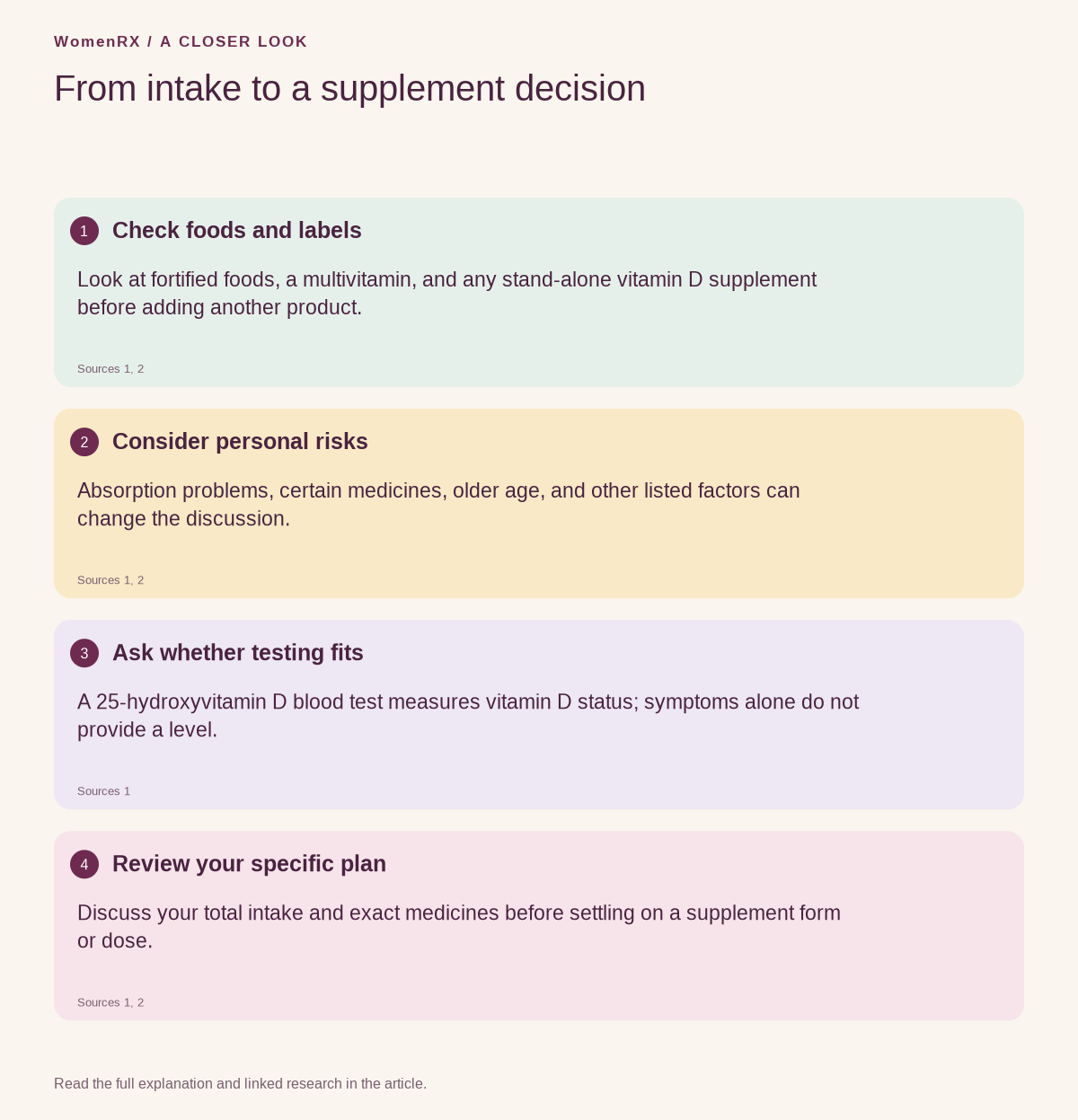
From intake to a supplement decision
Check foods and labels: Look at fortified foods, a multivitamin, and any stand-alone vitamin D supplement before adding another product.12
Consider personal risks: Absorption problems, certain medicines, older age, and other listed factors can change the discussion.12
Ask whether testing fits: A 25-hydroxyvitamin D blood test measures vitamin D status; symptoms alone do not provide a level.1
Review your specific plan: Discuss your total intake and exact medicines before settling on a supplement form or dose.12
Read the figure as text
A useful supplement discussion starts with what you already get and whether your health history calls for testing or a tailored plan.- Check foods and labels: Look at fortified foods, a multivitamin, and any stand-alone vitamin D supplement before adding another product.12
- Consider personal risks: Absorption problems, certain medicines, older age, and other listed factors can change the discussion.12
- Ask whether testing fits: A 25-hydroxyvitamin D blood test measures vitamin D status; symptoms alone do not provide a level.1
- Review your specific plan: Discuss your total intake and exact medicines before settling on a supplement form or dose.12
More questions, answered
Should I choose vitamin D2 or D3?
Both can raise vitamin D in your blood. D3 may raise it higher and for longer than D2, but that comparison does not tell you which dose you need. 2
Does a prenatal vitamin count toward my vitamin D intake?
Yes. Check its label and include that amount when reviewing your overall intake. The 600 IU daily recommendation during pregnancy and breastfeeding is an intake amount, not an instruction to add that much on top of a prenatal vitamin. 12
Sources you can check
- Vitamin D Deficiency: MedlinePlusAccessed 2026-09-25Return to first citation
- Vitamin D: MedlinePlusAccessed 2026-09-25Return to first citation