Vitamin C: When Does Supplementation Matter?
There isn’t one time-to-work answer: correcting a low intake and taking vitamin C for a cold are different questions.
If your vitamin C intake or status is low, supplementation can help address that shortfall, but the available guidance doesn’t give a reliable number of days for symptoms to improve. For colds, regular use at doses studied (at least 200 mg a day) may modestly shorten illness, while starting after symptoms begin hasn’t shown a benefit. If you already get enough vitamin C, more isn’t a guaranteed boost. 1
The reason you’re taking it changes the answer
Vitamin C is needed for collagen formation, wound healing, and other normal body functions. So supplementation matters most when it helps fill a real intake gap or correct a deficiency. That’s different from taking it in hopes of a quick lift in energy, stronger general immunity, or faster recovery from an infection. 1
Most people in the United States get enough vitamin C from food, though a limited food variety and some health conditions can raise the chance of inadequate intake. Fruits and vegetables such as peppers, citrus, kiwifruit, broccoli, and strawberries are useful sources. The vitamin C in supplements is absorbed about as well as vitamin C from food. 1
If your intake or status is low
Severe, prolonged deficiency causes scurvy, which can involve fatigue, gum problems, easy bruising, joint pain, and poor wound healing. A low intake doesn’t automatically mean you have scurvy, and symptoms like fatigue can have many causes. Vitamin C status is typically assessed with a blood plasma measurement. 1
There isn’t a supported universal countdown for when you’ll feel better after correcting low vitamin C. The NIH Office of Dietary Supplements guidance describes how deficiency develops and how status is assessed, but doesn’t give a clinical timeline for symptom improvement after starting supplements. In practice, the question is whether an actual shortfall is being corrected, not whether a supplement should produce a noticeable effect by a particular day.
For general intake, the recommended amount for adult women is 75 mg a day. It’s 85 mg during pregnancy and 120 mg while breastfeeding. These are daily intake recommendations, not a treatment plan for diagnosed deficiency. Food counts toward the total, and many fruits and vegetables contain vitamin C. 1
Colds: regular use is not the same as starting late
For the general population, regular vitamin C supplementation hasn’t meaningfully reduced the chance of catching a cold. In trials of regular use at doses of at least 200 mg a day, cold duration was modestly shorter on average: 8% in adults and 14% in children. Those are relative reductions in duration, not a promise that a cold will end a set number of hours or days sooner. 1
The timing distinction matters: taking vitamin C only after cold symptoms start hasn’t been shown to reduce cold duration or symptom severity. Some studies found lower cold incidence among people exposed to extreme physical exercise or cold environments, but that finding doesn’t establish a prevention benefit for everyone. 1
NHS guidance also describes the overall evidence as limited, saying supplements have little evidence of helping people prevent colds or get better more quickly. 2
The cold research includes adults and children, but the guidance doesn’t report a separate women’s effect. So there’s no basis here for assuming that supplementation works differently for women, or that women should expect a particular onset of benefit.
More isn’t automatically better
The body regulates vitamin C levels. As intake rises, absorption becomes less efficient; vitamin C absorbed in excess of what the body uses can be excreted in urine. That makes a large dose an unreliable shortcut to a faster or stronger effect. 1
High intakes can cause diarrhea, nausea, or abdominal cramps. For adults, including during pregnancy and breastfeeding, the tolerable upper intake level is 2,000 mg a day from food and supplements combined. That is a safety ceiling, not a target. People with kidney disorders or hereditary hemochromatosis have particular reasons to be cautious about high intakes. 1
The practical takeaway is to match the expectation to the reason: address a demonstrated or likely intake gap, don’t expect a supplement started during a cold to act as a rescue treatment, and don’t use a high dose as a substitute for knowing whether you need more vitamin C at all.
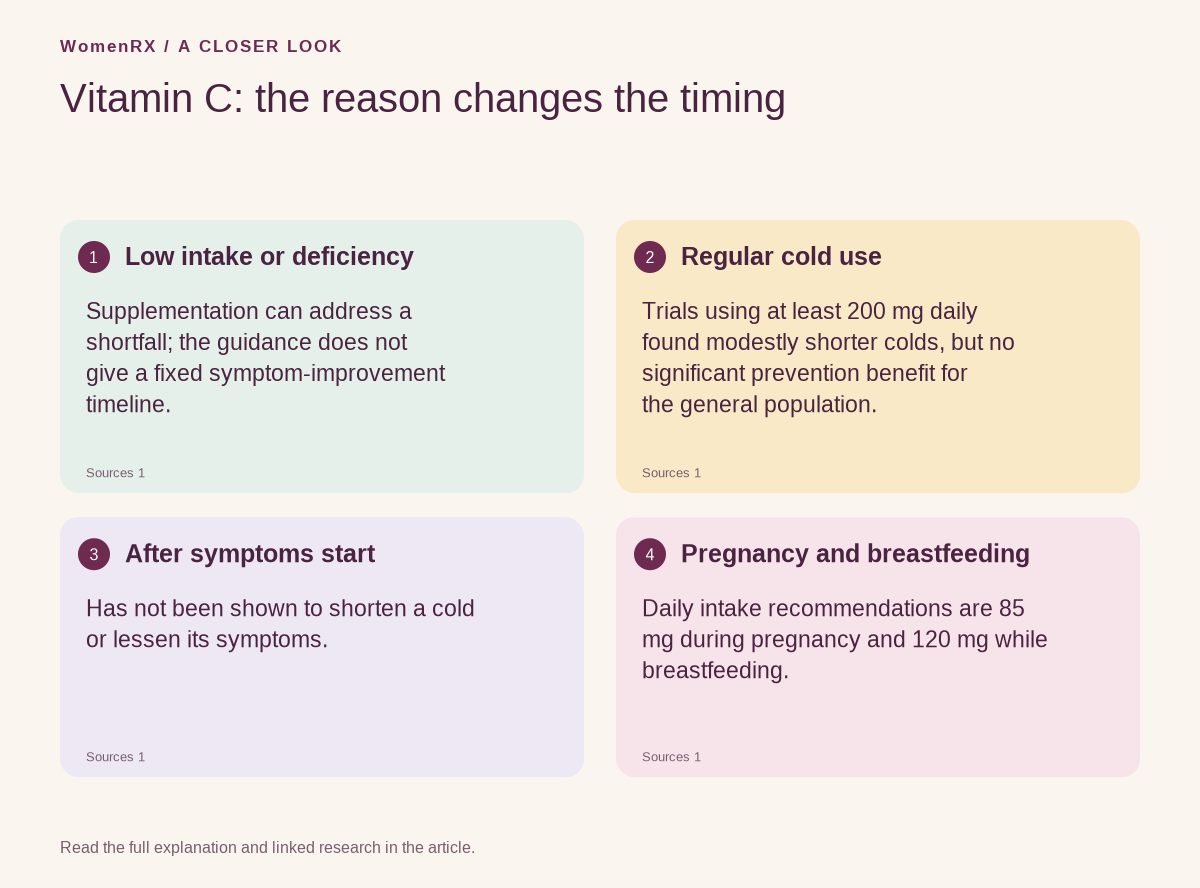
Vitamin C: the reason changes the timing
Low intake or deficiency: Supplementation can address a shortfall; the guidance does not give a fixed symptom-improvement timeline.1
Regular cold use: Trials using at least 200 mg daily found modestly shorter colds, but no significant prevention benefit for the general population.1
After symptoms start: Has not been shown to shorten a cold or lessen its symptoms.1
Pregnancy and breastfeeding: Daily intake recommendations are 85 mg during pregnancy and 120 mg while breastfeeding.1
Read the figure as text
Compare what supplementation is intended to do with what the evidence says about timing.- Low intake or deficiency: Supplementation can address a shortfall; the guidance does not give a fixed symptom-improvement timeline.1
- Regular cold use: Trials using at least 200 mg daily found modestly shorter colds, but no significant prevention benefit for the general population.1
- After symptoms start: Has not been shown to shorten a cold or lessen its symptoms.1
- Pregnancy and breastfeeding: Daily intake recommendations are 85 mg during pregnancy and 120 mg while breastfeeding.1
More questions, answered
Does vitamin C prevent colds?
Regular supplementation hasn’t significantly reduced cold risk in the general population. A lower incidence was reported in studies of people under extreme physical exercise or cold exposure, but that result shouldn’t be generalized to everyone. 1
How much vitamin C do I need during pregnancy or breastfeeding?
The recommended daily intake is 85 mg during pregnancy and 120 mg while breastfeeding. These figures include vitamin C from food and supplements; they aren’t treatment doses for deficiency. 1
Sources you can check
- Vitamin C - Health Professional Fact SheetAccessed 2026-09-25Return to first citation
- Common cold - NHSAccessed 2026-09-25Return to first citation