Vitamin C Benefits: What’s Proven and What Isn’t
Vitamin C has essential jobs in the body, but those jobs don’t mean a supplement prevents disease.
Vitamin C is needed to make collagen and certain other compounds, supports immune function, and helps your body absorb iron from plant foods. Getting enough prevents deficiency, but taking extra isn’t proven to prevent most illnesses. For colds, regular use may modestly shorten their duration, while starting it after symptoms begin doesn’t appear to help. Food and supplements provide similarly absorbed vitamin C. 1
What vitamin C does in your body
Vitamin C is an essential nutrient: humans can’t make it, so we have to get it from food or supplements. The body uses it to make collagen, a protein that helps form connective tissue and supports wound healing. It also helps make carnitine and certain neurotransmitters, contributes to immune function, and improves absorption of nonheme iron, the type found in plant foods. These are established roles, not proof that taking extra vitamin C treats a disease. 1
A severe, sustained shortage can cause scurvy, which weakens connective tissue and can lead to symptoms such as fatigue, bleeding gums, joint pain, and poor wound healing. Scurvy is rare in developed countries, but inadequate intake can still be a concern when someone has a very limited food variety or problems with absorption. 1
For most adults, the recommended intake is 75 mg per day for women and 90 mg for men. The recommendation is 85 mg during pregnancy and 120 mg while breastfeeding; women who smoke need 35 mg more per day than nonsmokers. These are intake targets for meeting nutrient needs, not amounts shown to prevent chronic disease. 1
Food and supplements aren’t separate kinds of vitamin C
Citrus fruit is one option, but peppers, kiwifruit, strawberries, broccoli, and Brussels sprouts are also useful sources. For example, one medium orange provides 70 mg, while half a cup of raw red pepper provides 95 mg. Cooking and prolonged storage can reduce vitamin C in foods. 1
The ascorbic acid in common supplements has similar bioavailability to vitamin C naturally present in foods. So a supplement can provide the nutrient, but that doesn’t make its effects interchangeable with eating fruits and vegetables as part of a varied diet. Studies linking higher fruit and vegetable intake to health outcomes can’t by themselves show that vitamin C is responsible; those foods contain other nutrients and compounds too. 1
What supplement studies say about illness
Common colds: In the general population, taking vitamin C regularly doesn’t appear to prevent colds. Trials suggest regular use may modestly shorten a cold: by about 8% in adults and 14% in children. Starting vitamin C after symptoms begin doesn’t appear to reduce the cold’s duration or severity. Results differ for people exposed to extreme physical exercise or cold environments, among whom trials found fewer colds with regular use. That finding isn’t a general prevention promise. 1
Cancer and heart disease: Observational studies of diet have sometimes linked higher vitamin C intake with lower disease risk, but those findings don’t establish cause and effect. Most randomized trials of vitamin C supplements, alone or in combinations, haven’t shown cancer prevention. In a large trial of a combination of antioxidants, cancer incidence was lower in men but not women; because several nutrients were given together, the result doesn’t show that vitamin C caused the difference or that women respond differently to vitamin C alone. 1
In a trial of 8,171 women aged 40 or older with a history of cardiovascular disease, 500 mg of vitamin C daily for an average of 9.4 years didn’t affect overall cardiovascular events. This was a study of women who already had cardiovascular disease, not proof about every possible use or population. Still, it’s a useful example of why a biological role or encouraging observational association isn’t enough to establish a supplement benefit. 1
Cancer treatment: Research on vitamin C as a cancer treatment is not the same as research on everyday oral supplements. A systematic review of 19 cancer trials found that only four used random assignment to vitamin C or placebo; the review concluded the evidence didn’t establish a clinically relevant benefit for cancer patients generally. Oral and intravenous vitamin C can produce very different blood concentrations, but that difference does not establish that either route is an effective cancer treatment. 1 2
A practical way to judge a vitamin C claim
Ask what outcome was actually studied. A finding that vitamin C is needed for collagen production supports the importance of getting enough; it doesn’t show that taking extra improves skin, heals wounds faster in people who already get enough, or prevents illness. A finding from food-intake research is not automatically evidence for a pill. And when a study tests a blend of antioxidants, it can’t isolate vitamin C’s effect. 1
If you’re considering a supplement, check how much it adds to what you already get from food and other products. For adults, the upper intake level is 2,000 mg per day from food and supplements combined; that’s a safety limit, not a target. High intakes can cause diarrhea, nausea, and abdominal cramps. The relationship between vitamin C and kidney stones is uncertain overall, though extra caution is relevant for people with existing hyperoxaluria; high supplemental intake can also be a concern with hereditary hemochromatosis because vitamin C increases iron absorption. 1
The clearest case for vitamin C is meeting your nutrient needs and preventing deficiency. Beyond that, benefits depend on the specific outcome, population, and form of vitamin C studied, and many popular disease-prevention claims go further than the evidence.
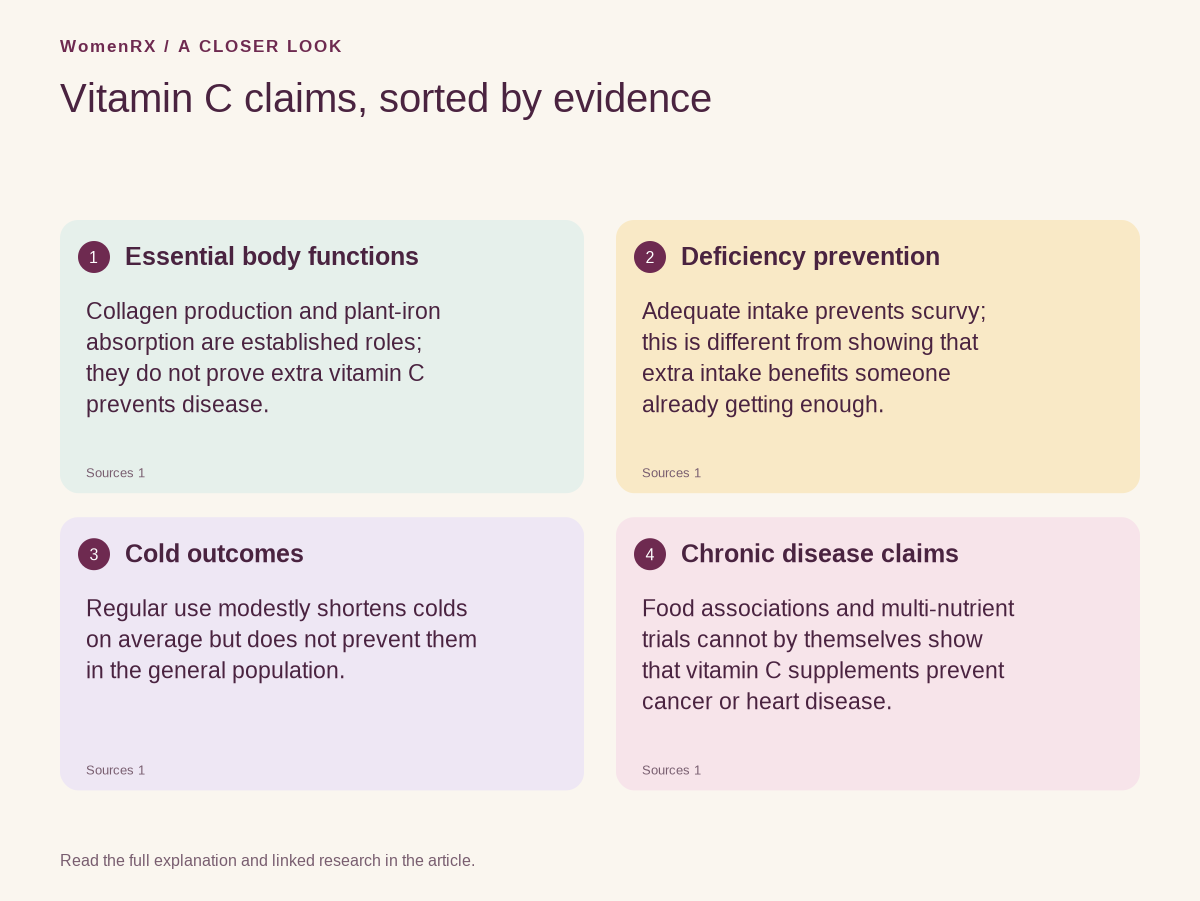
Vitamin C claims, sorted by evidence
Essential body functions: Collagen production and plant-iron absorption are established roles; they do not prove extra vitamin C prevents disease.1
Deficiency prevention: Adequate intake prevents scurvy; this is different from showing that extra intake benefits someone already getting enough.1
Cold outcomes: Regular use modestly shortens colds on average but does not prevent them in the general population.1
Chronic disease claims: Food associations and multi-nutrient trials cannot by themselves show that vitamin C supplements prevent cancer or heart disease.1
Read the figure as text
These distinctions show why a nutrient’s role in the body, a food association, and a supplement trial answer different questions.- Essential body functions: Collagen production and plant-iron absorption are established roles; they do not prove extra vitamin C prevents disease.1
- Deficiency prevention: Adequate intake prevents scurvy; this is different from showing that extra intake benefits someone already getting enough.1
- Cold outcomes: Regular use modestly shortens colds on average but does not prevent them in the general population.1
- Chronic disease claims: Food associations and multi-nutrient trials cannot by themselves show that vitamin C supplements prevent cancer or heart disease.1
More questions, answered
Does an antioxidant effect prove vitamin C prevents disease?
No. Antioxidant activity is a biological property. Whether taking a supplement changes disease risk has to be tested in studies that measure that outcome; most randomized trials have not shown cancer-prevention benefits from vitamin C supplements. 1
Does the evidence show a vitamin C benefit unique to women?
Current evidence doesn’t establish a benefit unique to women. Some studies enrolled women, including a cardiovascular trial that found no overall event benefit, while a cancer-prevention trial of several antioxidants found different results in men and women but could not isolate vitamin C. 1
Sources you can check
- Vitamin C - Health Professional Fact SheetAccessed 2026-09-25Return to first citation
- The Effect of Vitamin C (Ascorbic Acid) in the Treatment of Patients with Cancer: A Systematic Review.van Gorkom GNY, Lookermans EL, Van Elssen CHMJ, Bos GMJ. · Nutrients · 2019Return to first citation