Vaginal Estrogen Side Effects: What to Do and When to Seek Advice
Mild irritation may settle, but bleeding after menopause deserves assessment even when it begins after vaginal estrogen.
Mild headache, vaginal discomfort, or irritation can happen after starting vaginal estrogen and may improve with time. Use the product as directed, and contact the prescriber if symptoms are severe, persist, or bother you. If you’ve gone through menopause, report any vaginal bleeding, even a single episode; don’t assume it’s just a side effect. 1 2 3
Start with the symptom, not the assumption
Vaginal estrogen is used for menopause-related vaginal dryness and irritation. Because it’s applied locally, its intended role is to relieve these vaginal symptoms, rather than hot flashes or other menopause symptoms. Some people have no side effects; others notice mild symptoms, particularly early in treatment. 3
The key distinction is between discomfort that’s mild and improving, and symptoms that need assessment. Timing alone can’t tell you why bleeding started, so don’t label it a medication side effect without checking.
If you have mild discomfort or a headache
Vaginal or abdominal discomfort and headaches are among the side effects reported with vaginal estrogen. Headaches may last a few days after starting; mild vaginal itching or soreness may also occur. Follow the instructions for your specific product and use its applicator as directed. If vaginal pain or itching hasn’t improved after a week, or a headache is severe or lasts longer than a week, contact your prescriber. 2 3
A symptom that’s getting worse, keeps returning, or interferes with your day is also worth raising. A prescriber may discuss changing the dose or trying a different form of vaginal estrogen; don’t change your treatment based on a guess about the cause. 4
If you notice any bleeding after menopause
Bleeding after menopause should be checked, even if it happened only once or you’re unsure whether it was blood. This applies if spotting or bleeding begins after starting vaginal estrogen, too. Some bleeding can occur early in hormone treatment, but that doesn’t show what caused it or rule out another explanation. 1 2 3
There are several possible causes. Thinning or inflammation of the vaginal or uterine lining and noncancerous polyps are among the common ones; a thickened uterine lining is another possibility, and bleeding can less commonly be linked to cancer. An assessment helps identify the cause rather than relying on when the bleeding started. 1
Contact your clinician promptly to arrange an assessment. Make sure to mention that you’re using vaginal estrogen, when you started, and when the bleeding occurred. Guidance for vaginal estrogen also advises contacting a clinician about heavy bleeding or unexpected bleeding after several months of use. Don’t wait for a particular treatment milestone if you have bleeding after menopause. 1 2
If symptoms suggest an infection
Contact a clinician if you have vaginal pain or itching along with symptoms such as a fever or an urgent need to urinate. Those symptoms may need assessment rather than an adjustment to estrogen alone. 2
When to seek urgent care
Pain, redness, or swelling in one leg can be a sign of a blood clot and warrants urgent medical advice. Seek urgent care rather than waiting for a routine follow-up. 2
Choose the next step by the symptom
For mild discomfort that’s improving, follow the product directions and keep an eye on how it changes. For symptoms that persist, worsen, or trouble you, contact the prescriber to discuss what to do next. For any bleeding after menopause, arrange an assessment, even if it’s light or brief. For new one-sided leg pain, redness, or swelling, seek urgent medical advice. These steps help you respond to the symptom without assuming what caused it.
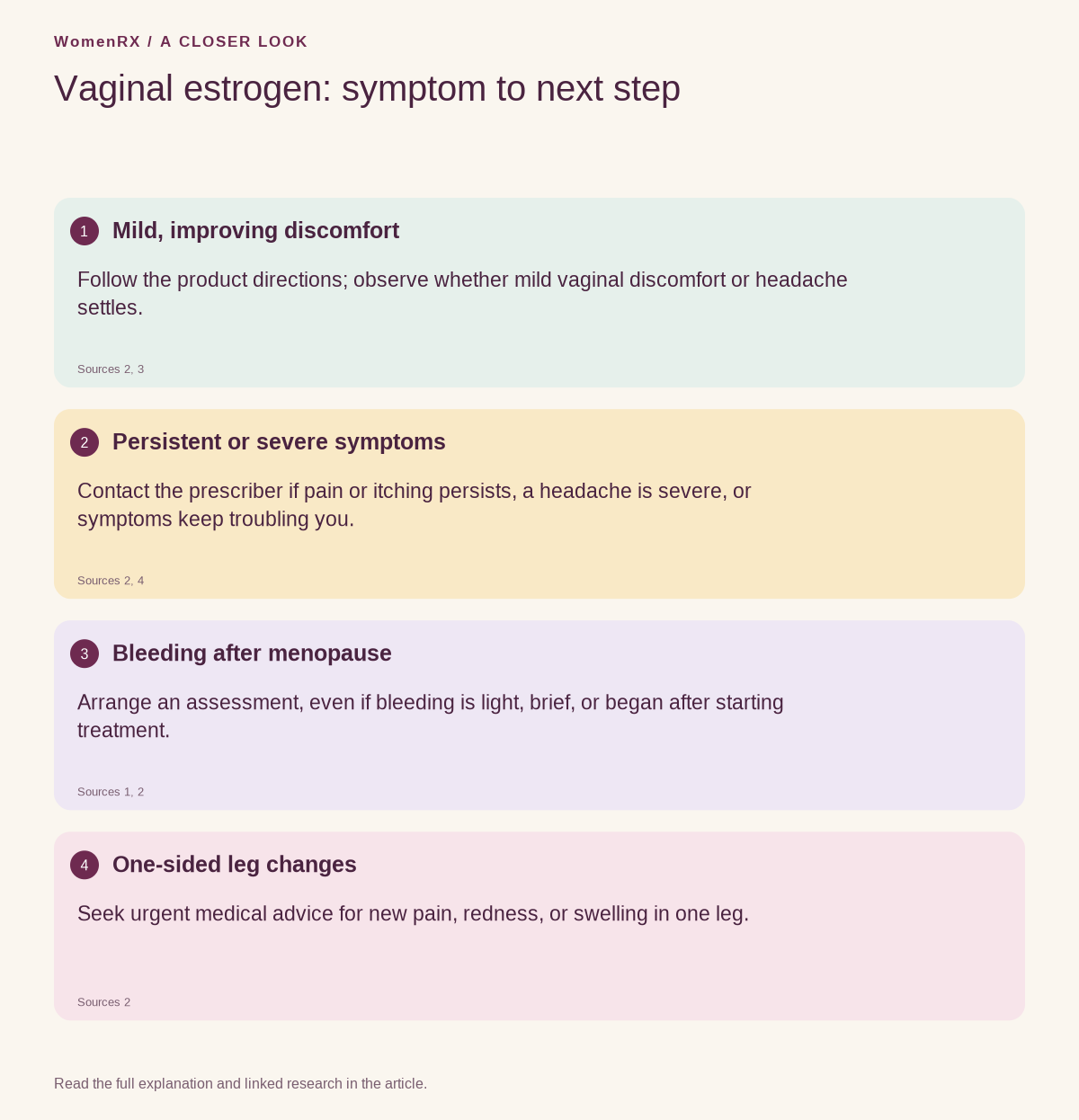
Vaginal estrogen: symptom to next step
Mild, improving discomfort: Follow the product directions; observe whether mild vaginal discomfort or headache settles.23
Persistent or severe symptoms: Contact the prescriber if pain or itching persists, a headache is severe, or symptoms keep troubling you.24
Bleeding after menopause: Arrange an assessment, even if bleeding is light, brief, or began after starting treatment.12
One-sided leg changes: Seek urgent medical advice for new pain, redness, or swelling in one leg.2
Read the figure as text
Use the symptom you notice to choose a sensible next action; this guide does not diagnose the cause.- Mild, improving discomfort: Follow the product directions; observe whether mild vaginal discomfort or headache settles.23
- Persistent or severe symptoms: Contact the prescriber if pain or itching persists, a headache is severe, or symptoms keep troubling you.24
- Bleeding after menopause: Arrange an assessment, even if bleeding is light, brief, or began after starting treatment.12
- One-sided leg changes: Seek urgent medical advice for new pain, redness, or swelling in one leg.2
Sources you can check
- Postmenopausal bleeding - NHSAccessed 2026-09-25Return to first citation
- Side effects of vaginal oestrogen - NHSAccessed 2026-09-25Return to first citation
- About vaginal oestrogen - NHSAccessed 2026-09-25Return to first citation
- Common questions about vaginal oestrogen - NHSAccessed 2026-09-25Return to first citation