Vaginal Estrogen Side Effects: Local Effects and Safety Questions
Most side effects are minor or improve, but bleeding, persistent discomfort, and certain medical-history concerns deserve a closer look.
Vaginal estrogen can cause irritation or pain in or around the vagina, abdominal pain, headache, or bleeding, though many people have no side effects or only minor ones. Low-dose products act mainly in the vagina, but some estrogen reaches the rest of the body. Creams, tablets, and rings differ in use, so don’t assume they’ll feel alike or have identical absorption. 1245
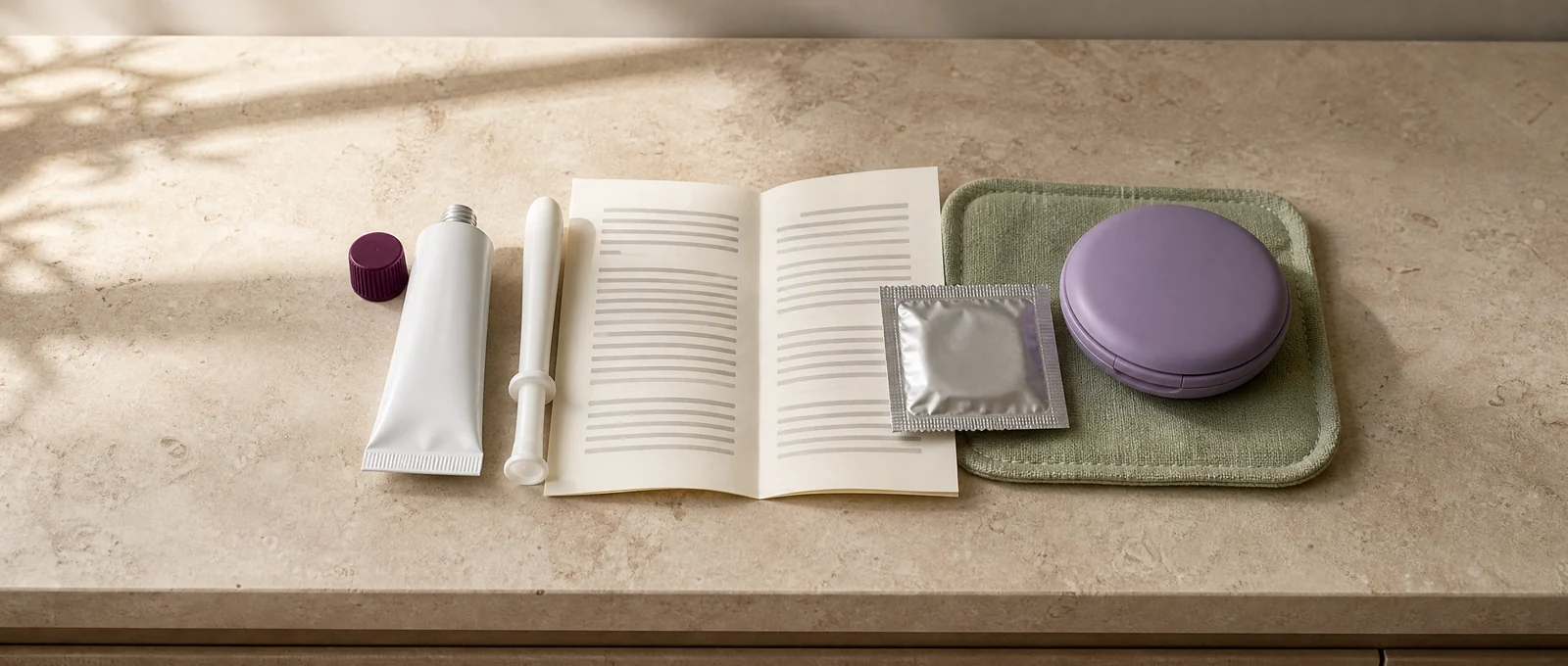
What’s a side effect, and what might be something else?
Vaginal estrogen treats dryness and irritation related to falling estrogen levels around and after menopause. That creates a frustrating overlap: irritation or discomfort while using it might be related to the product, but it might also be a symptom that hasn’t improved yet. Headache, abdominal or vaginal pain, and bleeding are also reported early effects; these often improve during the first few months. 12
Pay attention to what changes after you start. For example, new soreness with insertion is a different question from dryness that was already there. If pain or itching isn’t improving, ask whether the product or its form could be contributing. If you also have a fever or an urgent need to urinate, an infection may need attention rather than a change in estrogen product. 12
Bleeding deserves its own conversation. It can occur after starting vaginal estrogen, but don’t assume heavy or unexpected bleeding is simply a side effect. Tell your clinician about it, particularly if bleeding appears or changes after you’ve been using treatment for several months. 1
Choosing a form changes the practical questions
Creams, tablets, and rings all deliver estrogen vaginally, but they aren’t used the same way. An applicator may be uncomfortable for one person; someone else may dislike the idea of leaving a ring in place. Those are good reasons to discuss a different form. They aren’t evidence that the alternative will necessarily cause fewer side effects or deliver exactly the same amount of estrogen to the rest of the body. 245
There’s one especially useful detail if you use barrier contraception: some estrogen creams and gels can damage condoms and diaphragms and make them less reliable. Check the instructions for your particular product and ask about compatibility before relying on either method. 4
What does “local” mean for safety?
Low-dose vaginal estrogen is meant to relieve vaginal symptoms, not hot flashes or sleep problems. Little of the medicine generally reaches the rest of the body compared with systemic hormone therapy, but local treatment doesn’t mean zero exposure. The amount may matter when you’re discussing a particular product and your medical history. 25
A 2026 clinical review reports that large observational studies found no increase in breast or endometrial cancer or cardiovascular events among average-risk women using low-dose vaginal estrogen. That’s reassuring for that group, but observational findings can’t guarantee no risk for an individual or answer the same question for someone with a cancer history. 5
If you’ve had breast cancer, bring that up before choosing treatment, especially if you take an aromatase inhibitor. Decisions in this situation call for input from your oncology team and the clinician treating your vaginal symptoms; the review urges particular caution with aromatase-inhibitor use. 5
Changes not to brush off
Persistent or worsening vaginal pain or itching, possible infection symptoms, and heavy or unexpected bleeding warrant a call to your clinician. Report a new breast lump or breast changes, too. Seek prompt medical attention for pain, redness, or swelling in one leg; sudden swelling of the mouth or throat or trouble breathing needs emergency care. None of these symptoms proves vaginal estrogen caused the problem, but they shouldn’t be treated as routine irritation. 1
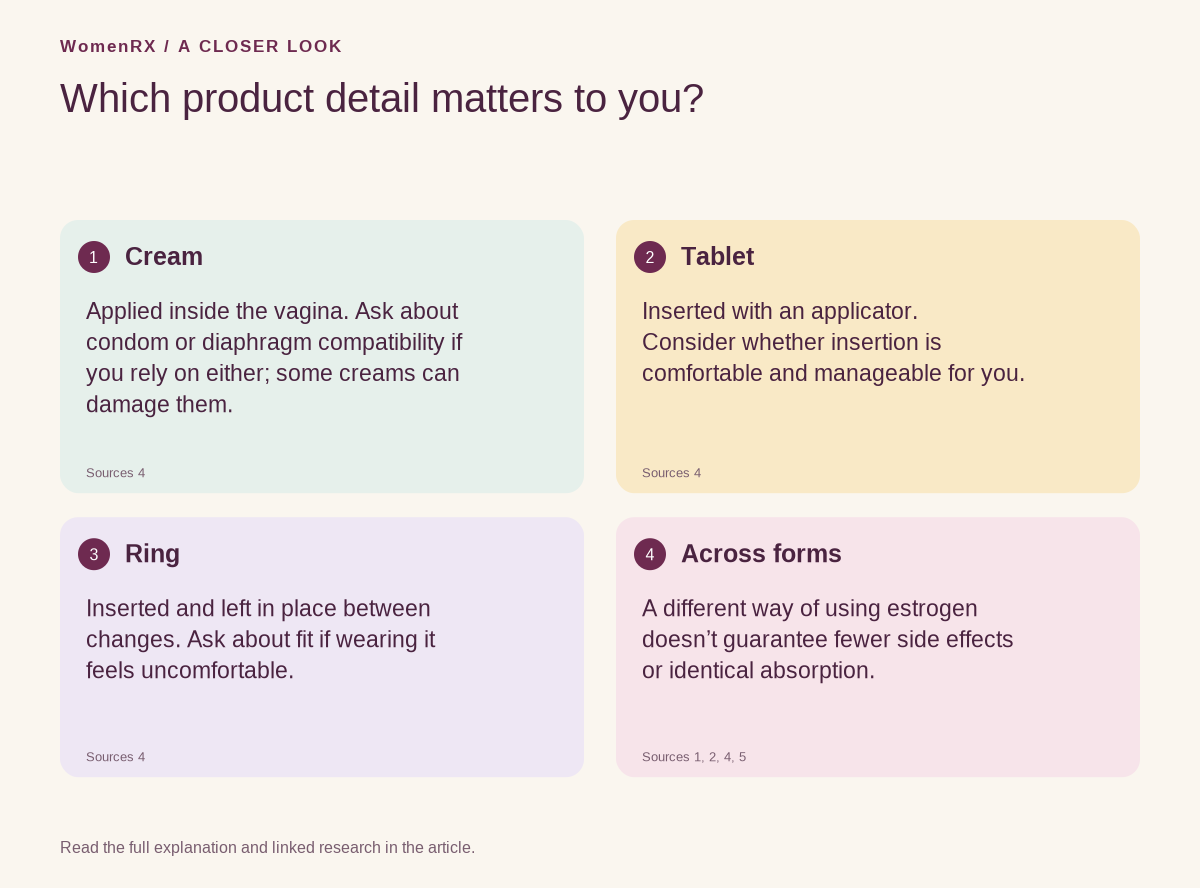
Which product detail matters to you?
Cream: Applied inside the vagina. Ask about condom or diaphragm compatibility if you rely on either; some creams can damage them.4
Tablet: Inserted with an applicator. Consider whether insertion is comfortable and manageable for you.4
Ring: Inserted and left in place between changes. Ask about fit if wearing it feels uncomfortable.4
Across forms: A different way of using estrogen doesn’t guarantee fewer side effects or identical absorption.1245
Read the figure as text
The form you choose changes how treatment fits into daily life, even when the goal is the same: relief of local symptoms.- Cream: Applied inside the vagina. Ask about condom or diaphragm compatibility if you rely on either; some creams can damage them.4
- Tablet: Inserted with an applicator. Consider whether insertion is comfortable and manageable for you.4
- Ring: Inserted and left in place between changes. Ask about fit if wearing it feels uncomfortable.4
- Across forms: A different way of using estrogen doesn’t guarantee fewer side effects or identical absorption.1245
More questions, answered
Do I need a progestogen with low-dose vaginal estrogen?
Generally, no. Unlike systemic estrogen, vaginal estrogen typically doesn’t require a progestogen to protect the uterus because little medicine reaches the rest of the body. Ask how that applies to the specific product you’re considering. 2
What if vaginal estrogen isn’t helping?
It can take up to three months to work fully. If symptoms haven’t improved by then, discuss whether another form or a different approach makes sense rather than assuming all vaginal estrogen products will feel the same. 3
Sources you can check
- Side effects of vaginal oestrogen - NHSAccessed 2026-09-25Return to first citation
- About vaginal oestrogen - NHSAccessed 2026-09-25Return to first citation
- Common questions about vaginal oestrogen - NHSAccessed 2026-09-25Return to first citation
- How and when to use vaginal oestrogen - NHSAccessed 2026-09-25Return to first citation
- Case-Based Perspectives on the Management of Genitourinary Syndrome of Menopause.Cyriac J, Sood R. · Clinics and practice · 2026Return to first citation