Vaginal Dryness After Menopause: When to Get Help
Dryness often responds to simple measures, but symptoms that persist, disrupt your life, or come with bleeding deserve a closer look.
Menopause-related changes can cause vaginal dryness, irritation, pain with sex, and sometimes urinary symptoms, but those symptoms don’t establish the cause on their own. Seek an assessment if dryness persists despite self-care, affects daily life, or comes with unusual discharge or bleeding. Bring up frequent urination or repeated suspected UTIs too. Lubricants, moisturizers, and prescription treatments serve different purposes. 1 4 5
When dryness may be part of a wider pattern
As estrogen levels fall around menopause, vaginal dryness and irritation can develop. Some women also notice soreness, itching, pain with sex, urinary urgency or discomfort, or repeated urinary tract infections (UTIs). When these symptoms are related to menopause, the pattern is called genitourinary syndrome of menopause, or GSM. You don’t need to have every symptom for the problem to be worth addressing. 1 2 5
The distinction matters because dryness isn’t always caused by menopause. Lack of arousal during sex, irritation from products, and conditions such as diabetes or Sjögren’s syndrome can also play a part. Urinary symptoms deserve the same open-minded approach: they may occur alongside GSM, but don’t assume every episode of urinary discomfort is menopause-related. 1 5
When to arrange an assessment
Make an appointment if dryness has lasted a few weeks and what you’ve tried hasn’t helped, or if it’s affecting daily comfort or sex. Unusual vaginal discharge also calls for assessment. Bleeding after sex, between periods, or after menopause should be checked rather than attributed to dryness. 1
If you’re peeing more often than usual, have urinary discomfort, or keep having suspected UTIs, raise that directly, particularly if the symptoms are recurring or affecting daily life. An assessment can consider whether menopause-related changes fit the pattern or whether another cause needs attention. You don’t have to decide that yourself before asking for help. 1 5
Match the option to the discomfort
If friction during sex is the main problem, a water-based lubricant is an option to try at the time of sex. If dryness bothers you at other times too, a vaginal moisturizer is intended to help keep the area moist. Choose products made for vaginal use. Perfumed washes, douches, and ordinary body creams or lotions may make irritation worse. 1
If symptoms remain bothersome, ask about treatment for GSM. The North American Menopause Society recommends considering low-dose vaginal estrogen or other therapies when over-the-counter options haven’t relieved bothersome GSM symptoms and there isn’t another reason to use systemic hormone therapy. Vaginal estrogen is placed in the vagina and is used for symptoms such as dryness and irritation. It doesn’t treat hot flashes, mood changes, or sleep problems. Whether it suits you is a conversation about your symptoms, health history, and preferences, not an automatic next step. 2 4
Other GSM treatments named in the menopause guidance include vaginal dehydroepiandrosterone and oral ospemifene. Their routes differ, which may matter if you’d rather use a vaginal product or avoid one. If you also have bothersome hot flashes or other symptoms beyond vaginal discomfort, say so: systemic hormone therapy is a separate discussion, with benefits and risks that vary by treatment and individual circumstances. 4
Say what you want treatment to change
A useful starting point is specific: “Sex is uncomfortable because of friction,” “I feel dry throughout the day,” or “I keep having urinary symptoms as well.” Mention whether you’re still having periods, whether there’s been any bleeding or unusual discharge, and what you’ve already tried. Then say what you’d prefer to discuss first, whether that’s a nonhormonal product, a local vaginal treatment, or help with a broader set of menopause symptoms. Those details make it easier to choose a next step that addresses your concern. 1 4
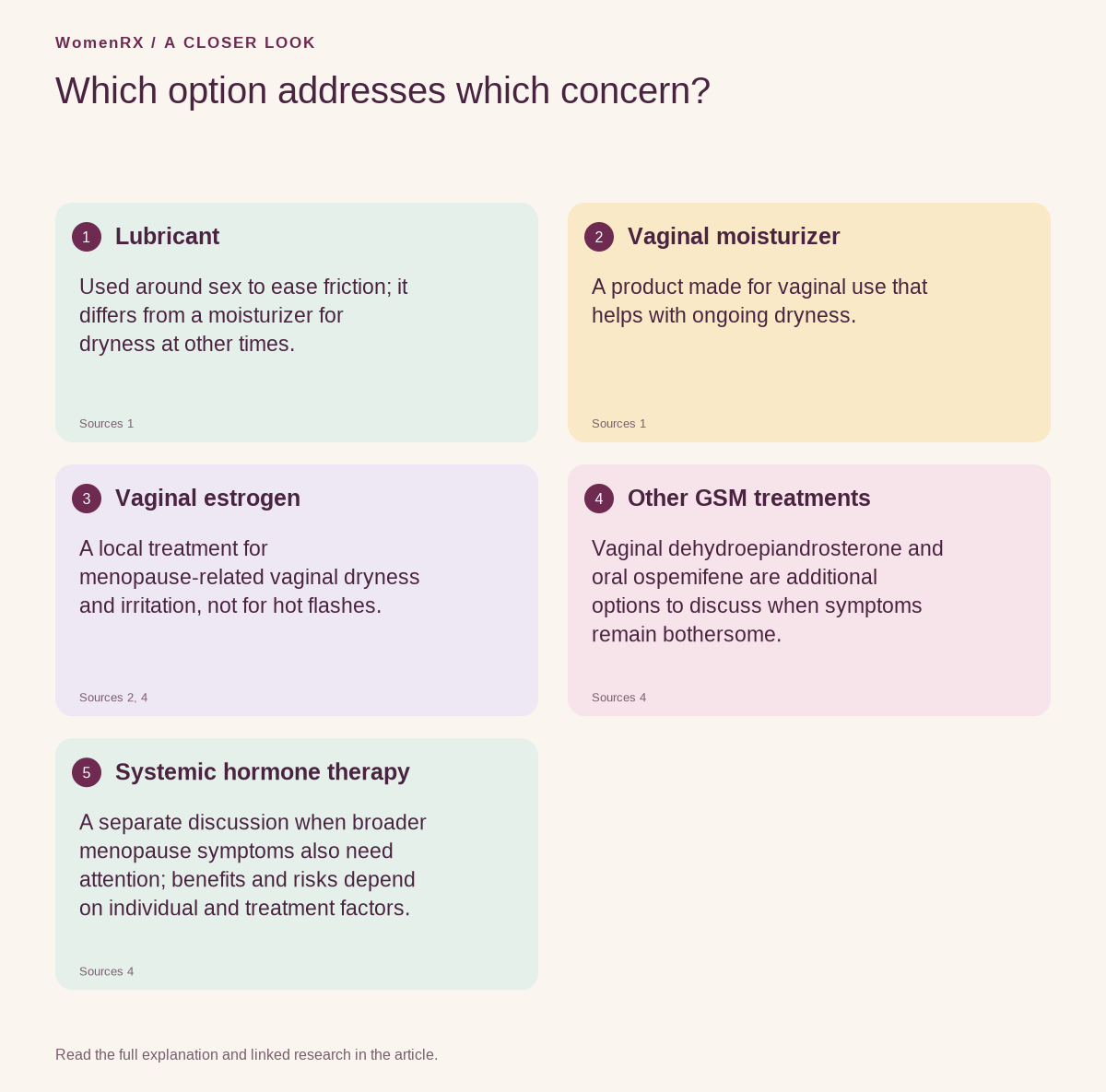
Which option addresses which concern?
Lubricant: Used around sex to ease friction; it differs from a moisturizer for dryness at other times.1
Vaginal moisturizer: A product made for vaginal use that helps with ongoing dryness.1
Vaginal estrogen: A local treatment for menopause-related vaginal dryness and irritation, not for hot flashes.24
Other GSM treatments: Vaginal dehydroepiandrosterone and oral ospemifene are additional options to discuss when symptoms remain bothersome.4
Systemic hormone therapy: A separate discussion when broader menopause symptoms also need attention; benefits and risks depend on individual and treatment factors.4
Read the figure as text
These options differ in how they’re used and what they’re meant to relieve. The comparison is a starting point for discussing your symptoms and preferences.- Lubricant: Used around sex to ease friction; it differs from a moisturizer for dryness at other times.1
- Vaginal moisturizer: A product made for vaginal use that helps with ongoing dryness.1
- Vaginal estrogen: A local treatment for menopause-related vaginal dryness and irritation, not for hot flashes.24
- Other GSM treatments: Vaginal dehydroepiandrosterone and oral ospemifene are additional options to discuss when symptoms remain bothersome.4
- Systemic hormone therapy: A separate discussion when broader menopause symptoms also need attention; benefits and risks depend on individual and treatment factors.4
More questions, answered
How soon should vaginal estrogen help?
It can take up to three months to work fully. If you’re not feeling better after that, speak with your prescriber about whether the treatment or the explanation for your symptoms needs another look. 2 3
Sources you can check
- Vaginal dryness - NHSAccessed 2026-09-25Return to first citation
- About vaginal oestrogen - NHSAccessed 2026-09-25Return to first citation
- Common questions about vaginal oestrogen - NHSAccessed 2026-09-25Return to first citation
- The 2022 hormone therapy position statement of The North American Menopause Society.“The 2022 Hormone Therapy Position Statement of The North American Menopause Society” Advisory Panel. · Menopause (New York, N.Y.) · 2022Return to first citation
- Vaginal Estrogen: Pearls for the Practitioner A Practical Review of Evidence, Guidelines, and Prescribing Strategies for Genitourinary Syndrome of Menopause.Perelmuter S, Srivastava M, Freedman KP, Hanfling S, Rubin RS. · Journal of women's health (2002) · 2026Return to first citation