Can Vaginal Dryness Begin in Perimenopause?
Yes. Vaginal dryness can start during the menopause transition, but hormones aren’t the only possible cause.
Vaginal dryness can begin in perimenopause as hormone changes affect vaginal moisture, and it may become more common or bothersome after menopause. But dryness, soreness, itching, pain with sex, or urinary changes don’t prove menopause is the cause. Irritants, low arousal, and some health conditions can also play a role. Lubricants, moisturizers, and local vaginal estrogen are different options to discuss based on your symptoms. 1 2 6
Why it can start before your periods stop
Vaginal dryness can be part of genitourinary syndrome of menopause, often shortened to GSM. This group of symptoms involves the vagina and urinary tract. Falling estrogen around menopause can reduce vaginal moisture, and symptoms may include dryness or irritation. That can happen during the transition, not just after periods have ended. 1 2 5
In a study of 4,063 women attending a menopause clinic in China, participants included women who were perimenopausal and postmenopausal. GSM symptoms were generally more frequent and severe after menopause. Because this was a specialist-clinic group, the findings don’t tell us how common dryness is among all women, or predict when it will begin for any one person. Timing and severity vary. 6
Dryness may show up as soreness or itching in and around the vagina, discomfort or pain during sex, or changes such as needing to urinate more often or having repeated urinary tract infections. You don’t need to have all of these symptoms for dryness to be worth addressing. 1
Dryness isn’t always a menopause symptom
A new dry or irritated feeling doesn’t establish its cause. Menopause-related hormone changes are one possibility, but low arousal during sex, perfumed soaps or washes, and some underlying conditions, including diabetes or Sjögren’s syndrome, can also contribute to vaginal dryness. 1
Itching or soreness can accompany dryness, but those symptoms alone don’t tell you whether hormones, an irritant, or another issue is responsible. Unusual discharge is a reason to get checked rather than assume menopause is the explanation. Seek evaluation if you have bleeding after sex, bleeding between periods, or bleeding after menopause; also get help if dryness is affecting daily life or persists for weeks despite steps you’ve tried. 1
Match the option to what’s bothering you
For discomfort during sex: A water-based lubricant can be used before sex. It’s meant to reduce friction during sexual activity; it isn’t the same as a moisturizer intended to ease ongoing dryness. 1
For dryness beyond sex: Vaginal moisturizers are another option and are used inside the vagina to help keep it moist. Unperfumed soaps and washes around the vagina may also help avoid one potential source of irritation. 1
For persistent menopause-related symptoms: Local vaginal estrogen is a treatment to discuss with a clinician. It’s used for vaginal symptoms such as dryness and irritation, rather than other menopause symptoms like hot flashes or sleep problems. The North American Menopause Society’s 2022 position statement recommends low-dose vaginal estrogen, among other options, for bothersome GSM symptoms that haven’t improved with over-the-counter therapies when there isn’t a reason to use systemic hormone therapy. The right choice depends on your circumstances. 2 4
These options do different jobs, so one isn’t automatically the right substitute for another. For example, a lubricant may help with sex-related friction, while persistent symptoms may call for a broader discussion of vaginal moisturizers, local estrogen, or other treatments. If you’re unsure whether the symptoms fit dryness, or if you notice unusual discharge or bleeding, seek evaluation before settling on a cause or treatment. 1 3 4
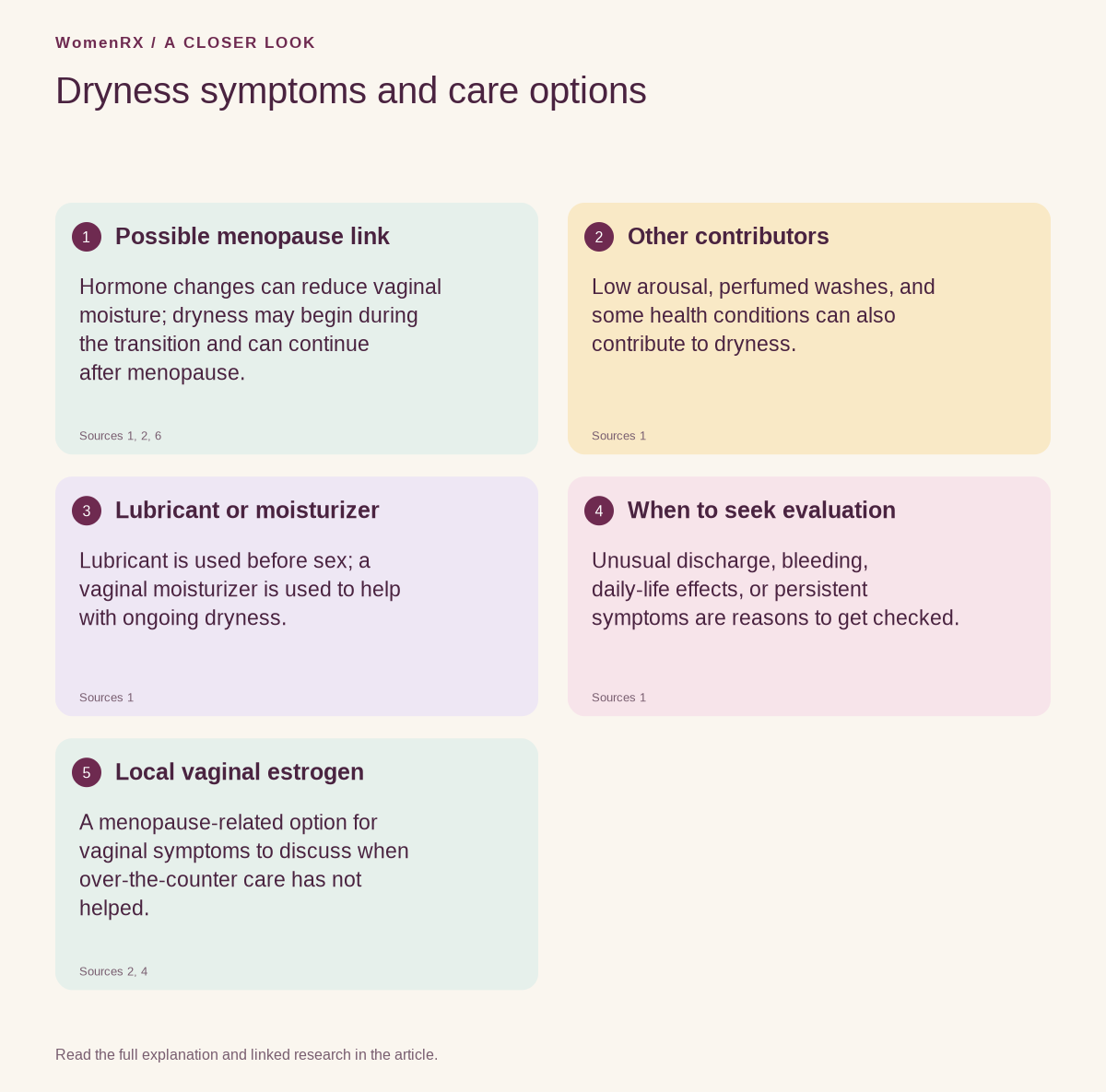
Dryness symptoms and care options
Possible menopause link: Hormone changes can reduce vaginal moisture; dryness may begin during the transition and can continue after menopause.126
Other contributors: Low arousal, perfumed washes, and some health conditions can also contribute to dryness.1
Lubricant or moisturizer: Lubricant is used before sex; a vaginal moisturizer is used to help with ongoing dryness.1
When to seek evaluation: Unusual discharge, bleeding, daily-life effects, or persistent symptoms are reasons to get checked.1
Local vaginal estrogen: A menopause-related option for vaginal symptoms to discuss when over-the-counter care has not helped.24
Read the figure as text
Dryness can occur during perimenopause, but symptoms and possible causes vary. These distinctions can help frame what to discuss and when evaluation is useful.- Possible menopause link: Hormone changes can reduce vaginal moisture; dryness may begin during the transition and can continue after menopause.126
- Other contributors: Low arousal, perfumed washes, and some health conditions can also contribute to dryness.1
- Lubricant or moisturizer: Lubricant is used before sex; a vaginal moisturizer is used to help with ongoing dryness.1
- When to seek evaluation: Unusual discharge, bleeding, daily-life effects, or persistent symptoms are reasons to get checked.1
- Local vaginal estrogen: A menopause-related option for vaginal symptoms to discuss when over-the-counter care has not helped.24
Sources you can check
- Vaginal dryness - NHSAccessed 2026-09-25Return to first citation
- About vaginal oestrogen - NHSAccessed 2026-09-25Return to first citation
- Common questions about vaginal oestrogen - NHSAccessed 2026-09-25Return to first citation
- The 2022 hormone therapy position statement of The North American Menopause Society.“The 2022 Hormone Therapy Position Statement of The North American Menopause Society” Advisory Panel. · Menopause (New York, N.Y.) · 2022Return to first citation
- Vaginal Estrogen: Pearls for the Practitioner A Practical Review of Evidence, Guidelines, and Prescribing Strategies for Genitourinary Syndrome of Menopause.Perelmuter S, Srivastava M, Freedman KP, Hanfling S, Rubin RS. · Journal of women's health (2002) · 2026Return to first citation
- Genitourinary syndrome of menopause in Chinese perimenopausal and postmenopausal women.Ruan X, Zhang L, Cui Y, Gu M, Mueck AO. · Climacteric : the journal of the International Menopause Society · 2021Return to first citation