Vaginal Dryness in Perimenopause: What Can Help
A lubricant can ease friction during sex, while a vaginal moisturizer or local treatment may better fit dryness that keeps coming back.
If dryness mainly makes sex uncomfortable, a water-based lubricant may help with friction. A vaginal moisturizer is an option when dryness bothers you at other times, too. If symptoms persist, an assessment can help identify the cause and whether local vaginal estrogen makes sense. Pain that continues despite self-care, bleeding, or unusual discharge deserves a closer look. 124
Start with when the discomfort happens
Hormone changes during the menopause transition can reduce vaginal fluid and contribute to dryness. But a dry or sore feeling doesn’t automatically mean hormones are the cause. Low arousal during sex, perfumed washes or douches, and conditions such as diabetes or Sjögren’s syndrome can also contribute. 1
That distinction helps you choose a first step. If discomfort happens mainly during sex, a lubricant can reduce friction at that moment. Water-based lubricant is one option. If dryness also bothers you outside of sex, a vaginal moisturizer is intended to help keep the vagina moist beyond sexual activity. These products do different jobs: a lubricant used during sex may not be enough for dryness that keeps returning, while a moisturizer may not provide the comfort you want during sex. 1
If a perfumed soap, wash, or douche seems to leave you feeling irritated, avoiding it is another practical change to try. 1
When local treatment may be worth discussing
If nonprescription options aren’t helping with bothersome menopause-related vaginal symptoms, low-dose vaginal estrogen is one treatment to discuss. The North American Menopause Society recommends it or other therapies for symptoms that haven’t improved with over-the-counter care when systemic hormone therapy isn’t otherwise indicated. In other words, treating vaginal dryness does not automatically mean taking hormones throughout your body. 4
Vaginal estrogen is placed in the vagina and comes in forms such as creams, gels, tablets, and rings. It treats menopause-related vaginal dryness and irritation, not hot flashes or sleep problems. It can take up to three months to work fully, so it’s a different choice from a lubricant you use for comfort during sex. 23
Dryness can begin during perimenopause, but menopause-related changes shouldn’t be assumed to explain every new symptom. If an initial approach isn’t working, finding out what’s behind the discomfort matters more than trying one product after another. 1
Know when to get symptoms checked
Arrange an assessment if dryness lasts a few weeks despite self-care or affects your daily life. The same applies if pain, including pain during sex, keeps happening despite steps to ease friction or is interfering with daily life. You don’t have to wait for sex to become unbearable before bringing it up. 1
Unusual vaginal discharge or bleeding after sex, between periods, or after menopause also needs assessment rather than another dryness product. These symptoms can occur alongside dryness, but a moisturizer or lubricant won’t tell you what’s causing them. 1
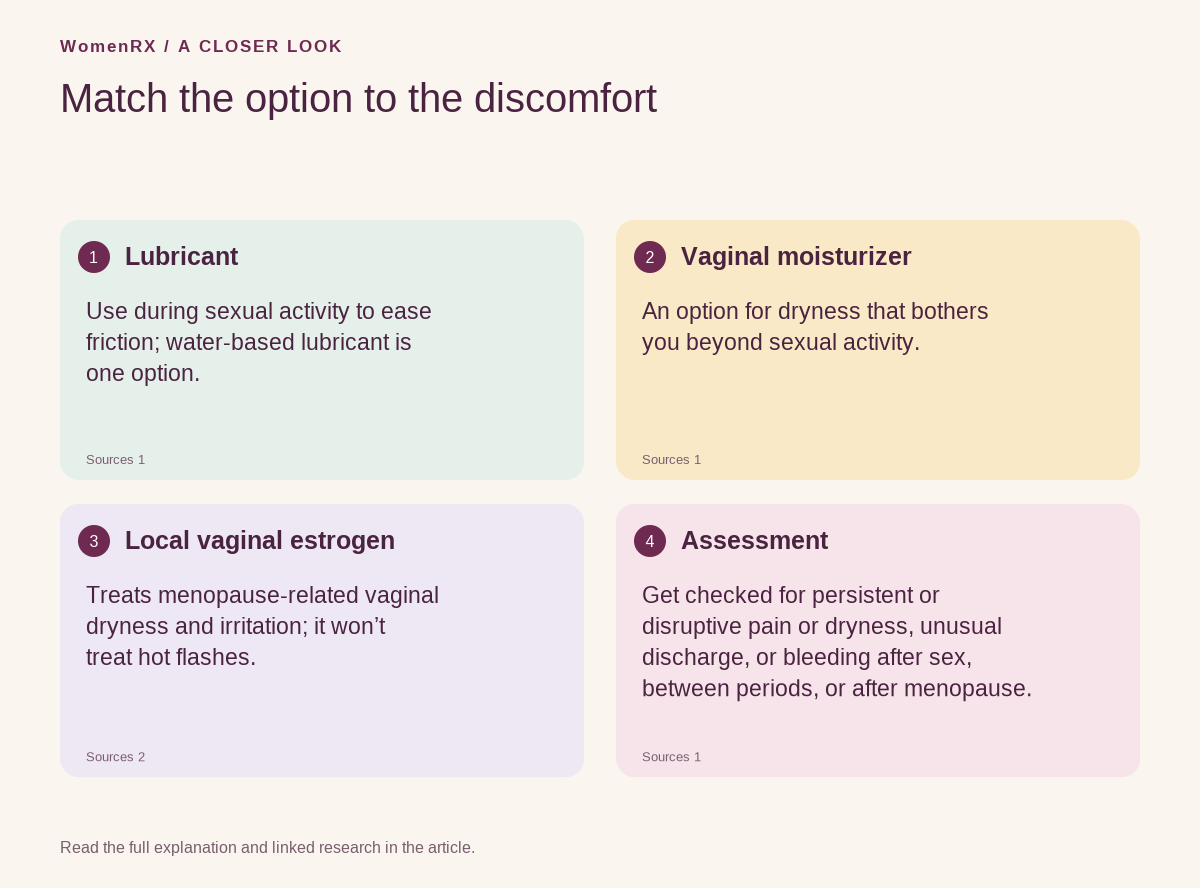
Match the option to the discomfort
Lubricant: Use during sexual activity to ease friction; water-based lubricant is one option.1
Vaginal moisturizer: An option for dryness that bothers you beyond sexual activity.1
Local vaginal estrogen: Treats menopause-related vaginal dryness and irritation; it won’t treat hot flashes.2
Assessment: Get checked for persistent or disruptive pain or dryness, unusual discharge, or bleeding after sex, between periods, or after menopause.1
Read the figure as text
The useful distinction is whether you need comfort during sex, help with recurring dryness, or an assessment of symptoms.- Lubricant: Use during sexual activity to ease friction; water-based lubricant is one option.1
- Vaginal moisturizer: An option for dryness that bothers you beyond sexual activity.1
- Local vaginal estrogen: Treats menopause-related vaginal dryness and irritation; it won’t treat hot flashes.2
- Assessment: Get checked for persistent or disruptive pain or dryness, unusual discharge, or bleeding after sex, between periods, or after menopause.1
Sources you can check
- Vaginal dryness - NHSAccessed 2026-09-25Return to first citation
- About vaginal oestrogen - NHSAccessed 2026-09-25Return to first citation
- Common questions about vaginal oestrogen - NHSAccessed 2026-09-25Return to first citation
- The 2022 hormone therapy position statement of The North American Menopause Society.“The 2022 Hormone Therapy Position Statement of The North American Menopause Society” Advisory Panel. · Menopause (New York, N.Y.) · 2022Return to first citation