Recurrent UTIs in Perimenopause: What Counts and What Helps
Repeated urinary symptoms deserve a closer look before you settle on another round of UTI treatment.
A UTI that comes back after treatment, or two episodes within six months or three within a year, is a reason to review what’s happening. That pattern doesn’t tell you how long it will last. Ask which episodes had urine tests and which were identified by symptoms alone. A clinician can then assess whether infections, vaginal changes, or both are contributing and discuss prevention. 12
A recurrence count isn’t a countdown
If you’ve had burning or frequent urination again, you may be wondering whether this will keep happening until menopause is over. The recurrence count cannot tell you when your episodes will stop. “Recurrent UTI” describes a pattern, commonly two UTIs in six months or three in 12 months; it isn’t a prediction of duration. You should also get a recurrence reviewed if symptoms return after treatment, even before you reach that count. 1
The first useful distinction is whether you’ve had separate bacterial infections or persistent urinary symptoms that need another explanation. UTIs are usually caused by bacteria entering the urinary tract. Burning with urination and frequency can occur with a UTI, but symptoms alone don’t explain every repeat episode. A urine test isn’t always needed for a straightforward suspected UTI. When symptoms keep returning, distinguish episodes with a urine test that identified infection from episodes treated based on symptoms alone. Ask whether testing would help assess a new episode. A negative urine test doesn’t automatically settle every persistent case, either. 1
For example, if symptoms improved after treatment and then returned weeks later, tell the clinician both dates. If they never really cleared, say that instead. Those are different stories, and the distinction matters more than simply counting every bad day as a new infection.
Why menopause changes belong in the conversation
Estrogen levels fall during the menopause transition, and vaginal dryness or irritation may appear alongside urinary complaints. Vaginal estrogen treats those local vaginal symptoms. If you suspect a current UTI, seek an assessment rather than relying on vaginal estrogen for those symptoms. 123
That overlap can make a repeat episode harder to interpret. For example, someone may notice both frequent urination and ongoing vaginal irritation. It’s worth describing each symptom rather than using “UTI” as shorthand for all of them. Persistent symptoms after UTI treatment deserve another look because they can resemble symptoms of other conditions, even though urine tests do not catch every infection. 1
NHS guidance lists vaginal estrogen as an option to discuss for recurrent UTIs in perimenopause or after menopause. The North American Menopause Society recommends low-dose vaginal estrogen or other therapies for bothersome genitourinary syndrome of menopause symptoms when over-the-counter treatments haven’t helped and there is no indication for systemic hormone therapy. That recommendation addresses those symptoms; it does not establish how long recurrent UTIs last during perimenopause. 14
Match prevention to the problem you actually have
If you have symptoms now, first consider whether you need prompt assessment. Fever or shivering, pain in your back just below the ribs, blood in your urine, or symptoms that worsen quickly are reasons to seek prompt medical care rather than wait for a routine prevention visit. 1
If episodes appear to be recurrent infections, prevention is a separate conversation from treatment of the current episode. Options a clinician may consider include vaginal estrogen around or after menopause and, in some circumstances, a preventive antibiotic approach. The choice depends on your symptoms and clinical assessment, not just the number of times you’ve felt burning. 1
If vaginal dryness or irritation is part of the picture, vaginal moisturizers or lubricants may help those symptoms. Vaginal estrogen can take up to three months to work fully for vaginal symptoms, so it shouldn’t be judged as a quick fix for burning that may be an infection. Neither moisturizers nor vaginal estrogen should be treated as a substitute for assessing a suspected UTI. 23
You may also see cranberry products suggested for prevention. They may help some people prevent UTIs, but they have not been shown to ease symptoms or treat an infection that has already started. That’s a meaningful difference when you’re deciding what to do today versus how to reduce future episodes. 1
Bring the pattern, not just the label
Before a visit, jot down when each episode began, whether symptoms cleared between episodes, and which episodes had urine tests, what those tests showed, and which were treated based on symptoms alone. Include treatments you’ve already had, vaginal dryness or irritation, and any pattern you’ve noticed, such as symptoms after sex. This isn’t a diagnostic checklist; it helps you describe what happened when you discuss testing and whether prevention should target recurrent infection, local menopausal symptoms, or both. 12
The most useful question may be: “Which of these episodes had evidence of infection, and what should we do differently if symptoms return?” If repeated symptoms remain unexplained, keep the conversation open rather than assuming that perimenopause, or another antibiotic, is the whole answer. 1
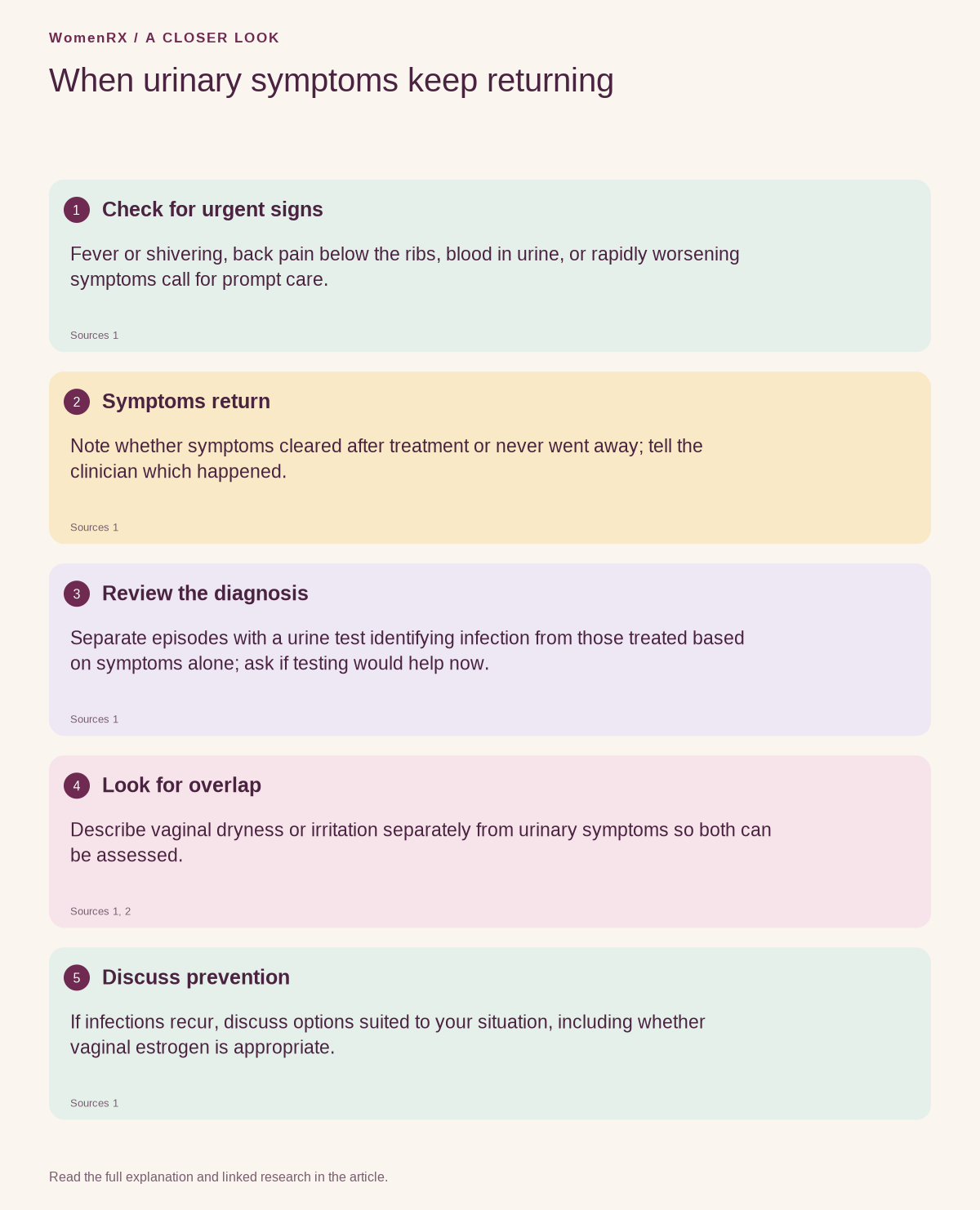
When urinary symptoms keep returning
Check for urgent signs: Fever or shivering, back pain below the ribs, blood in urine, or rapidly worsening symptoms call for prompt care.1
Symptoms return: Note whether symptoms cleared after treatment or never went away; tell the clinician which happened.1
Review the diagnosis: Separate episodes with a urine test identifying infection from those treated based on symptoms alone; ask if testing would help now.1
Look for overlap: Describe vaginal dryness or irritation separately from urinary symptoms so both can be assessed.12
Discuss prevention: If infections recur, discuss options suited to your situation, including whether vaginal estrogen is appropriate.1
Read the figure as text
A way to separate a current episode, a recurring pattern, and prevention planning.- Check for urgent signs: Fever or shivering, back pain below the ribs, blood in urine, or rapidly worsening symptoms call for prompt care.1
- Symptoms return: Note whether symptoms cleared after treatment or never went away; tell the clinician which happened.1
- Review the diagnosis: Separate episodes with a urine test identifying infection from those treated based on symptoms alone; ask if testing would help now.1
- Look for overlap: Describe vaginal dryness or irritation separately from urinary symptoms so both can be assessed.12
- Discuss prevention: If infections recur, discuss options suited to your situation, including whether vaginal estrogen is appropriate.1
More questions, answered
Does vaginal estrogen treat a UTI I have right now?
Vaginal estrogen is used for local menopause-related symptoms and may be discussed as part of a recurrent-UTI plan around or after menopause. If you suspect a current UTI, seek an assessment rather than relying on vaginal estrogen for those symptoms. 12
Sources you can check
- Urinary tract infections (UTIs) - NHSAccessed 2026-09-25Return to first citation
- About vaginal oestrogen - NHSAccessed 2026-09-25Return to first citation
- Common questions about vaginal oestrogen - NHSAccessed 2026-09-25Return to first citation
- The 2022 hormone therapy position statement of The North American Menopause Society.“The 2022 Hormone Therapy Position Statement of The North American Menopause Society” Advisory Panel. · Menopause (New York, N.Y.) · 2022Return to first citation