Recurrent UTIs in Perimenopause: Confirm the Pattern First
When urinary symptoms keep coming back, the next prevention choice depends on whether past episodes were bacterial infections, vaginal irritation, or a mix of both.
If you keep having UTI-like symptoms during perimenopause, review what happened during each episode, including any urine culture results. Burning can signal a UTI, but menopause-related vaginal irritation may also need attention. Vaginal estrogen can help prevent recurrent UTIs in peri- and postmenopausal women; it isn’t a substitute for assessing a possible infection that’s happening now. 126
First, find out what has been recurring
Burning when you pee is a common UTI symptom. Around the menopause transition, vaginal dryness or irritation can also develop as estrogen levels fall. You can have vaginal discomfort, a bacterial infection, or both, so the location of the discomfort and your age don’t settle the question on their own. 12
A commonly used definition of recurrent UTI is two symptomatic episodes within six months or three within a year. If you’ve reached that pattern, it’s worth reviewing the episodes rather than assuming that every return of discomfort needs the same treatment. 14
The useful distinction is between an episode that was tested, one that was treated without a culture, and symptoms that keep returning without a clear explanation:
- If an episode is happening now and hasn’t been tested, describe the symptoms and your previous episodes when seeking care. A urine test may help, although one isn’t required for every suspected UTI. If symptoms worsen quickly or aren’t improving within 48 hours of starting treatment, seek prompt reassessment. 1
- If past episodes had positive cultures alongside symptoms, bring those results into the prevention discussion. They help establish which bouts were bacterial infections and show what grew on each occasion. A study of adult women with recurrent UTI counted an episode only when a positive culture occurred with relevant symptoms; that was its research definition, not a rule that every episode must be cultured. 45
- If most episodes were never tested, or symptoms keep returning without a clear infection history, the first question is what’s causing the discomfort. Mention vaginal dryness or irritation if you have it, rather than describing everything as another UTI. This matters because a plan to prevent bacterial infections may not address vaginal symptoms. 236
Culture history can add another clue, but it can’t tell the whole story. In a retrospective study of 181 adult women with recurrent UTI, the same bacterial species appeared in 239 of 315 pairs of culture-confirmed episodes, or 75.9%. That finding is consistent with several possible explanations for recurrence; it does not show why any one woman’s infection returned. 5
Why perimenopause changes the conversation
Falling estrogen can cause vaginal dryness and irritation, and changes in the local vaginal environment may contribute to UTI susceptibility. But hormone changes alone don’t explain who develops recurrent infections. Diabetes and problems emptying the bladder are among the other factors that may affect risk, particularly in research on postmenopausal women. Evidence about those factors should not be treated as a diagnosis based on age or symptoms alone. 24
For example, if you’ve noticed vaginal irritation between suspected infections, that’s relevant to the discussion even when a UTI was confirmed on another occasion. If you’ve been told you have diabetes or have trouble emptying your bladder, bring that up too: it may change what else needs assessment alongside a prevention plan. 24
Match prevention to what you’re trying to prevent
Vaginal estrogen is a prevention option to discuss if recurrent bacterial UTIs are part of the picture. A review of five randomized trials in peri- and postmenopausal women reported fewer culture-confirmed recurrences with low-dose vaginal estrogen. The results reported across these groups don’t establish the size of the effect specifically during perimenopause. The trials did not establish that one vaginal preparation works better than another. Vaginal estrogen can also relieve menopause-related dryness and irritation, but it does not treat an active bacterial UTI. 26
The tradeoff is different from systemic hormone therapy: vaginal estrogen is used locally, and little of it enters the rest of the body. Early side effects can include vaginal or abdominal pain, headache, or bleeding; these often improve over the first few months. Your own health history, symptom goals, and tolerance for possible side effects belong in the choice. 23
Antibiotic prevention is a different discussion for women with documented recurrent infections. One trial found estriol pessaries less effective than antibiotic prophylaxis at preventing recurrence, but that single comparison does not make antibiotics the best choice for everyone. Repeated antibiotic exposure also brings resistance concerns into the decision. 46
These options serve different purposes from treating today’s symptoms. If the record shows confirmed infections, the conversation can focus on preventing the next one and on factors that may be contributing. If the record mostly shows untested or unexplained discomfort, clarifying the cause comes first. That way, a possible vaginal symptom isn’t overlooked, and a possible infection isn’t dismissed as “just hormones.” 1246
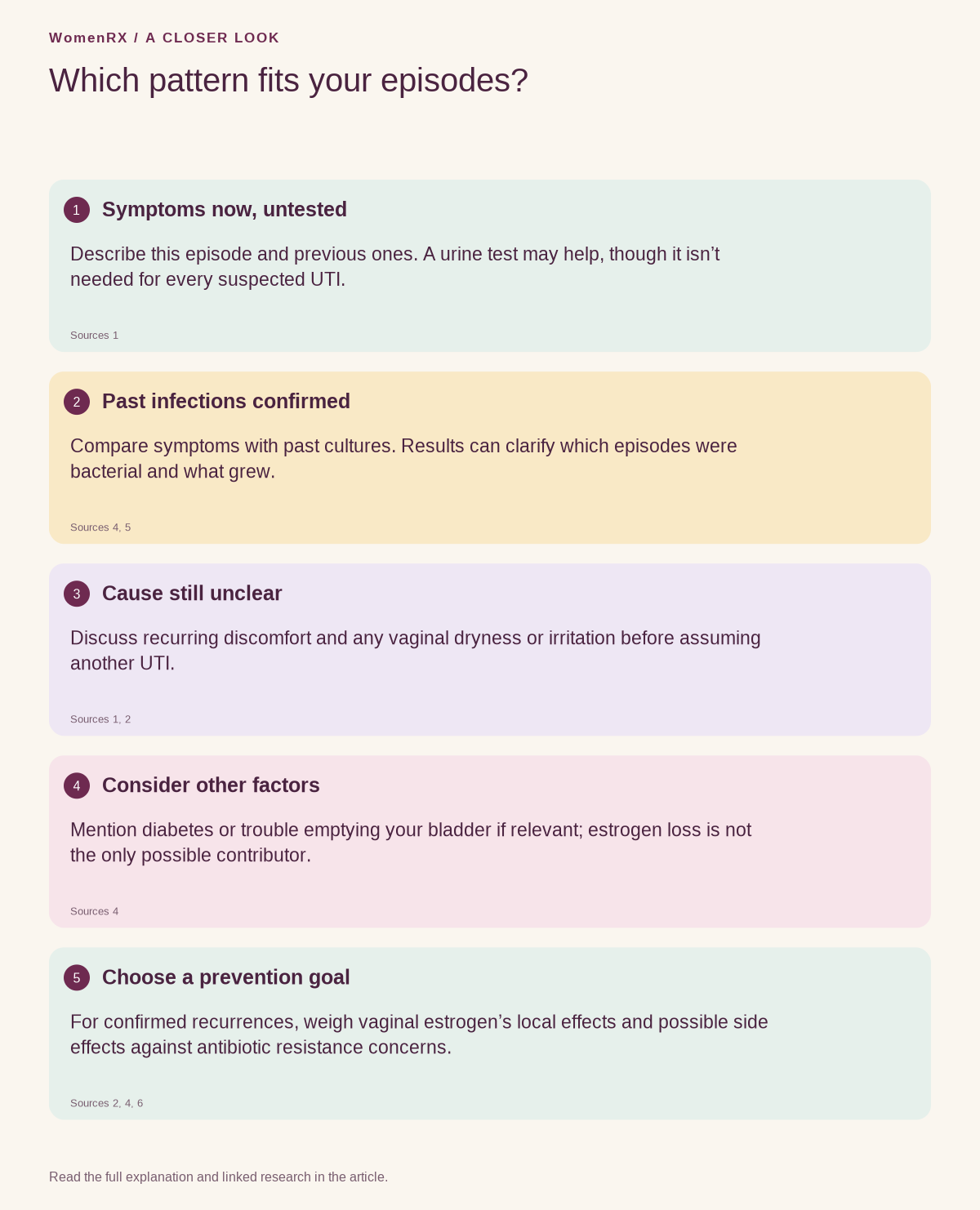
Which pattern fits your episodes?
Symptoms now, untested: Describe this episode and previous ones. A urine test may help, though it isn’t needed for every suspected UTI.1
Past infections confirmed: Compare symptoms with past cultures. Results can clarify which episodes were bacterial and what grew.45
Cause still unclear: Discuss recurring discomfort and any vaginal dryness or irritation before assuming another UTI.12
Consider other factors: Mention diabetes or trouble emptying your bladder if relevant; estrogen loss is not the only possible contributor.4
Choose a prevention goal: For confirmed recurrences, weigh vaginal estrogen’s local effects and possible side effects against antibiotic resistance concerns.246
Read the figure as text
The next discussion changes depending on whether symptoms are new, infections have been confirmed, or discomfort remains unexplained.- Symptoms now, untested: Describe this episode and previous ones. A urine test may help, though it isn’t needed for every suspected UTI.1
- Past infections confirmed: Compare symptoms with past cultures. Results can clarify which episodes were bacterial and what grew.45
- Cause still unclear: Discuss recurring discomfort and any vaginal dryness or irritation before assuming another UTI.12
- Consider other factors: Mention diabetes or trouble emptying your bladder if relevant; estrogen loss is not the only possible contributor.4
- Choose a prevention goal: For confirmed recurrences, weigh vaginal estrogen’s local effects and possible side effects against antibiotic resistance concerns.246
More questions, answered
Do I need a urine culture every time I have symptoms?
Not necessarily. A urine test is not always needed for a suspected UTI. When symptoms keep returning, though, reviewing any cultures alongside the symptoms from those episodes can make the recurrence pattern clearer. 145
Sources you can check
- Urinary tract infections (UTIs) - NHSAccessed 2026-09-25Return to first citation
- About vaginal oestrogen - NHSAccessed 2026-09-25Return to first citation
- The 2022 hormone therapy position statement of The North American Menopause Society.“The 2022 Hormone Therapy Position Statement of The North American Menopause Society” Advisory Panel. · Menopause (New York, N.Y.) · 2022Return to first citation
- The Urogenital Microbiome-Metabolic Interface in Postmenopausal Recurrent Urinary Tract Infection: Estrogen Deficiency, Diabetes, Obesity, and Microbial Reservoirs.Alghoul WI, Ashraf R, Rafiuddin S, Kharoufeh AZH, Al-Shammari WBJ, Abedi M, Alabid I, Patni MM, Yousef AJ, Hamdy HA. · Journal of clinical medicine · 2026Return to first citation
- Culture-confirmed Bacterial Species Causing Recurrent Urinary Tract Infection Among Adult Women.Tuddenham S, Brotman RM, Handa VL. · Urogynecology (Philadelphia, Pa.) · 2026Return to first citation
- Vaginal Estrogen for Urinary Tract Infection Prevention: A Narrative Review of Evidence, Guidelines, and Regulatory Gaps.Ghasoub R, Mackay W, Shepherd A. · Gynecologic and obstetric investigation · 2026Return to first citation