Progesterone Cream or Pill: What Changes With Estrogen?
If you have a uterus and use systemic estrogen, the question is whether your progesterone plan protects the uterine lining, not which form feels easier to use.
If you have a uterus and use systemic estrogen, a progestogen is generally included to counter estrogen’s effect on the uterine lining. A prescribed capsule can contain both estradiol and micronized progesterone. The small cream trial tested one skin-applied product against a different oral progestogen, so it doesn’t show that cream can replace an oral micronized progesterone treatment. 2 1 3
The key question is uterine-lining protection
If you still have your uterus and use systemic estrogen for menopause symptoms, the decision isn’t simply which form feels easier to take. Estrogen without a progestogen can increase the risk of endometrial overgrowth, called hyperplasia, which can be a precursor to endometrial cancer. Guidance for postmenopausal hormone therapy describes combining estrogen with a progestogen for women who haven’t had a hysterectomy. 2 4
That’s why relief of hot flashes, sleep problems, or other symptoms doesn’t by itself show that a product is protecting your uterine lining. The two goals are related to treatment, but they aren’t interchangeable measures of success.
What the pill and cream evidence actually covers
Prescribed oral micronized progesterone: One US prescription capsule combines estradiol with micronized progesterone. That gives the oral form a clear place in a combined hormone-treatment product. It doesn’t mean that every pill labeled progesterone has the same formulation, or that this combination capsule tells you how to use a separate progesterone pill with your own estrogen treatment. The product description identifies what’s in the capsule; it doesn’t provide a cream-versus-pill comparison of uterine-lining outcomes. 1
Progesterone cream applied to the skin: The most direct cream comparison was a small crossover trial. Healthy menopausal women used conjugated equine estrogen with either a particular transdermal progesterone cream or oral medroxyprogesterone acetate; 26 women completed both six-month treatment periods. Across the 52 post-treatment biopsies, none showed hyperplasia. But 12 showed proliferative endometrium, and the study was too small and brief to establish that the cream reliably protects the lining over time. 3
Crucially, the trial’s oral treatment was medroxyprogesterone acetate, not micronized progesterone. Its results cannot tell you that cream and an oral micronized progesterone pill provide equivalent protection. It tested one cream, too, not every skin-applied or compounded formula. 3
The study also reported that most participants preferred the cream. Preference can matter when choosing treatment, but it isn’t a measure of uterine-lining protection. 3
How that changes the choice
If you’re considering a cream because you’d rather not take a pill, first identify what job each product is meant to do. A prescription capsule containing estrogen and micronized progesterone puts both hormones in one oral product. A progesterone cream used alongside estrogen is a different plan, and the small cream trial cannot establish that it supplies the same protection. Convenience or symptom relief doesn’t close that evidence gap. 1 3
This distinction is especially relevant if you have a uterus and systemic estrogen is already part of your treatment. Ask: “Which exact product in my plan is intended to protect my uterine lining while I use estrogen, and what evidence supports that product and route?” If the answer is a cream, clarify whether it’s intended to replace a prescribed oral progestogen or serve another purpose. 2 4 3
The postmenopausal guidance and the cream trial don’t settle this comparison for someone in perimenopause whose periods are still changing. In that situation, make sure the proposed plan accounts for your stage as well as the estrogen you’re using. 4 3
If you’re postmenopausal and have persistent or recurring unusual vaginal bleeding, have it evaluated rather than assuming it’s a routine effect of treatment. 2
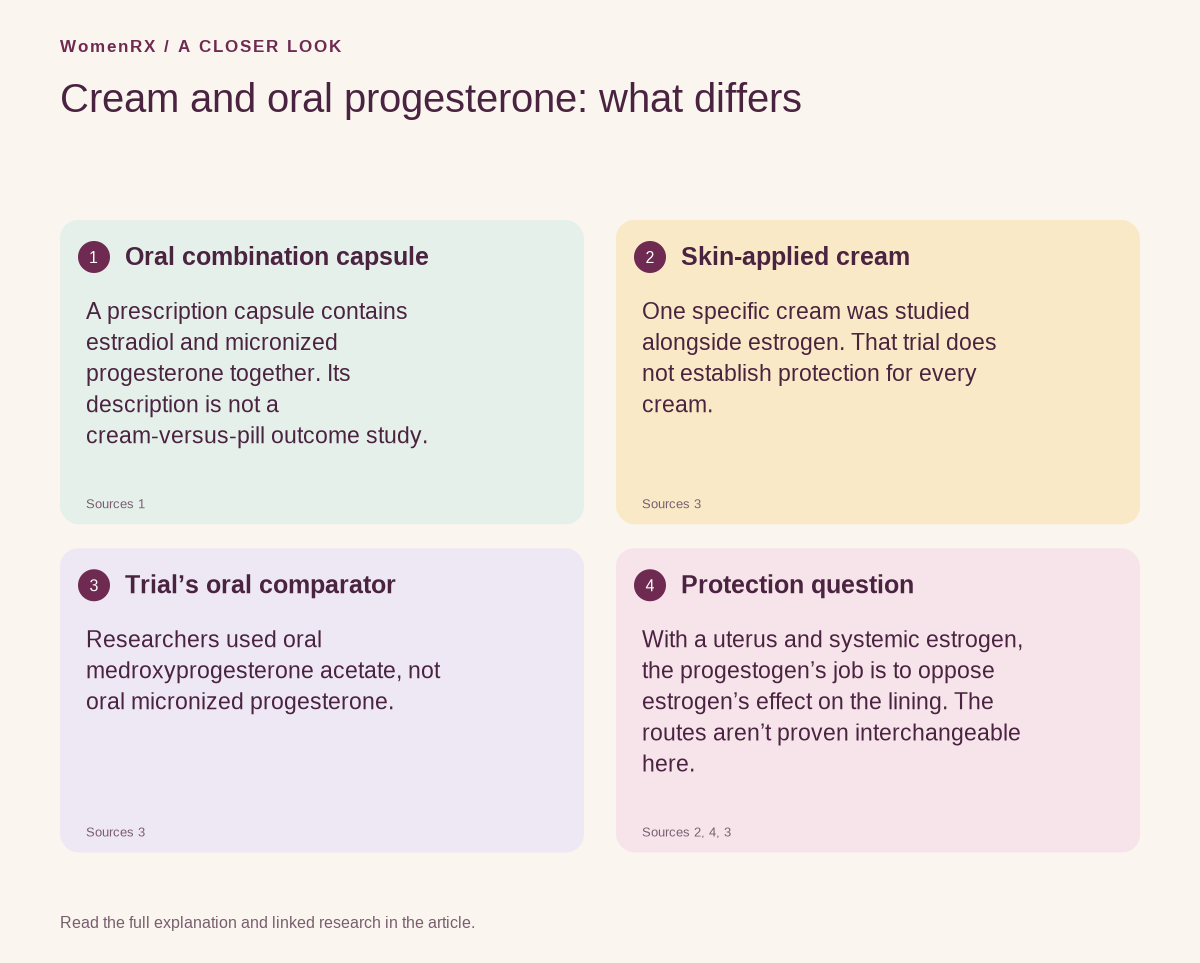
Cream and oral progesterone: what differs
Oral combination capsule: A prescription capsule contains estradiol and micronized progesterone together. Its description is not a cream-versus-pill outcome study.1
Skin-applied cream: One specific cream was studied alongside estrogen. That trial does not establish protection for every cream.3
Trial’s oral comparator: Researchers used oral medroxyprogesterone acetate, not oral micronized progesterone.3
Protection question: With a uterus and systemic estrogen, the progestogen’s job is to oppose estrogen’s effect on the lining. The routes aren’t proven interchangeable here.243
Read the figure as text
Compare the actual products and evidence before treating two routes as interchangeable.- Oral combination capsule: A prescription capsule contains estradiol and micronized progesterone together. Its description is not a cream-versus-pill outcome study.1
- Skin-applied cream: One specific cream was studied alongside estrogen. That trial does not establish protection for every cream.3
- Trial’s oral comparator: Researchers used oral medroxyprogesterone acetate, not oral micronized progesterone.3
- Protection question: With a uterus and systemic estrogen, the progestogen’s job is to oppose estrogen’s effect on the lining. The routes aren’t proven interchangeable here.243
More questions, answered
Does symptom relief mean a progesterone cream is protecting my uterus?
No. A change in symptoms doesn’t show whether the uterine lining is protected. The small cream trial assessed biopsies, but it did not establish that symptom relief predicts protection. 3
Did the cream study test oral micronized progesterone?
No. Its oral comparator was medroxyprogesterone acetate, a different progestogen. The trial therefore cannot establish equivalence between that cream and oral micronized progesterone. 3
Sources you can check
- BIJUVA (ESTRADIOL AND PROGESTERONE) CAPSULE [MAYNE PHARMA] | US prescribing information and patient instructionsAccessed 2026-09-25Return to first citation
- ESTRACE (ESTRADIOL) CREAM [ALLERGAN, INC.] | US prescribing information and patient instructionsAccessed 2026-09-25Return to first citation
- Transdermal progesterone cream as an alternative progestin in hormone therapy.Leonetti HB, Landes J, Steinberg D, Anasti JN. · Alternative therapies in health and medicine · 2005Return to first citation
- [Menopause hormone treatment in practice. Postmenopausal women management: CNGOF and GEMVi clinical practice guidelines].Gosset A, Robin G, Letombe B, Pouillès JM, Trémollieres F. · Gynecologie, obstetrique, fertilite & senologie · 2021Return to first citation