Perimenopause Fatigue: What Your Patterns Can Tell You
Fatigue can occur during the menopause transition, but the timing alone can’t show what’s causing yours.
Tiredness may overlap with perimenopause, especially when sleep is disrupted, but it isn’t proof that hormonal change is the cause. Notice whether fatigue tracks with awakenings, hot flashes or night sweats, mood or stress changes, your cycle, medicines, or other symptoms. If it lasts for weeks, affects daily life, or comes with other concerning changes, ask a clinician to help assess possible causes. 1 2 3
Start with the pattern, not the label
Fatigue is a symptom, not a diagnosis. It has been reported alongside other symptoms during perimenopause, including sleep disturbances, but that overlap doesn’t establish that perimenopause caused any one person’s tiredness. A survey of 293 women aged 45 to 55 in central Massachusetts found fatigue and sleep disturbances were commonly reported, with symptom reporting highest during perimenopause. Because it was a survey of symptoms over the previous month, it shows an association in that group, not a cause. 3
The most useful question is often whether something else changed at the same time as your energy. For example, are you waking more often, feeling low or stressed, taking a new medicine, or noticing a separate physical symptom? These clues can help make a conversation about fatigue more specific without asking you to diagnose yourself.
When sleep may be part of the picture
If hot flashes or night sweats are waking you, interrupted sleep could be one contributor to daytime tiredness. Lack of sleep is a recognized cause of fatigue, and sleep disturbance and fatigue have both been reported during perimenopause. That connection is plausible, but it doesn’t rule out another cause or prove that menopause symptoms explain the whole picture. 1 2 3
Try to distinguish trouble falling asleep from waking during the night, and note whether you feel tired during the day after those nights. Also notice snoring, gasping, snorting, or choking during sleep. Those signs, particularly with daytime tiredness, can point to sleep apnea rather than a menopause-related sleep problem alone. 1
Keep other explanations in view
Fatigue can also relate to stress, depression or anxiety, lifestyle habits, medical conditions, or medicines. MedlinePlus lists medicines such as antidepressants, antihistamines, and some medicines for nausea and pain among possible contributors. Alcohol, excess caffeine, too little sleep, and too little or too much exercise can also play a role. If something changed recently, include it in the picture rather than assuming your cycle explains the timing. 2
Some accompanying symptoms are worth describing clearly. Fatigue with noticeable heartbeats, shortness of breath, or pale skin can occur with iron-deficiency anemia. Unusual thirst and more frequent urination, especially at night, are among symptoms listed with diabetes; feeling nervous or irritable alongside muscle weakness is listed with an overactive thyroid. These patterns aren’t a way to diagnose yourself, but they give a clinician useful context. 1
Make a short, useful record
A brief fatigue diary can help you notice when you have more or less energy. For a few days or weeks, jot down when tiredness is strongest, how your sleep went, and whether you noticed hot flashes, night sweats, mood changes, or changes in your cycle. Add any recent medicine changes and other symptoms. MedlinePlus notes that a diary can reveal patterns through the day; the point is to make the pattern clearer, not to score or prove a cause. 2
You don’t need to collect every detail before asking for help. If fatigue has lasted a few weeks without a clear explanation, is affecting daily life, or comes with other symptoms such as weight loss or mood changes, arrange an assessment. A clinician may ask about sleep and daily activities, examine you, and decide whether tests are useful. Depending on the situation, tests may check for anemia, diabetes, or an overactive thyroid. 1 2
The right next step depends on what’s contributing to the tiredness. If sleep disruption seems central, say what is waking you and how it affects your day. If fatigue persists despite better sleep, or comes with another physical or mood change, describe that too. A menopause transition may be part of the context, but it shouldn’t be the only explanation considered.
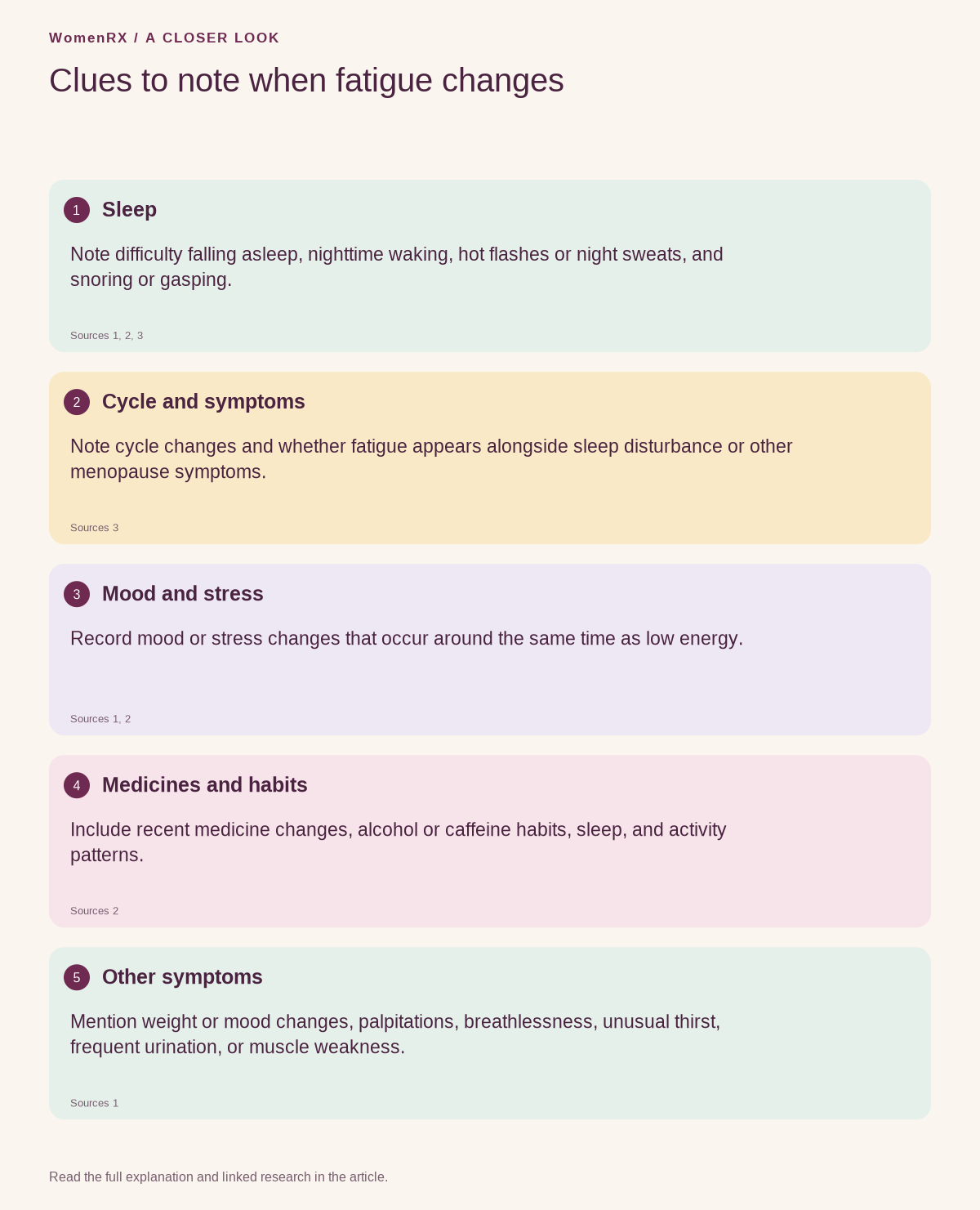
Clues to note when fatigue changes
Sleep: Note difficulty falling asleep, nighttime waking, hot flashes or night sweats, and snoring or gasping.123
Cycle and symptoms: Note cycle changes and whether fatigue appears alongside sleep disturbance or other menopause symptoms.3
Mood and stress: Record mood or stress changes that occur around the same time as low energy.12
Medicines and habits: Include recent medicine changes, alcohol or caffeine habits, sleep, and activity patterns.2
Other symptoms: Mention weight or mood changes, palpitations, breathlessness, unusual thirst, frequent urination, or muscle weakness.1
Read the figure as text
Use these prompts to notice patterns and describe them clearly; none can diagnose the cause of fatigue on its own.- Sleep: Note difficulty falling asleep, nighttime waking, hot flashes or night sweats, and snoring or gasping.123
- Cycle and symptoms: Note cycle changes and whether fatigue appears alongside sleep disturbance or other menopause symptoms.3
- Mood and stress: Record mood or stress changes that occur around the same time as low energy.12
- Medicines and habits: Include recent medicine changes, alcohol or caffeine habits, sleep, and activity patterns.2
- Other symptoms: Mention weight or mood changes, palpitations, breathlessness, unusual thirst, frequent urination, or muscle weakness.1
More questions, answered
Does fatigue by itself mean I’m in perimenopause?
No. Fatigue can occur alongside perimenopause symptoms, but it has many possible causes. Its presence alone can’t identify the menopause transition or establish what is causing your tiredness. 1 2 3
When should I ask for an assessment?
If fatigue has lasted a few weeks without a clear explanation, affects daily life, or comes with other symptoms such as weight loss or mood changes, arrange an assessment. Mention sleep-related gasping, snoring, or choking as well. 1
Sources you can check
- Tiredness and fatigue - NHSAccessed 2026-09-25Return to first citation
- Fatigue: MedlinePlusAccessed 2026-09-25Return to first citation
- Therapeutic decisions for menopause: results of the DAMES project in central Massachusetts.Obermeyer CM, Reynolds RF, Price K, Abraham A. · Menopause (New York, N.Y.) · 2004Return to first citation