Hormones and Depression: What Mood Patterns Can Tell You
When low mood follows a cycle or a birth, timing can offer clues, but it doesn’t by itself prove hormones are the cause.
Reproductive changes can coincide with mood symptoms, but depression can also have biological, psychological, and environmental causes, and sometimes no clear cause is found. A repeating pattern around your cycle is useful to document; after birth, persistent or severe symptoms deserve attention. In either case, timing helps guide an assessment, but it isn’t a diagnosis on its own. 1 2 4
Timing is a clue, not a verdict
A low mood that appears at a particular reproductive stage can feel as if it must have a hormonal explanation. Hormonal shifts may be part of the picture, but depression has multiple possible contributors, and there may be no obvious cause. A calendar pattern can help distinguish symptoms that reliably track a cycle from symptoms that continue more broadly. It can’t establish the cause by itself. 2
It also helps to distinguish occasional mood changes from depression. Mood swings and irritability can occur with menstruation. Depression is more concerning when low mood or loss of interest affects everyday life and lasts at least two weeks. 2 3
Around your period: look for a repeating pattern
If symptoms seem tied to your menstrual cycle, record mood and related symptoms day by day alongside the dates of bleeding. Note whether symptoms ease at other points in the cycle, or whether low mood and loss of interest continue regardless of timing. Looking across the whole cycle can make the pattern clearer than relying on memory after the fact. A review of 75 diary studies found daily ratings valuable for studying premenstrual dysphoric disorder (PMDD), while also finding substantial variation in how diaries and diagnostic procedures were used. 4
That distinction matters: a cycle-linked pattern is a useful topic to raise in an assessment, not proof that hormones are the only cause. If symptoms are persistent, interfere with your daily life, or include thoughts of death or suicide, don’t wait for a cycle record to be complete before seeking help. 2
During pregnancy and after birth: take symptoms seriously
Depression can occur in connection with pregnancy and the postpartum period, but postpartum depression is not attributed to hormones alone. MedlinePlus describes its cause as unknown and points to a combination of possible factors, including sudden hormone changes after pregnancy, fatigue, lack of sleep, limited support, and stressful events. A history of depression or bipolar disorder can also matter. 1 2
After birth, short-lived “baby blues” commonly involve mood swings, crying, or anxiety and usually pass within a few days to a week. More severe symptoms that last longer than two weeks may indicate postpartum depression. It can begin at any time in the first year after childbirth, so symptoms that begin later still deserve attention. 1
You don’t need to decide whether hormones, sleep loss, stress, or something else is responsible before asking for an assessment. Screening questions and a discussion of your symptoms can help; blood tests may be used when needed to check for conditions such as thyroid disorders that can cause or worsen depression. 1
Perimenopause: don’t assume the explanation
Depression can occur during menopause-related life changes, but experiencing low mood at this stage doesn’t establish that changing hormones caused it. Depression has several possible biological, environmental, and psychological contributors, and medical conditions or medicines can also cause similar symptoms. A symptom history and, when needed, tests to rule out other medical causes are part of assessment. 2
The menopause guidance cited here addresses treatments for symptoms such as hot flashes and genitourinary symptoms; it doesn’t establish hormone therapy as a depression treatment. If both mood symptoms and menopause symptoms are affecting you, describe them separately when seeking care so each can be assessed on its own merits. 5 6
What to write down, and when to act
For cycle-related symptoms, a brief daily note can capture mood, interest in usual activities, bleeding dates, and whether symptoms ease or persist. For symptoms after pregnancy or during perimenopause, note when they began, how long they’ve lasted, and how they affect sleep, work, relationships, or daily tasks. These details help show whether symptoms are brief, recurring, or more continuous; they don’t diagnose depression.
Arrange an assessment if low mood or loss of interest persists for at least two weeks, disrupts daily life, or feels severe. Postpartum symptoms that are intense, last beyond the brief baby-blues period, or make it hard to care for yourself or your baby warrant particular attention. Confusion, hallucinations, or dangerous behavior after childbirth may signal postpartum psychosis, which is an emergency: call 911 or go to an emergency room. 1 2
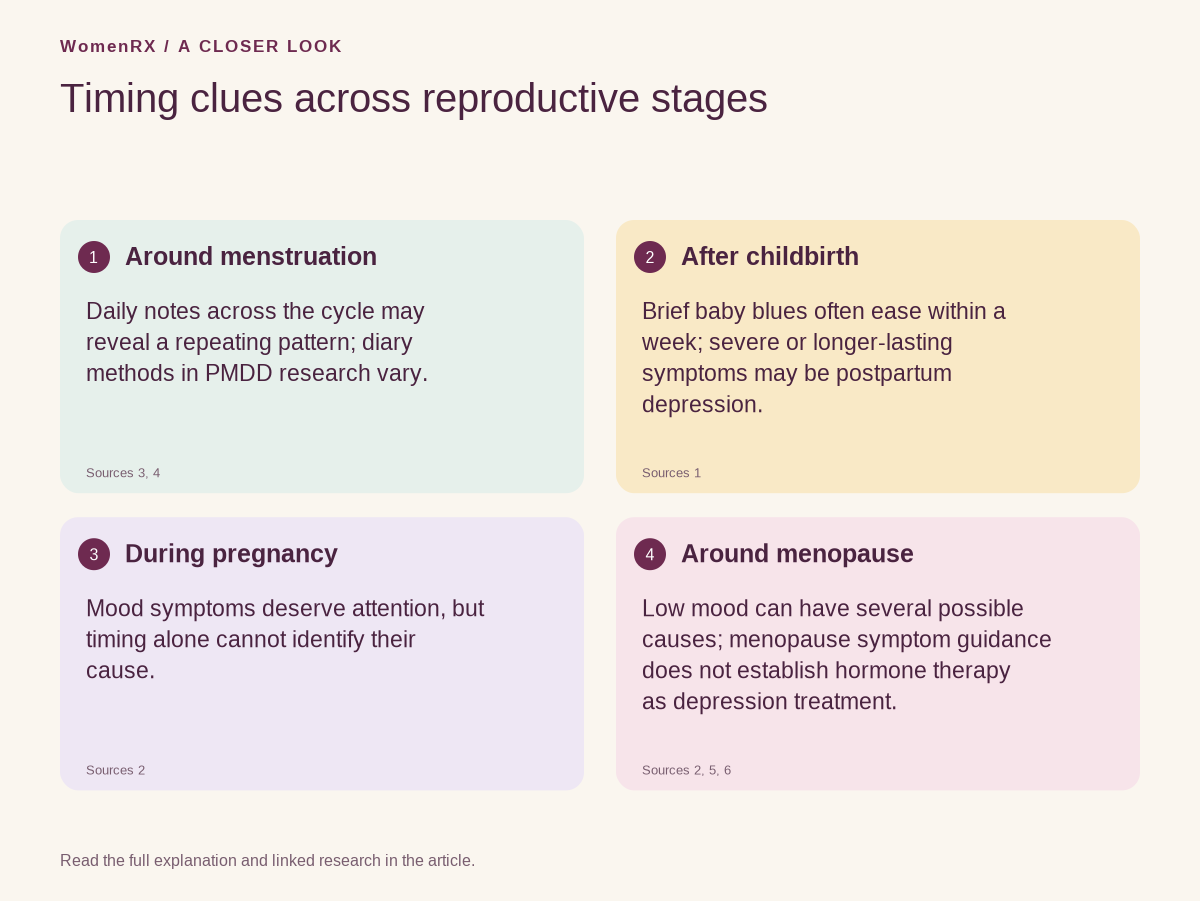
Timing clues across reproductive stages
Around menstruation: Daily notes across the cycle may reveal a repeating pattern; diary methods in PMDD research vary.34
After childbirth: Brief baby blues often ease within a week; severe or longer-lasting symptoms may be postpartum depression.1
During pregnancy: Mood symptoms deserve attention, but timing alone cannot identify their cause.2
Around menopause: Low mood can have several possible causes; menopause symptom guidance does not establish hormone therapy as depression treatment.256
Read the figure as text
Compare what a mood pattern can suggest with what it cannot establish; timing helps frame an assessment but does not prove a cause.- Around menstruation: Daily notes across the cycle may reveal a repeating pattern; diary methods in PMDD research vary.34
- After childbirth: Brief baby blues often ease within a week; severe or longer-lasting symptoms may be postpartum depression.1
- During pregnancy: Mood symptoms deserve attention, but timing alone cannot identify their cause.2
- Around menopause: Low mood can have several possible causes; menopause symptom guidance does not establish hormone therapy as depression treatment.256
More questions, answered
Can a hormone test tell me whether hormones are causing depression?
The assessment described for depression relies on symptoms, history, and a mental health evaluation; tests may be used to check for other medical conditions, such as thyroid disorders. A hormone level alone doesn’t establish the cause of depression. 1 2
Should I wait to track symptoms before asking for help?
No. Tracking can help reveal a cycle-related pattern, but it isn’t a prerequisite for assessment. Seek help sooner if symptoms are severe, affect daily life, or include thoughts of death or suicide. 2 4
Sources you can check
- Postpartum Depression: MedlinePlusAccessed 2026-09-25Return to first citation
- Depression: MedlinePlusAccessed 2026-09-25Return to first citation
- Menstruation | Period | MedlinePlusAccessed 2026-09-25Return to first citation
- Daily symptom ratings for studying premenstrual dysphoric disorder: A review.Bosman RC, Jung SE, Miloserdov K, Schoevers RA, aan het Rot M. · Journal of affective disorders · 2016Return to first citation
- The 2022 hormone therapy position statement of The North American Menopause Society.“The 2022 Hormone Therapy Position Statement of The North American Menopause Society” Advisory Panel. · Menopause (New York, N.Y.) · 2022Return to first citation
- The 2023 nonhormone therapy position statement of The North American Menopause Society.Menopause (New York, N.Y.) · 2023Return to first citation