Nonhormonal Help for Insomnia During Menopause
Cognitive behavioral therapy for insomnia can help even when night sweats are part of the picture, while other sleep problems may need a different approach.
For ongoing trouble falling or staying asleep, ask about cognitive behavioral therapy for insomnia (CBT-I), a structured approach that works on thoughts and behaviors that can keep insomnia going. It’s different from sleep-hygiene tips alone. If hot flashes repeatedly wake you, treatment can also target those symptoms. Breathing pauses during sleep or another suspected sleep disorder are reasons to seek an evaluation. 2 4 5
First, notice what is interrupting your sleep
Menopause can bring hot flashes and night sweats, and these may wake you. But waking at night doesn’t automatically mean the hot flashes explain all of your sleep difficulty. You might also have trouble falling asleep, lie awake after waking, or feel unrefreshed during the day. Insomnia can also occur alongside another health condition, medication effect, substance use, or sleep disorder. 1 2
A useful first distinction is whether you wake mainly with a hot flash, or whether difficulty sleeping continues even when heat and sweating aren’t the obvious trigger. These can overlap. In a small pilot trial, 43 perimenopausal and postmenopausal women with insomnia and nighttime hot flashes were assigned to a menopause-adapted CBT intervention or menopause education. The CBT group had greater improvement in insomnia severity and in how much hot flashes interfered with daily life after treatment. That’s encouraging, though a pilot study can’t settle how well the approach works for everyone. 5
Why CBT-I is more than sleep-hygiene advice
Sleep-hygiene steps can make a bedroom and schedule more sleep-friendly. They may include keeping the room dark and quiet and maintaining regular sleep habits. They’re useful supports, but they aren’t the same as CBT-I, which is a structured treatment focused on thoughts and behaviors that keep insomnia going. 2
That distinction matters when sleep difficulty has become a pattern rather than a short-lived rough patch. A scoping review of randomized trials in menopausal women found that CBT-I improved sleep quality and reduced insomnia severity; the review also described benefits lasting as long as six months in some studies. The studies varied in how treatment was delivered, and the review noted that participants were often white and well educated, so the findings may not represent every woman’s experience. 6
CBT-I may be worth asking about if you’re spending long stretches awake, worrying about whether you’ll sleep, or still feeling impaired even when night sweats aren’t happening every night. It’s also reasonable to ask whether a therapist or an online program offers CBT-I specifically, rather than general advice about healthy sleep. The format can vary, and a menopause-adapted program is one area being studied. 2 5
If night sweats are the main trigger
When hot flashes or night sweats are clearly driving repeated awakenings, a next step may be to discuss options that treat menopausal vasomotor symptoms. The North American Menopause Society’s nonhormone therapy position statement recommends cognitive behavioral therapy and several prescription approaches, including gabapentin and certain antidepressants, for vasomotor symptoms. Those recommendations address hot flashes and related symptoms; they don’t mean a medication is automatically the right treatment for insomnia itself. 4
You can describe the pattern in everyday terms: whether you wake hot or sweaty, whether you have trouble returning to sleep, and whether sleep remains difficult on nights without a noticeable hot flash. This helps separate treating the trigger from treating an insomnia pattern that may have developed alongside it. There’s no need to assume one explanation excludes the other.
When another sleep problem may need attention
Persistent insomnia can be related to other sleep disorders, medical conditions, medicines, or substances such as caffeine, tobacco, and alcohol. Sleep-related breathing disorders, including sleep apnea, are one possible alternative or additional cause of disrupted sleep. 1 3
If someone has noticed pauses in your breathing during sleep, or you suspect a breathing problem at night, bring that up when seeking an evaluation. Assessment may include a sleep and medical history and physical exam; a sleep study may be used when appropriate. Other clues worth mentioning include tingling or prickling in your legs that eases when you move them, since that can point toward restless legs rather than insomnia alone. 3
The practical route is: consider CBT-I for persistent difficulty sleeping; discuss nonhormonal treatment if hot flashes are repeatedly waking you; and seek assessment when breathing pauses or another sleep disorder may be involved. Sleep habits can support any of these steps, but ongoing insomnia deserves more than a checklist of bedroom tips.
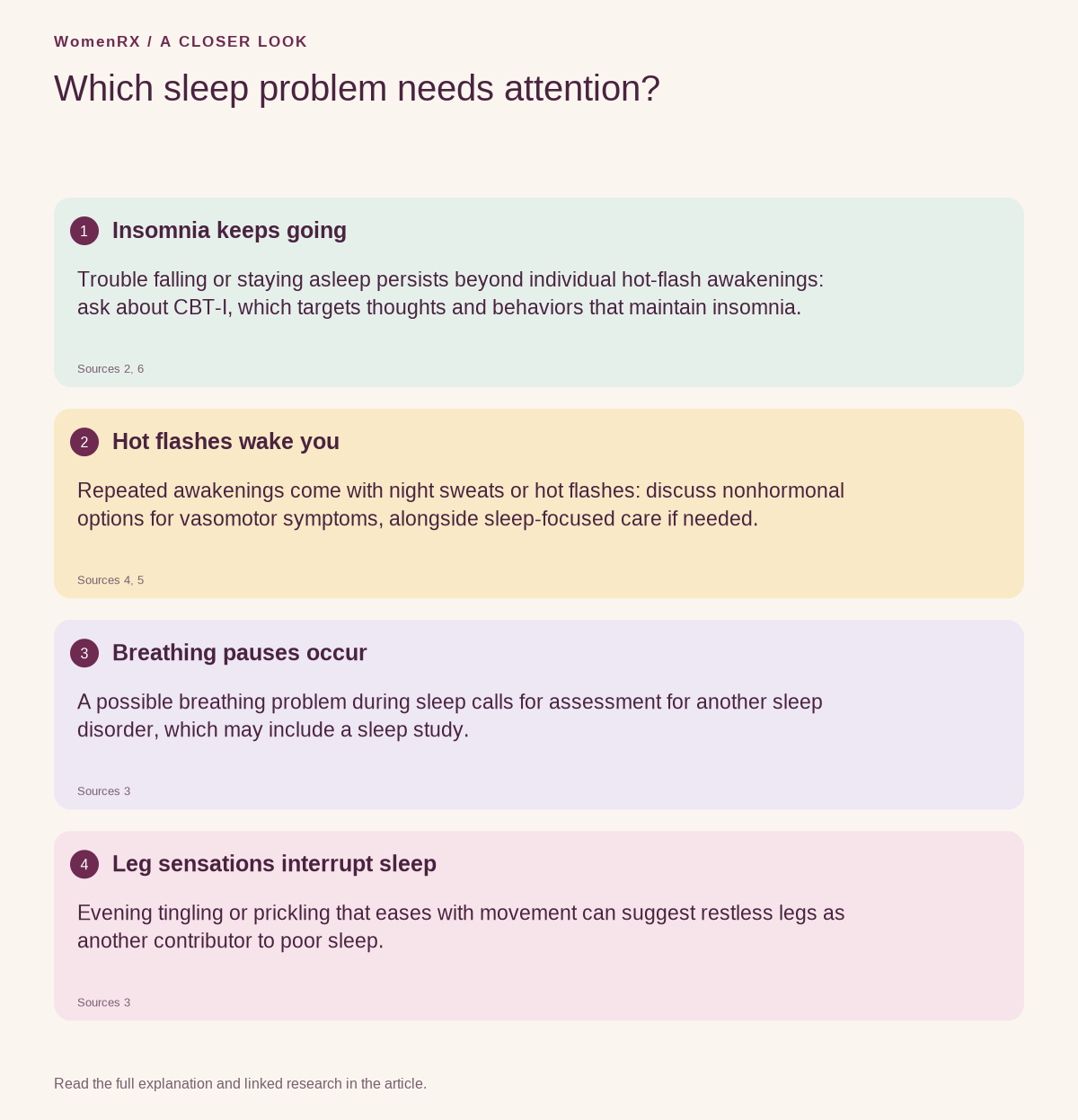
Which sleep problem needs attention?
Insomnia keeps going: Trouble falling or staying asleep persists beyond individual hot-flash awakenings: ask about CBT-I, which targets thoughts and behaviors that maintain insomnia.26
Hot flashes wake you: Repeated awakenings come with night sweats or hot flashes: discuss nonhormonal options for vasomotor symptoms, alongside sleep-focused care if needed.45
Breathing pauses occur: A possible breathing problem during sleep calls for assessment for another sleep disorder, which may include a sleep study.3
Leg sensations interrupt sleep: Evening tingling or prickling that eases with movement can suggest restless legs as another contributor to poor sleep.3
Read the figure as text
Use the main pattern of interrupted sleep to identify a practical next step. More than one route may fit.- Insomnia keeps going: Trouble falling or staying asleep persists beyond individual hot-flash awakenings: ask about CBT-I, which targets thoughts and behaviors that maintain insomnia.26
- Hot flashes wake you: Repeated awakenings come with night sweats or hot flashes: discuss nonhormonal options for vasomotor symptoms, alongside sleep-focused care if needed.45
- Breathing pauses occur: A possible breathing problem during sleep calls for assessment for another sleep disorder, which may include a sleep study.3
- Leg sensations interrupt sleep: Evening tingling or prickling that eases with movement can suggest restless legs as another contributor to poor sleep.3
More questions, answered
Can CBT-I help if I still have night sweats?
It may. A small pilot trial in perimenopausal and postmenopausal women who had both insomnia and nighttime hot flashes found improvement in insomnia severity and hot-flash interference with a menopause-adapted CBT intervention. The study is promising, but small. 5
Does insomnia always mean I need a sleep study?
No single test is described as necessary for everyone with insomnia. Evaluation can include your medical and sleep history and a physical exam; a sleep study may be used to investigate a suspected sleep disorder such as sleep apnea. 3
Sources you can check
- Insomnia | MedlinePlusAccessed 2026-09-25Return to first citation
- Insomnia - NHSAccessed 2026-09-25Return to first citation
- Sleep Disorders | MedlinePlusAccessed 2026-09-25Return to first citation
- The 2023 nonhormone therapy position statement of The North American Menopause Society.Menopause (New York, N.Y.) · 2023Return to first citation
- Cognitive behavioral therapy for menopausal insomnia in perimenopausal and postmenopausal women with insomnia and nocturnal hot flashes: a randomized-controlled pilot trial.Arentson-Lantz EJ, Muench A, Kokonda M, Meers JM, Swartz M, Manber R, Thurston RC, Nowakowski S. · Menopause (New York, N.Y.) · 2026Return to first citation
- The Effectiveness of Cognitive Behavioral Therapy on Insomnia Severity Among Menopausal Women: A Scoping Review.Ntikoudi A, Owens DA, Spyrou A, Evangelou E, Vlachou E. · Life (Basel, Switzerland) · 2024Return to first citation