Night Sweats in Perimenopause: Track Episodes and Choose a Next Step
Night sweats can be part of perimenopause, but the pattern, sleep impact, and other symptoms help you decide what to do next.
Yes. Night sweats can happen during perimenopause, when hormonal changes may bring hot flashes and sweating at night. But sweating can also reflect a warm room or bedding, anxiety, alcohol or drug use, a medication, or another cause. Notice whether episodes repeat, soak your clothes or sheets in a cool room, disrupt sleep, or come with other symptoms. 1 3
When a night sweat fits the perimenopause picture
During perimenopause, hormone levels and menstrual cycles can fluctuate. Hot flashes and night sweats may emerge during this transition, though not everyone has them. Episodes that feel like sudden heat and sweating, especially alongside other hot flashes or changing periods, may fit the pattern. They don't prove that perimenopause is the cause. 3 4 5
A warm bedroom or heavy bedding can also make you sweat at night. Clinically, “night sweats” usually means sweating enough to soak sleepwear or bedding even when the room is cool. That distinction can help separate an overheated night from repeated episodes worth discussing. 1
A brief record can make the pattern clearer
If the episodes recur, jot down a few details when convenient. This isn't a diagnostic test; it's a way to see what tends to happen and explain it clearly:
- What happened: Did you feel a sudden wave of heat, or mainly notice sweating after waking? Were your clothes or sheets soaked?
- What was around it: Note whether the room or bedding was unusually warm, and whether you drank alcohol or used a medication that might be relevant. Don't stop a prescribed medicine on your own.
- How often and how disruptive: Record whether it happened again, woke you, or made it hard to get back to sleep.
- What else is going on: Note changes in menstrual cycles, daytime hot flashes, or other new symptoms.
A short record can help you and a clinician weigh the pattern and possible causes. Perimenopause is assessed in context, including menstrual and symptom history; a single hormone measurement may be of limited use because hormone levels fluctuate during the transition. 5
When to seek medical review
Consider contacting a clinician if soaking episodes happen regularly, wake you, or worry you, even if perimenopause seems likely. Also seek advice if night sweats occur with a very high temperature or feeling feverish and shivery, a cough, diarrhea, or unexplained weight loss. These features don't identify a cause on their own, but they make it less useful to assume the sweating is only menopausal. 1
Other possibilities include anxiety, alcohol or drug use, a tendency to sweat excessively, or a medication that may be contributing. A clinician can consider these alongside your cycle and symptom history. If you suspect a medicine, share its name and when you take it rather than changing it without guidance. 1
If it seems menopausal, focus the conversation on impact
If the pattern appears consistent with perimenopause, how much the episodes affect your sleep and daily life is useful context for discussing options. You can ask which approaches fit your symptoms and personal health history, and what benefits, risks, or monitoring apply to any option being considered. Treatment information for a specific menopause medicine may come from studies of postmenopausal women, so it shouldn't automatically be treated as proof of the same effect in perimenopause. For example, the prescribing information for estradiol with progesterone describes a symptom trial in postmenopausal women, not a perimenopause-specific trial. 2
The practical next step is simple: if episodes are occasional and have an obvious room or bedding explanation, adjust that setting and see whether the pattern changes. If they recur, disrupt sleep, or come with concerning symptoms, bring the pattern and any other symptoms to a clinician instead of presuming the cause.
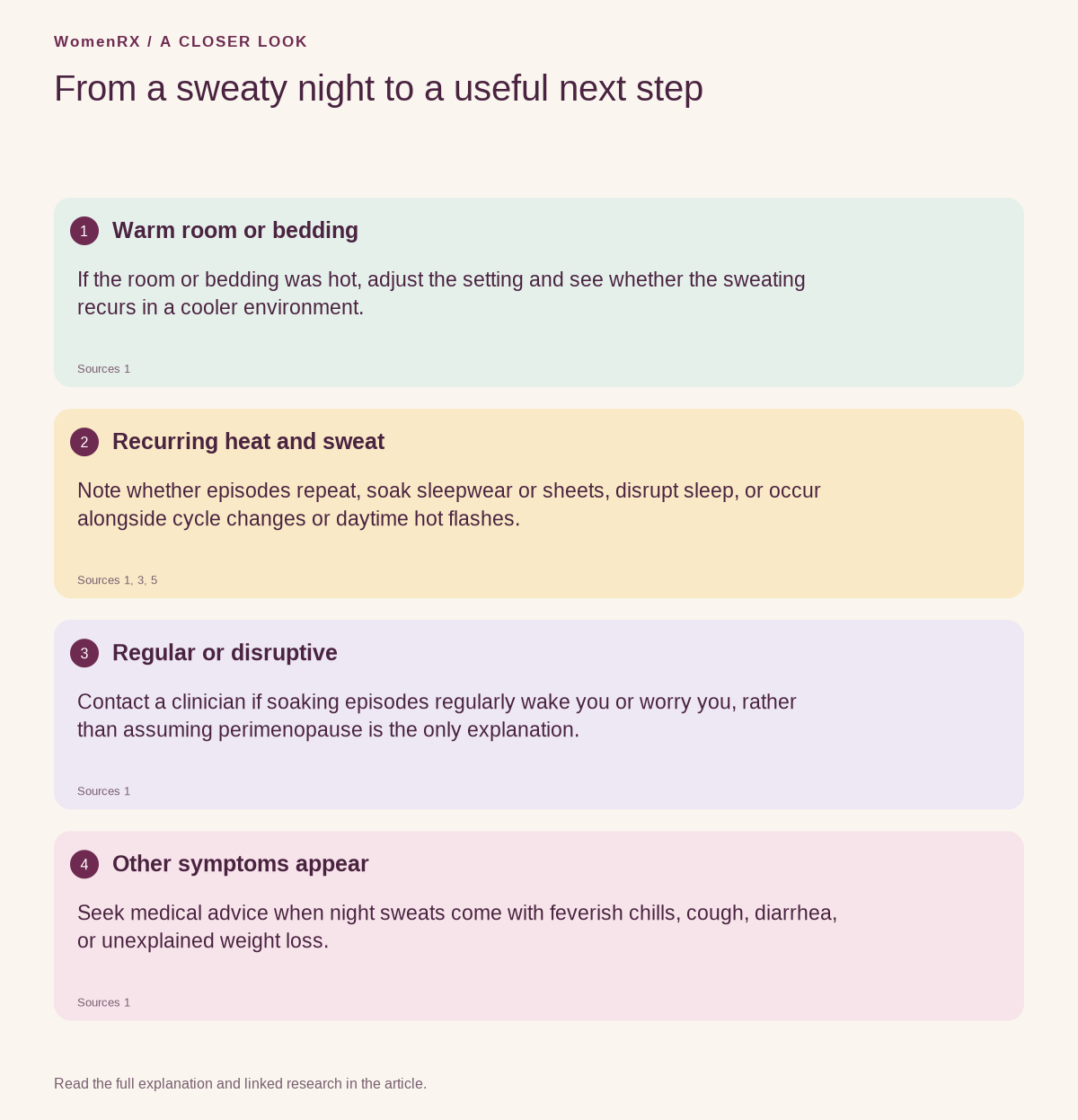
From a sweaty night to a useful next step
Warm room or bedding: If the room or bedding was hot, adjust the setting and see whether the sweating recurs in a cooler environment.1
Recurring heat and sweat: Note whether episodes repeat, soak sleepwear or sheets, disrupt sleep, or occur alongside cycle changes or daytime hot flashes.135
Regular or disruptive: Contact a clinician if soaking episodes regularly wake you or worry you, rather than assuming perimenopause is the only explanation.1
Other symptoms appear: Seek medical advice when night sweats come with feverish chills, cough, diarrhea, or unexplained weight loss.1
Read the figure as text
Use the episode pattern and any accompanying features to decide whether to adjust the sleep setting, keep noting the pattern, or seek medical review. This is a practical guide, not a diagnostic test.- Warm room or bedding: If the room or bedding was hot, adjust the setting and see whether the sweating recurs in a cooler environment.1
- Recurring heat and sweat: Note whether episodes repeat, soak sleepwear or sheets, disrupt sleep, or occur alongside cycle changes or daytime hot flashes.135
- Regular or disruptive: Contact a clinician if soaking episodes regularly wake you or worry you, rather than assuming perimenopause is the only explanation.1
- Other symptoms appear: Seek medical advice when night sweats come with feverish chills, cough, diarrhea, or unexplained weight loss.1
More questions, answered
Does one sweaty night mean I’m in perimenopause?
No. One episode, especially in a warm room or under heavy bedding, doesn't establish that perimenopause is the cause. Look at the broader pattern, including cycle changes and recurring hot flashes, and seek advice if episodes become regular or concerning. 1 3
Sources you can check
- Night sweats - NHSAccessed 2026-09-25Return to first citation
- BIJUVA (ESTRADIOL AND PROGESTERONE) CAPSULE [MAYNE PHARMA] | US prescribing information and patient instructionsAccessed 2026-09-25Return to first citation
- Perimenopause and Lifestyle Medicine: A Window of Opportunity.Pangalangan JML, Tollefson M. · American journal of lifestyle medicine · 2026Return to first citation
- A systematic review of community pharmacy interventions to improve peri- and post-menopausal health.Chow H, Righton O, Berry H, Bell Z, Flynn AC. · Post reproductive health · 2024Return to first citation
- Nomenclature and endocrinology of menopause and perimenopause.Burger H, Woods NF, Dennerstein L, Alexander JL, Kotz K, Richardson G. · Expert review of neurotherapeutics · 2007Return to first citation