Nausea on GLP-1 Medicines: What May Help
Small sips, smaller bland meals, and noticing when symptoms began can help you decide what to try and when to contact your prescriber.
For manageable nausea, try frequent small sips of clear fluids, smaller meals, and bland foods; avoid foods or smells that make you feel worse. If nausea or vomiting persists, worsens after a dose increase, or keeps you from holding down fluids, contact your prescriber promptly. Signs of dehydration or severe, persistent abdominal pain need prompt medical attention. 1 2 3 4
Nausea is a common digestive side effect in trials of GLP-1 and dual GIP/GLP-1 medicines, including semaglutide and tirzepatide. Trial evidence also suggests digestive symptoms can be dose-related, but there isn’t one remedy that works for everyone. Start with what you can tolerate, and pay attention to whether symptoms began or worsened around a dose increase. 4
Start with small, manageable changes
If nausea is mild and you can drink, try sipping clear fluids often instead of drinking a large amount at once. Smaller meals more often may feel easier than a few larger ones. Bland foods may be more comfortable; spicy, fatty, or salty foods and strong smells can make nausea worse for some people. These are general nausea strategies, not a GLP-1-specific plan, and your own food triggers may differ. 1
If symptoms make it hard to maintain food or fluid intake, let your prescriber know. Trials have included lifestyle or dietary guidance, but a systematic review found that evidence on the best nutritional approach for people taking these medicines remains limited. 4
Notice the timing, especially around dose changes
Many clinical trials included dose increases during the early weeks of treatment, and the review found that digestive effects were often dose-related. If nausea starts or gets worse after an increase, tell your prescriber when it began and how it is affecting eating and drinking. Ask whether your treatment plan needs review. 4
For semaglutide marketed as Wegovy, the US prescribing information advises reporting nausea, vomiting, or diarrhea that persists or lasts longer than expected. It also warns that fluid loss from these symptoms can lead to dehydration and kidney problems. 3
When to contact your prescriber
Contact your prescriber promptly if nausea or vomiting persists, gets worse, or makes it difficult to keep fluids down, including when small, frequent sips won’t stay down. That’s a reason to get individualized advice, not to wait for a routine follow-up. The Wegovy information specifically advises reporting persistent or extended nausea, vomiting, and diarrhea; MedlinePlus recommends small amounts of clear liquid often when drinking is difficult. 1 3
Dry mouth, urinating less often than usual, and dark urine can be signs of dehydration. Seek medical help right away if you notice these signs, particularly if you’re still vomiting or having diarrhea. Confusion alongside dehydration symptoms also needs immediate medical attention. 1 2
Severe or persistent abdominal pain, especially pain that may spread to your back, needs urgent medical assessment. Wegovy’s prescribing information identifies this as a possible sign of pancreatitis, with or without nausea or vomiting. Don’t assume severe pain is an ordinary medication side effect. 3
Don’t assume every bout of nausea is from the medicine
Nausea has many possible causes, and pregnancy is one of them. If pregnancy is possible, tell your care team rather than automatically attributing nausea to your medication; pregnancy testing may be part of evaluating nausea and vomiting. 1
The overall adult trial results summarized in a systematic review don’t establish whether nausea rates differ between women and men. 4
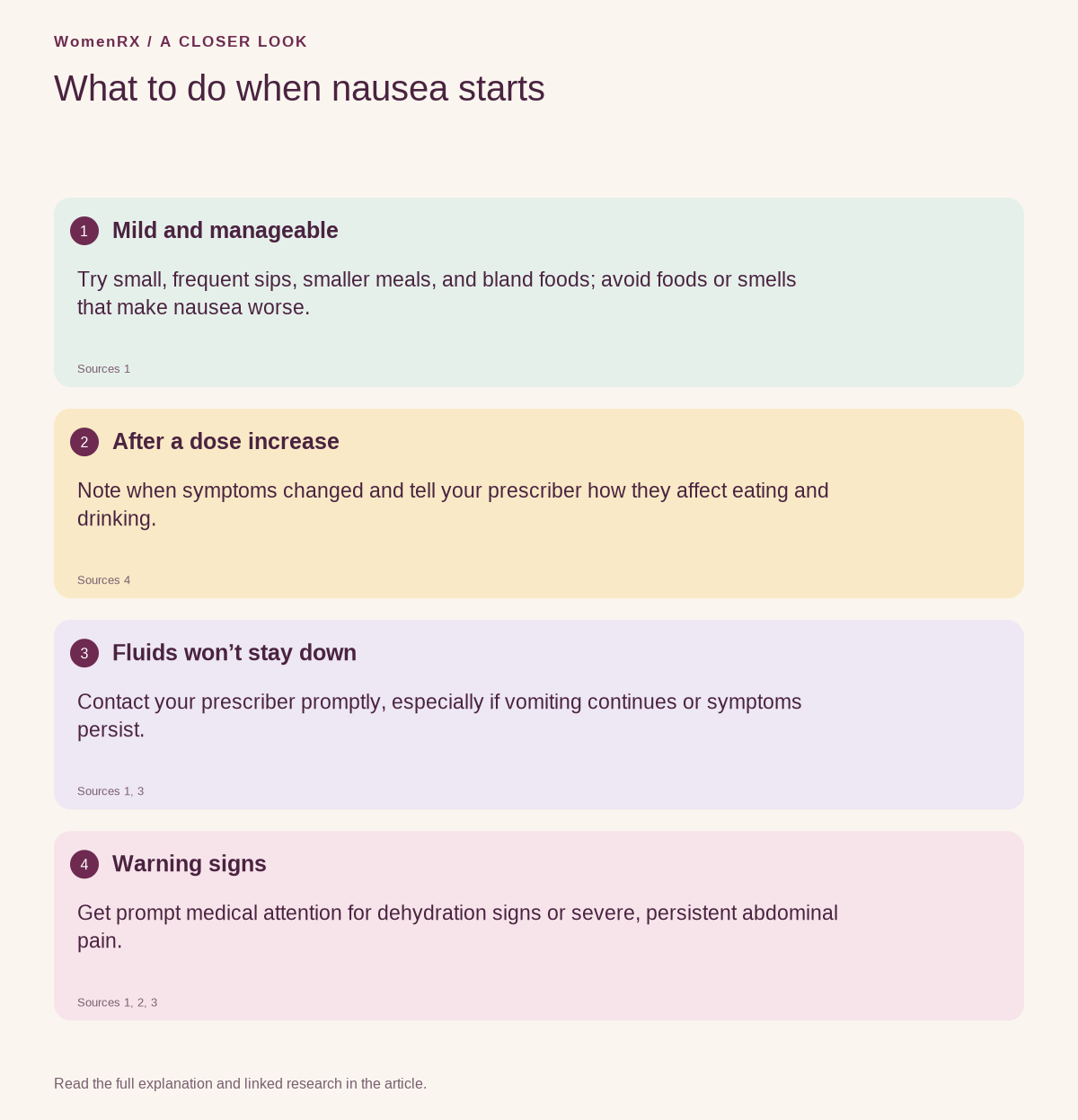
What to do when nausea starts
Mild and manageable: Try small, frequent sips, smaller meals, and bland foods; avoid foods or smells that make nausea worse.1
After a dose increase: Note when symptoms changed and tell your prescriber how they affect eating and drinking.4
Fluids won’t stay down: Contact your prescriber promptly, especially if vomiting continues or symptoms persist.13
Warning signs: Get prompt medical attention for dehydration signs or severe, persistent abdominal pain.123
Read the figure as text
Use symptom severity and fluid tolerance to choose a next step. The text below gives the same information as the flow.- Mild and manageable: Try small, frequent sips, smaller meals, and bland foods; avoid foods or smells that make nausea worse.1
- After a dose increase: Note when symptoms changed and tell your prescriber how they affect eating and drinking.4
- Fluids won’t stay down: Contact your prescriber promptly, especially if vomiting continues or symptoms persist.13
- Warning signs: Get prompt medical attention for dehydration signs or severe, persistent abdominal pain.123
More questions, answered
Should I change my next dose if I feel nauseated?
If nausea is persistent, worsening, or began after a dose increase, contact your prescriber to discuss your symptoms and whether your treatment plan needs review. 3 4
Could nausea be from something other than my GLP-1 medicine?
Yes. Nausea can have different causes, including pregnancy. If pregnancy is possible, mention that when you seek advice instead of assuming the medicine is the cause. 1
Sources you can check
- Nausea | Vomiting | MedlinePlusAccessed 2026-09-25Return to first citation
- Dehydration: MedlinePlusAccessed 2026-09-25Return to first citation
- WEGOVY (SEMAGLUTIDE) INJECTION, SOLUTION WEGOVY (SEMAGLUTIDE) TABLET [NOVO NORDISK PHARMACEUTICAL INDUSTRIES, LP] | US prescribing information and patient instructionsAccessed 2026-09-25Return to first citation
- Dietary Strategies and Nutritional Management in Patients Receiving GLP-1 and Dual GIP/GLP-1 Receptor Agonists as Adjuncts to Lifestyle Interventions: A Systematic Review of Randomised Clinical Trials.de Paulo RS, Bonifácio DB, de Carvalho MHL, Bressan J. · Diabetes, obesity & metabolism · 2026Return to first citation