Nausea on GLP-1 Medicines: What to Do Next
Nausea can follow a dose increase; the next step depends on whether symptoms persist, whether you’re vomiting, and whether you can keep fluids down.
Nausea is common with GLP-1-based medicines, including tirzepatide, and gastrointestinal symptoms can be more frequent at higher doses. 2 Smaller meals and sips of fluid may help you feel more comfortable, though they aren’t proven treatments for GLP-1 nausea. 5 If you can’t keep fluids down, seek urgent medical advice. 6 The Saxenda (liraglutide) label flags persistent or severe abdominal pain as a possible sign of pancreatitis; seek prompt assessment. 1
Start with the timing and severity
Nausea is a common gastrointestinal side effect of GLP-1-based medicines. A systematic review of 16 randomized trials involving 7,096 adults found that nausea and other gastrointestinal symptoms were more common with these medicines than with placebo in the included trials. The review found a pattern of more symptoms at higher doses; some trial reports also described symptoms declining over time. Neither pattern guarantees what will happen for you. 2
For a few days, note when nausea occurs, whether it follows a recent dose increase or restart, whether you vomit, and whether drinking has become difficult. Trials found more gastrointestinal symptoms at higher doses, while reports of suspected gastroparesis sometimes described symptoms after dose escalation or an inappropriate restart. Those case reports don’t establish how likely that is to happen. 2 3 Include when you take the medicine and any other relevant changes in your routine. This is a practical way to give your prescriber a clearer picture, not a test that can prove the cause. If pregnancy is possible, mention that too rather than assuming the medicine explains the nausea. 5
Try comfort measures without mistaking them for a cure
These medicines can slow how quickly food leaves the stomach. That helps explain why nausea may come with feeling full unusually soon or feeling bloated. It doesn’t mean every episode of nausea is caused by delayed stomach emptying. 4 3
If you feel full early, you could stop eating when you’re comfortably full and try a smaller portion at the next meal instead of pushing through your usual amount. Keep a drink nearby and try sips when you can. Smaller meals and sips are general nausea comfort measures, not proven ways to prevent GLP-1 nausea. Trials have used varied dietary guidance, but a systematic review found too little evidence to identify an optimal nutritional approach for managing these symptoms. 5 2
Pay attention to the difference between feeling too full for a meal and vomiting that makes drinking difficult. The second situation isn’t something to solve by adjusting meal size. 6
Discuss the dose pattern before changing anything
If nausea began or became worse after a dose change, tell the prescriber who manages your treatment. Ask whether the timing could fit a medication side effect and what they recommend before the next dose change. If nausea is affecting your ability to continue treatment, ask for a plan tailored to you. Trials show a dose-related pattern, but they don’t establish a one-size-fits-all adjustment plan. 2
Know when nausea needs assessment
Contact your prescriber if nausea persists or keeps returning, especially if vomiting or early fullness is making it difficult to eat or drink. 5 A review of 12 case reports involving 13 people described vomiting and difficulty taking in food or drink with suspected medicine-associated gastroparesis. Case reports can’t show how often this happens or establish the cause of your symptoms. 3
If you keep vomiting and can’t keep fluids down, seek urgent medical advice rather than waiting for a routine reply from your prescriber. Vomiting can lead to dehydration; dark urine or peeing less than usual are signs to mention when you seek help. Inability to keep fluids down calls for urgent advice, not automatically an emergency hospital visit. 6
Seek prompt medical assessment for persistent or severe abdominal pain, especially if it radiates to your back. The US Saxenda prescribing information identifies this as a possible sign of acute pancreatitis, with or without nausea or vomiting. That warning is product-specific in the cited label, so don’t treat its exact instructions or rates as applying to every medicine in the class. 1
What women-specific evidence can tell you
The trial review included adults with overweight or obesity, prediabetes, or type 2 diabetes, but its reported findings don’t give a women-specific comparison of nausea rates. Without that comparison, it isn’t clear whether women are more likely than men to experience nausea. If pregnancy is possible, raise it when discussing the symptom rather than deciding on your own that the medicine is the cause. 2 5
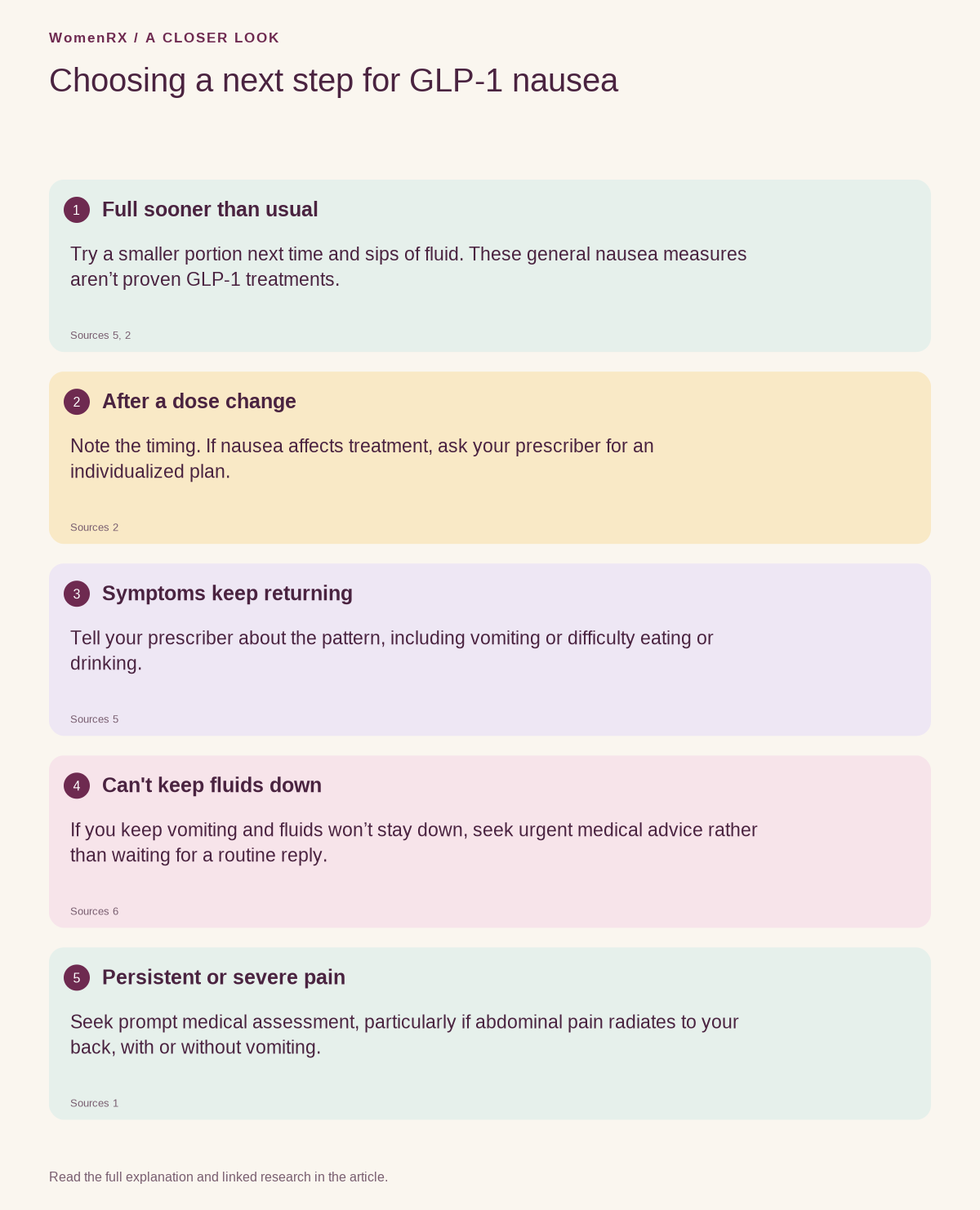
Choosing a next step for GLP-1 nausea
Full sooner than usual: Try a smaller portion next time and sips of fluid. These general nausea measures aren’t proven GLP-1 treatments.52
After a dose change: Note the timing. If nausea affects treatment, ask your prescriber for an individualized plan.2
Symptoms keep returning: Tell your prescriber about the pattern, including vomiting or difficulty eating or drinking.5
Can't keep fluids down: If you keep vomiting and fluids won’t stay down, seek urgent medical advice rather than waiting for a routine reply.6
Persistent or severe pain: Seek prompt medical assessment, particularly if abdominal pain radiates to your back, with or without vomiting.1
Read the figure as text
Use what happens alongside the nausea to distinguish a comfort measure from a dose discussion or medical assessment.- Full sooner than usual: Try a smaller portion next time and sips of fluid. These general nausea measures aren’t proven GLP-1 treatments.52
- After a dose change: Note the timing. If nausea affects treatment, ask your prescriber for an individualized plan.2
- Symptoms keep returning: Tell your prescriber about the pattern, including vomiting or difficulty eating or drinking.5
- Can't keep fluids down: If you keep vomiting and fluids won’t stay down, seek urgent medical advice rather than waiting for a routine reply.6
- Persistent or severe pain: Seek prompt medical assessment, particularly if abdominal pain radiates to your back, with or without vomiting.1
More questions, answered
Does nausea mean the medicine is working?
No. The trial review describes nausea as an adverse effect and does not establish it as a sign that treatment is working. Symptoms alone can’t tell you how well the medicine is meeting your treatment goals. 2
Sources you can check
- SAXENDA (LIRAGLUTIDE) INJECTION, SOLUTION [NOVO NORDISK PHARMACEUTICAL INDUSTRIES, LP] | US prescribing information and patient instructionsAccessed 2026-09-25Return to first citation
- Dietary Strategies and Nutritional Management in Patients Receiving GLP-1 and Dual GIP/GLP-1 Receptor Agonists as Adjuncts to Lifestyle Interventions: A Systematic Review of Randomised Clinical Trials.de Paulo RS, Bonifácio DB, de Carvalho MHL, Bressan J. · Diabetes, obesity & metabolism · 2026Return to first citation
- Gastroparesis induced by glucagon-like peptide-1 receptor agonists: A systematic review of clinical features, diagnosis, management, and outcomes.Olubodun T, Osundina MA, Soyoye DO, de Oliveira NMB, Olubodun AB, Ogundele OO. · PloS one · 2026Return to first citation
- GLP-1 receptor agonists and acute pancreatitis: fact or overstated risk?Domínguez Muñoz JE, Lariño Noia J, Domínguez Novoa Y, Iglesias-García J. · Revista espanola de enfermedades digestivas · 2026Return to first citation
- Feeling sick (nausea) - NHSAccessed 2026-09-25Return to first citation
- Diarrhoea and vomiting - NHSAccessed 2026-09-25Return to first citation