Dehydration on GLP-1 Medicines: Signs and Next Steps
Nausea, vomiting, or diarrhea can make it harder to replace fluids, so watch for changes in your urine and how alert you feel.
GLP-1 medicines can cause nausea, vomiting, or diarrhea. Fluid loss or difficulty drinking can then lead to dehydration. If vomiting persists and you can’t keep fluids down, contact a health care provider promptly. Do the same if dry mouth, dark urine, or infrequent urination occurs with vomiting or diarrhea. If dehydration signs come with confusion or difficulty waking, seek emergency care. 1235 If you’re pregnant or breastfeeding and struggling to drink, ask about your fluid needs. 2
Why dehydration can happen during treatment
The concern is often the chain of events: a medicine-related stomach or bowel symptom makes it difficult to drink, or vomiting and diarrhea cause fluid loss. GLP-1 medicines are associated with gastrointestinal effects such as nausea, vomiting, and diarrhea. A review describes uncommon kidney problems in contexts that often included gastrointestinal intolerance or volume depletion. That’s one reason to take fluid loss seriously. 5
Dehydration means losing more fluid than you take in. Vomiting and diarrhea are recognized causes. 2 If eating or drinking has become difficult, pay attention to what your body is doing rather than assuming the symptom will pass without consequence.
Signs that should change your next step
Dry mouth, infrequent urination, and dark urine are warning signs to take seriously, especially when they appear alongside vomiting or diarrhea. MedlinePlus advises contacting a health care provider immediately when vomiting comes with signs of dehydration. 1 If you have diarrhea, contact a provider if you notice dehydration signs or if it lasts more than two days as an adult. 4
If vomiting persists and you can’t keep fluids down, contact a health care provider promptly rather than waiting for dehydration signs to become more pronounced. Severe vomiting may require fluids through an IV. If vomiting comes with signs of dehydration, contact a provider immediately rather than relying on what you can manage to drink at home. 12 If diarrhea or vomiting is ongoing, replacing lost fluid matters; diarrhea treatment may also involve replacing electrolytes. 4
If you have signs of dehydration along with confusion, unusual sleepiness or difficulty waking, or pale or blotchy skin, seek emergency care. These changes can be signs of shock. Don’t delay emergency care to try drinking more first. 3
A practical response, without a one-size-fits-all target
If symptoms are mild and you can drink, keep fluids available and pay attention to whether urination returns to your usual pattern. There isn’t one daily fluid target that fits everyone; individual needs can differ. 2 If you notice dark or infrequent urine alongside vomiting or diarrhea, contact a health care provider promptly. Tell them which symptoms you’re having and whether you can keep fluids down. 14
If you’re pregnant, vomiting can have another cause, including morning sickness. Don’t dismiss dehydration signs because you suspect that’s the cause; contact your care team promptly. 1 If you’re breastfeeding and struggling to drink, ask your care team about your own fluid needs rather than following a fixed target. Fluid needs differ between people. 2
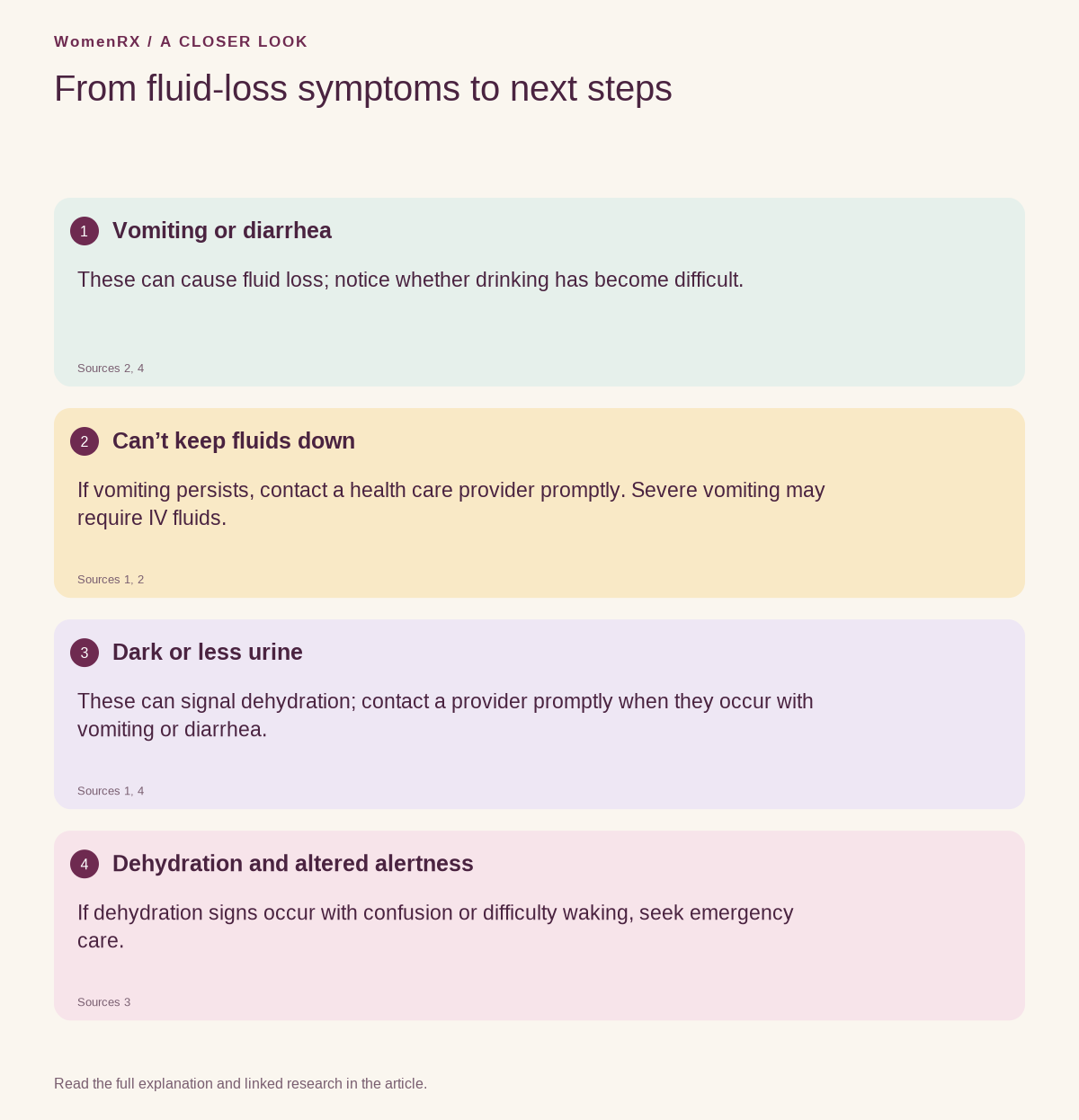
From fluid-loss symptoms to next steps
Vomiting or diarrhea: These can cause fluid loss; notice whether drinking has become difficult.24
Can’t keep fluids down: If vomiting persists, contact a health care provider promptly. Severe vomiting may require IV fluids.12
Dark or less urine: These can signal dehydration; contact a provider promptly when they occur with vomiting or diarrhea.14
Dehydration and altered alertness: If dehydration signs occur with confusion or difficulty waking, seek emergency care.3
Read the figure as text
Use what’s happening with drinking, urination, and alertness to decide when to seek help.- Vomiting or diarrhea: These can cause fluid loss; notice whether drinking has become difficult.24
- Can’t keep fluids down: If vomiting persists, contact a health care provider promptly. Severe vomiting may require IV fluids.12
- Dark or less urine: These can signal dehydration; contact a provider promptly when they occur with vomiting or diarrhea.14
- Dehydration and altered alertness: If dehydration signs occur with confusion or difficulty waking, seek emergency care.3
More questions, answered
Should I wait to see whether dark urine goes away?
Dark urine or urinating less often can be a sign of dehydration. If it occurs while you’re vomiting or having diarrhea, contact your health care provider promptly rather than waiting for more severe symptoms. 14
Can drinking fluids at home replace urgent care?
No. If you have signs of dehydration along with confusion, difficulty waking, or pale or blotchy skin, seek emergency care rather than delaying to try fluids at home. 3
Sources you can check
- Nausea | Vomiting | MedlinePlusAccessed 2026-09-25Return to first citation
- Dehydration: MedlinePlusAccessed 2026-09-25Return to first citation
- Dehydration - NHSAccessed 2026-09-25Return to first citation
- Diarrhea | MedlinePlusAccessed 2026-09-25Return to first citation
- Adverse Events Associated with Incretin-Based Therapies: A Narrative Review on Mechanisms, Clinical Management, and Risk Mitigation.Tobaiqy M, Alqutub ST. · Drug design, development and therapy · 2026Return to first citation