Dehydration on GLP-1 Medicines: What to Watch For
Vomiting or diarrhea while taking a GLP-1 medicine can leave you short on fluids, and persistent symptoms deserve a call to your prescriber.
GLP-1 medicines can cause nausea, vomiting, and diarrhea. Vomiting or diarrhea can lead to dehydration, especially if nausea also makes it hard to drink. Watch for thirst, dizziness, dry mouth, dark urine, or urinating less often. Try small, frequent sips if you can keep liquids down. Contact your prescriber promptly if symptoms persist or you notice dehydration signs; seek emergency help for confusion or difficulty waking. 24673
How stomach symptoms turn into a fluid problem
Nausea, vomiting, and diarrhea are known side effects of medicines used for weight management, including semaglutide and tirzepatide. In weight-reduction trials, these effects were reported most often while doses were being increased. Nausea may make drinking difficult; vomiting and diarrhea can also carry fluid out of your body. Dehydration happens when you lose more fluid than you take in. 246
That connection matters because fluid loss can affect more than how you feel. The prescribing information for Wegovy (semaglutide) and Zepbound (tirzepatide) reports kidney injury in some people who had gastrointestinal symptoms leading to dehydration. This doesn't mean a single episode of nausea will injure your kidneys. It does mean persistent vomiting or diarrhea isn't something to simply push through. 46
Decide what to do by what you can keep down
You feel mildly nauseated but can drink. Take small, frequent sips rather than trying to finish a large drink at once. If you've been vomiting or have diarrhea, replacing lost fluid matters; diarrhea can also cause a loss of electrolytes. There isn't one fluid target that fits everyone, and drinking isn't a substitute for care if symptoms become severe. 127
Vomiting or diarrhea continues, gets worse, or you can't reliably keep liquids down. Contact the clinician who prescribes your medication. Both Wegovy and Zepbound prescribing information advise contacting a healthcare provider about severe or persistent stomach symptoms and promptly reporting persistent nausea, vomiting, or diarrhea. Tell them whether you're able to drink and whether you're urinating as usual. Don't wait for an emergency sign before making that call. 467
You notice signs of dehydration. Marked thirst or dizziness can be clues. Dry mouth, dark urine, or urinating less often are also reasons to seek prompt medical advice, particularly if you're vomiting. A clinician may need to assess fluid loss and, when appropriate, check electrolytes or kidney function. 27
You become confused or are difficult to wake. Get emergency help. Severe dehydration can be life-threatening, and these aren't symptoms to manage by taking more sips at home. 23
Severe abdominal pain needs prompt medical assessment too, especially if it persists or reaches toward your back. Vomiting with that kind of pain shouldn't automatically be written off as an expected medication side effect; pancreatitis is one concern identified in the semaglutide and tirzepatide prescribing information. 467
Don’t assume the medicine is the only cause
For example, diarrhea that starts alongside fever or bloody stools may have another cause, such as an infection. If pregnancy is possible, nausea or vomiting may also need a different explanation; pregnancy testing may be part of an evaluation. These possibilities don't change the need to respond to fluid loss while it's happening. 17
A review of gastrointestinal side effects in adults with type 2 diabetes did not report a women's dehydration-risk estimate and excluded pregnancy and breastfeeding. If you're pregnant or breastfeeding, mention that when you seek care so the assessment fits your circumstances rather than assuming the medication explains every symptom. 5
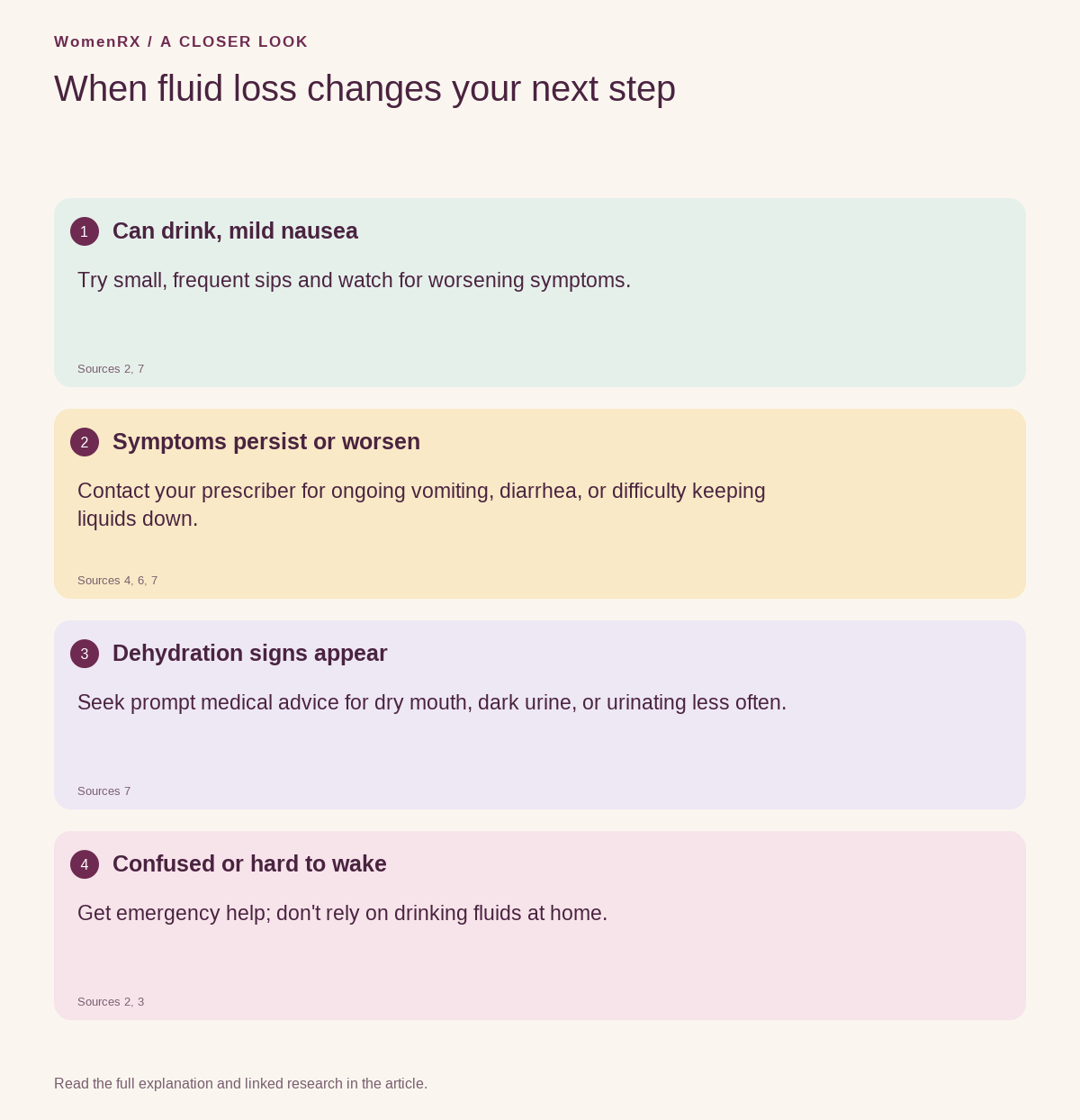
When fluid loss changes your next step
Can drink, mild nausea: Try small, frequent sips and watch for worsening symptoms.27
Symptoms persist or worsen: Contact your prescriber for ongoing vomiting, diarrhea, or difficulty keeping liquids down.467
Dehydration signs appear: Seek prompt medical advice for dry mouth, dark urine, or urinating less often.7
Confused or hard to wake: Get emergency help; don't rely on drinking fluids at home.23
Read the figure as text
Start with whether you can drink, then check for ongoing losses and signs that need faster help.- Can drink, mild nausea: Try small, frequent sips and watch for worsening symptoms.27
- Symptoms persist or worsen: Contact your prescriber for ongoing vomiting, diarrhea, or difficulty keeping liquids down.467
- Dehydration signs appear: Seek prompt medical advice for dry mouth, dark urine, or urinating less often.7
- Confused or hard to wake: Get emergency help; don't rely on drinking fluids at home.23
More questions, answered
Can I be dehydrated even if I haven't vomited?
Yes. Diarrhea can cause fluid loss, and drinking too little can also lead to dehydration. Nausea may make it harder to take in fluids even without vomiting. Watch how you feel and whether you're urinating less often or passing dark urine. 127
Sources you can check
- Diarrhea | MedlinePlusAccessed 2026-09-25Return to first citation
- Dehydration: MedlinePlusAccessed 2026-09-25Return to first citation
- Dehydration - NHSAccessed 2026-09-25Return to first citation
- WEGOVY (SEMAGLUTIDE) INJECTION, SOLUTION WEGOVY (SEMAGLUTIDE) TABLET [NOVO NORDISK PHARMACEUTICAL INDUSTRIES, LP] | US prescribing information and patient instructionsAccessed 2026-09-25Return to first citation
- Comparative gastrointestinal adverse effects of GLP-1 receptor agonists and multi-target analogs in type 2 diabetes: a Bayesian network meta-analysis.Xie X, Yang S, Deng S, Liu Y, Xu Z, He B. · Frontiers in pharmacology · 2025Return to first citation
- ZEPBOUND (TIRZEPATIDE) INJECTION, SOLUTION ZEPBOUND (TIRZEPATIDE) INJECTION, SOLUTION ZEPBOUND KWIKPEN (TIRZEPATIDE) INJECTION, SOLUTION [ELI LILLY AND COMPANY] | US prescribing information and patient instructionsAccessed 2026-09-25Return to first citation
- Nausea | Vomiting | MedlinePlusAccessed 2026-09-25Return to first citation