Bloating on a GLP-1 Medicine: What to Track
A brief episode of fullness or gas is different from bloating that keeps returning or comes with pain, vomiting, or bowel changes.
For mild, brief bloating without other symptoms, note whether it settles and whether fizzy drinks seem to trigger gas. 1 Semaglutide tablets are associated with gastrointestinal reactions, but timing alone won’t tell you what caused the fullness. 3 Seek urgent advice for bloating with pain, vomiting, constipation, or diarrhea. A swollen abdomen with sudden severe pain, bloody vomit, or severe difficulty breathing needs emergency care. 1
Bloating can feel like fullness or discomfort, sometimes with more gas than usual. A short-lived episode on its own isn’t the same as persistent pain, repeated vomiting, or a change in bowel habits. That distinction can help you decide whether to keep observing a mild symptom or seek medical assessment. 1
Semaglutide tablets have been associated with gastrointestinal reactions, sometimes severe. That warning matters, but it doesn’t establish that every episode of bloating during treatment is caused by the medicine. Gas can also be related to fizzy drinks, certain foods, or swallowing air while eating. 13
First, name what you’re feeling
Try not to put every abdominal symptom under “bloating.” The details matter:
- Bloating: fullness, discomfort, or a swollen feeling; you may also notice more gas.
- Constipation: record whether you’re passing stool as usual, separately from fullness.
- Abdominal pain: note where it is, how strong it feels, and whether it is steady, comes and goes, or spreads elsewhere.
- Vomiting: note whether it happened once or keeps happening, and whether you can keep fluids down.
These aren’t diagnoses. They’re useful distinctions because bloating accompanied by vomiting, constipation or diarrhea, or stomach pain calls for urgent clinical advice rather than being treated as routine gas. 1
If it’s mild bloating on its own, notice whether a fizzy drink or a particular food seems to precede it. Chewing with your mouth closed can reduce swallowed air, and regular movement may help ease bloating. You don’t need to assume a trigger from one episode; see whether a pattern emerges. 1
Make a short, specific log
For each episode, jot down:
- When it started and how long it lasted. Is it occasional, daily, or not going away?
- What the symptom actually was. Fullness or swelling, gas, constipation, pain, nausea, or vomiting? Record each separately.
- Medication timing. Write down the medicine name and when you started it or most recently changed treatment. This records timing without assuming the medicine caused the symptom.
- Bowel changes. Note whether you’re passing stool as usual, or have constipation or diarrhea.
- Other context. If relevant, record meals, fizzy drinks, and your menstrual-cycle timing. Bloating can occur around a period, but that possibility shouldn’t be used to explain away persistent or concerning symptoms. 1
A simple entry might read: “Fullness after dinner, lasted two hours; bowel movement as usual; no pain or vomiting.” Or: “Swollen feeling for three days; constipated; abdominal pain today.” These are examples of clear notes, not patterns that identify a cause.
When to stop monitoring and seek care
Contact your prescriber or another clinician for assessment if bloating keeps returning, doesn’t go away, or feels very pronounced. If bloating comes with abdominal pain, vomiting, constipation, diarrhea, fever, or feeling hot, cold, or shivery, seek urgent clinical advice rather than continuing to monitor it as ordinary bloating. 1
Get emergency care if your abdomen is swollen and you have a severe stomach ache that came on very suddenly, vomit blood or material that looks like coffee grounds, or have severe difficulty breathing. 1 Semaglutide prescribing information also warns about persistent or severe abdominal pain, sometimes spreading to the back, as a possible sign of pancreatitis; nausea or vomiting may or may not occur with it. Seek prompt assessment for that kind of pain rather than logging it as bloating. 2
What timing can and can’t tell you
The semaglutide-tablet warning about gastrointestinal reactions does not report a women-versus-men comparison for bloating. That warning cannot tell you whether women taking semaglutide tablets experience bloating more often than men. 3
A period may also coincide with bloating, but timing alone can’t establish its cause. Don’t dismiss symptoms that persist or come with pain, vomiting, or bowel changes. 1
If pregnancy is possible, include that in your notes and tell the clinician assessing your symptoms.
A useful bloating log
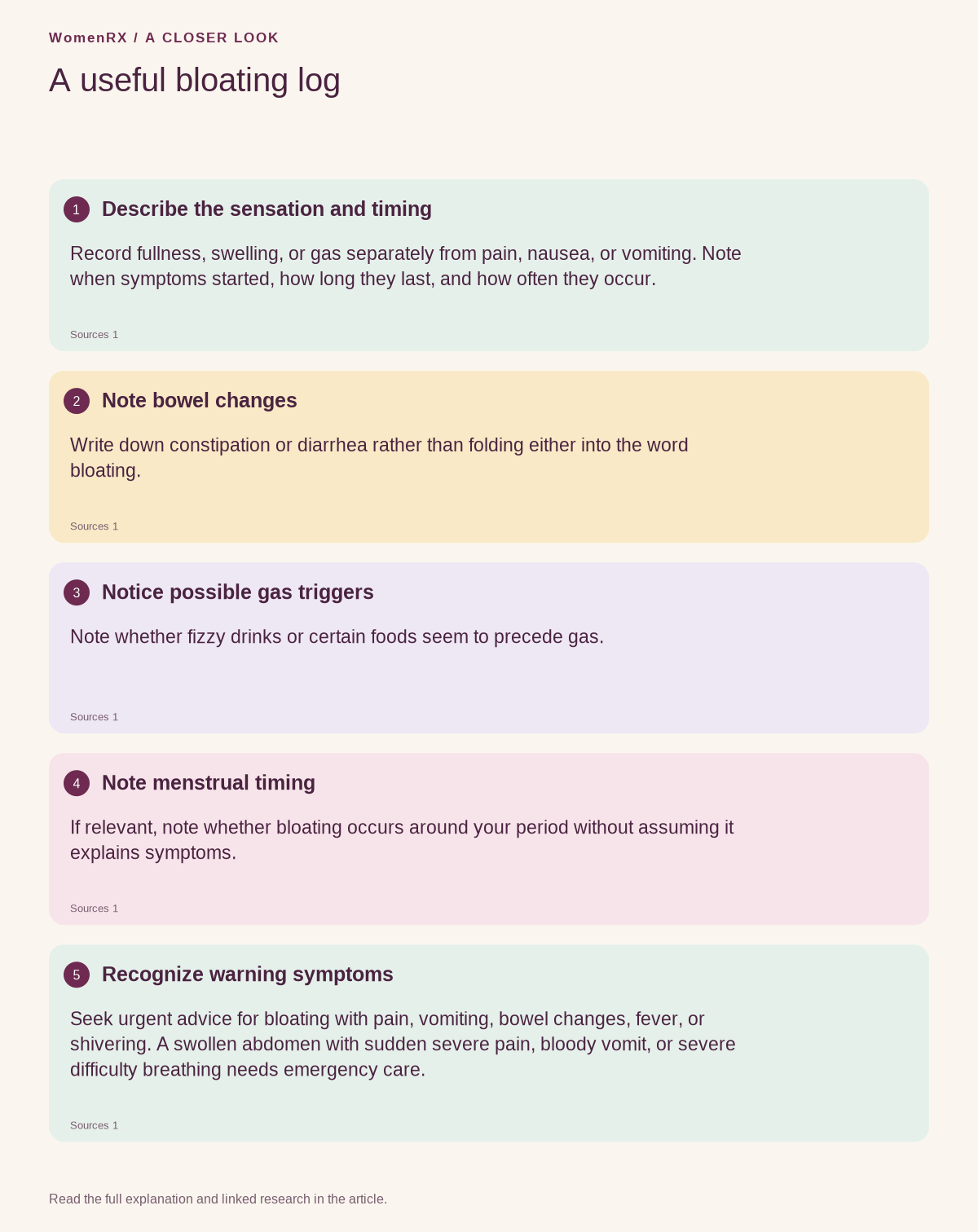
Describe the sensation and timing: Record fullness, swelling, or gas separately from pain, nausea, or vomiting. Note when symptoms started, how long they last, and how often they occur.1
Note bowel changes: Write down constipation or diarrhea rather than folding either into the word bloating.1
Notice possible gas triggers: Note whether fizzy drinks or certain foods seem to precede gas.1
Note menstrual timing: If relevant, note whether bloating occurs around your period without assuming it explains symptoms.1
Recognize warning symptoms: Seek urgent advice for bloating with pain, vomiting, bowel changes, fever, or shivering. A swollen abdomen with sudden severe pain, bloody vomit, or severe difficulty breathing needs emergency care.1
Read the figure as text
Record the symptom, how long it lasts, possible gas triggers, related changes, and when treatment started or changed. This checklist helps organize a discussion; it is not a diagnostic score.- Describe the sensation and timing: Record fullness, swelling, or gas separately from pain, nausea, or vomiting. Note when symptoms started, how long they last, and how often they occur.1
- Note bowel changes: Write down constipation or diarrhea rather than folding either into the word bloating.1
- Notice possible gas triggers: Note whether fizzy drinks or certain foods seem to precede gas.1
- Note menstrual timing: If relevant, note whether bloating occurs around your period without assuming it explains symptoms.1
- Recognize warning symptoms: Seek urgent advice for bloating with pain, vomiting, bowel changes, fever, or shivering. A swollen abdomen with sudden severe pain, bloody vomit, or severe difficulty breathing needs emergency care.1
More questions, answered
Does bloating around my period mean the medicine isn’t involved?
Not necessarily. Bloating can occur around a period, but timing alone can’t establish the cause. Keep track of whether it settles and whether pain, vomiting, or bowel changes occur too. 1
What if I’m not sure whether it’s bloating or pain?
Describe the sensation plainly: fullness or swelling, pressure, cramping, or steady pain. Note where it is and whether it spreads. Persistent or severe abdominal pain, including pain that spreads to the back, needs prompt assessment rather than being logged as bloating alone. 2
Sources you can check
- Bloating - NHSAccessed 2026-09-25Return to first citation
- WEGOVY (SEMAGLUTIDE) INJECTION, SOLUTION WEGOVY (SEMAGLUTIDE) TABLET [NOVO NORDISK PHARMACEUTICAL INDUSTRIES, LP] | US prescribing information and patient instructionsAccessed 2026-09-25Return to first citation
- OZEMPIC (ORAL SEMAGLUTIDE) TABLET RYBELSUS (ORAL SEMAGLUTIDE) TABLET [NOVO NORDISK PHARMACEUTICAL INDUSTRIES, LP] | US prescribing information and patient instructionsAccessed 2026-09-25Return to first citation