Constipation on a GLP-1 Medicine: What to Try and When to Call
GLP-1 medicines may contribute to constipation, but changes in eating, drinking, activity, other medicines, pregnancy, or postpartum recovery can matter too.
Constipation can happen while taking a GLP-1 medicine. 3 Reduced appetite and smaller meals may mean less fiber reaches your gut, and these medicines can also slow stomach emptying. 3 4 Try practical basics such as fluids, fiber-containing foods, movement, and responding to the urge to go. 1 2 Ask your prescriber or pharmacist before using a laxative. 1 Severe or persistent abdominal pain, especially with vomiting or pain going to your back, may signal pancreatitis. Seek urgent medical assessment rather than treating it as constipation. 3
Why constipation can show up
A GLP-1 medicine may be part of the picture, but it isn't the only possible cause. These medicines can slow stomach emptying. They can also reduce appetite and meal size, which may change how much fiber and other food reaches the colon. Those effects could contribute to constipation, though they don't explain every case. 3 4
A change in your bowel pattern matters more than whether you go every day. Constipation can mean going less often than usual, having fewer than three bowel movements in a week, or passing hard, dry stools that are difficult or painful to pass. 1 2
In the prescribing-information table for oral semaglutide, constipation was reported by 6% of participants taking 7 mg and 5% taking 14 mg, compared with 2% taking placebo. These rates should not be generalized to everyone taking semaglutide or other medicines in the class. The table doesn't provide a women-versus-men comparison. 3
Start with manageable changes
If symptoms are mild and you can pass stool, consider a few low-pressure steps:
- Keep fluids in view. Drinking plenty of fluids is part of general constipation self-care. If nausea or another health condition makes drinking difficult, get advice tailored to you rather than forcing a particular amount. 1
- Notice what you're eating. Fruits, vegetables, and grains contain fiber. If smaller meals have left you eating much less than usual, that may be useful context to share with your prescriber or dietitian. 1 4
- Add movement that fits your day. A walk or other regular activity may help bowel regularity. 1 2
- Make time when the urge comes. Try not to put off a bowel movement. Resting your feet on a low stool while on the toilet may also make passing stool easier. 2
Don't assume a laxative is the right next step. MedlinePlus advises using laxatives only if your health care provider says you should. Ask your prescriber or pharmacist what fits your symptoms, other medicines, and medical history. 1
Track the pattern, not just the date
For a few days, jot down when you have a bowel movement and whether the stool is hard, dry, painful, or difficult to pass. Also note when symptoms began relative to starting the medicine or a dose change, along with changes in appetite, food, fluids, activity, and any other medicines you take. This is a practical way to help your care team consider several possible contributors; it doesn't diagnose the cause.
Mention constipation-causing medicines as a possibility during that review. MedlinePlus specifically recommends asking whether medicines you take could be contributing. 1
If you're pregnant or recently gave birth, mention that too. Constipation is common during pregnancy and after giving birth, so the medicine may not be the only explanation. 2
Know when self-care isn't enough
Contact your prescriber if constipation is persistent, worsening, or a noticeable change from your usual pattern. You don't need to wait until you have fewer than three bowel movements a week if your own pattern has changed or passing stool has become painful. 1 2
Severe or persistent abdominal pain, especially pain that radiates to your back and may occur with nausea or vomiting, should not be treated as routine constipation. Semaglutide prescribing information identifies this pattern as a possible sign of pancreatitis and directs appropriate management if pancreatitis is suspected. Seek prompt medical assessment if you have this symptom pattern. 3
If symptoms are severe, don't try to manage them only with food or fluids. Tell the clinician evaluating you which GLP-1 medicine you take and when you last used it. For less severe but ongoing constipation, your prescriber can help weigh the medication, your bowel pattern, intake changes, and other possible causes together.
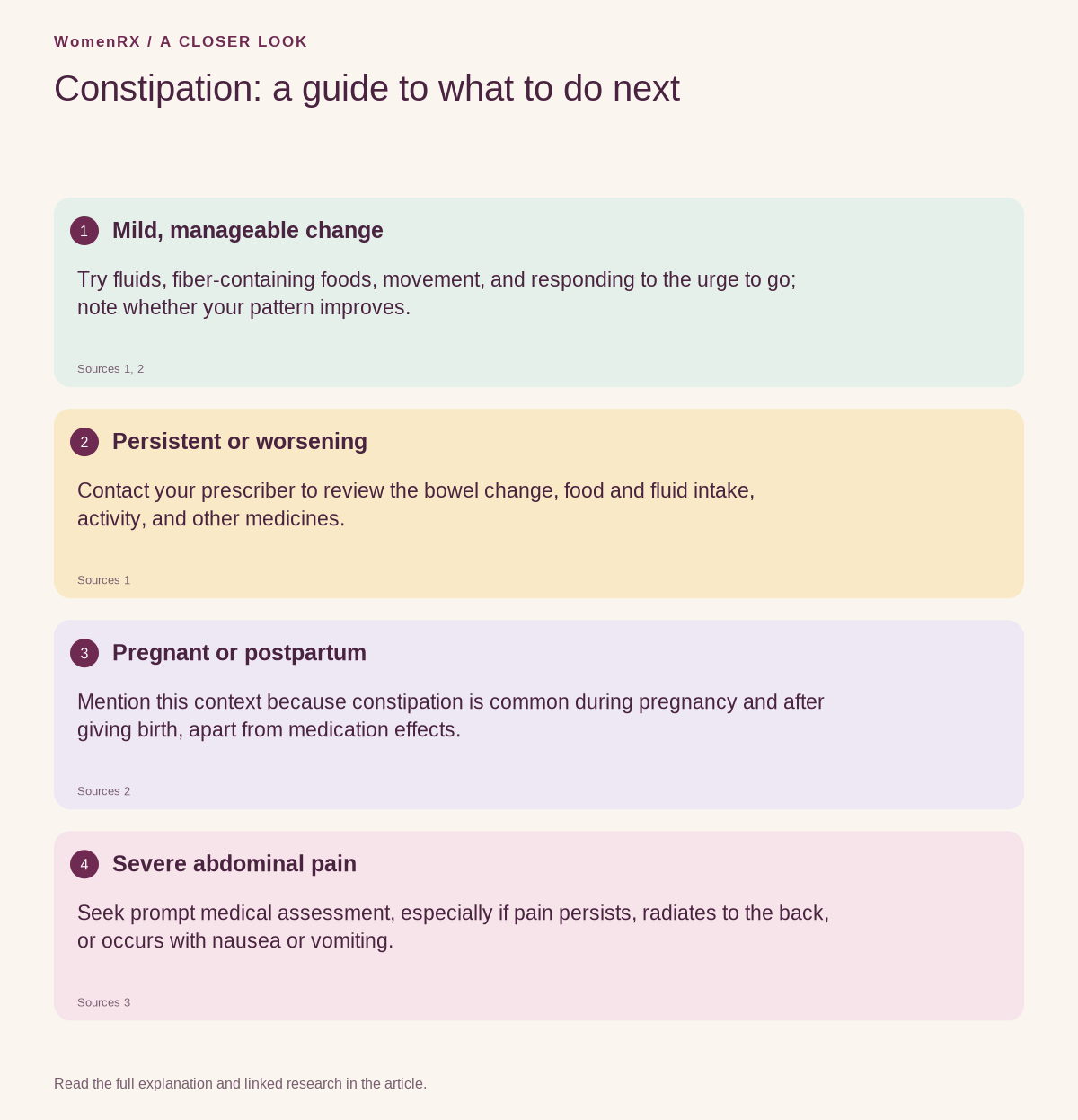
Constipation: a guide to what to do next
Mild, manageable change: Try fluids, fiber-containing foods, movement, and responding to the urge to go; note whether your pattern improves.12
Persistent or worsening: Contact your prescriber to review the bowel change, food and fluid intake, activity, and other medicines.1
Pregnant or postpartum: Mention this context because constipation is common during pregnancy and after giving birth, apart from medication effects.2
Severe abdominal pain: Seek prompt medical assessment, especially if pain persists, radiates to the back, or occurs with nausea or vomiting.3
Read the figure as text
Use symptom severity and change from your usual bowel pattern to choose a next step. These are alternative situations, not steps to follow in order, and this is not a diagnostic test.- Mild, manageable change: Try fluids, fiber-containing foods, movement, and responding to the urge to go; note whether your pattern improves.12
- Persistent or worsening: Contact your prescriber to review the bowel change, food and fluid intake, activity, and other medicines.1
- Pregnant or postpartum: Mention this context because constipation is common during pregnancy and after giving birth, apart from medication effects.2
- Severe abdominal pain: Seek prompt medical assessment, especially if pain persists, radiates to the back, or occurs with nausea or vomiting.3
More questions, answered
Do I need to have a bowel movement every day?
No. A daily bowel movement isn't necessary for everyone. Pay attention to changes from your usual pattern and to hard, dry, painful, or difficult-to-pass stool. 1 2
Is constipation more common in women taking GLP-1 medicines?
The cited prescribing-information table for oral semaglutide doesn't provide a women-versus-men constipation comparison, so it can't answer that question. Pregnancy and the period after giving birth are separate situations in which constipation is common. 2 3
Sources you can check
- Constipation | MedlinePlusAccessed 2026-09-25Return to first citation
- Constipation - NHSAccessed 2026-09-25Return to first citation
- OZEMPIC (ORAL SEMAGLUTIDE) TABLET RYBELSUS (ORAL SEMAGLUTIDE) TABLET [NOVO NORDISK PHARMACEUTICAL INDUSTRIES, LP] | US prescribing information and patient instructionsAccessed 2026-09-25Return to first citation
- Psyllium and Glucomannan as Viscous Fiber Modulators of the Gut-Microbiome-Incretin Axis: Molecular Links to Metabolic Inflammation, Barrier Function, and GLP-1 Receptor Agonist Therapy.Yoon Y, Hwang J, Yang CM, Moon M, Lee JJ, Lam KHS, Castro JC, Suryadi T, Suhaimi A, Lee J. · International journal of molecular sciences · 2026Return to first citation