Constipation on Semaglutide: What to Try and When to Call
Constipation can happen with semaglutide, but what you should do next depends on your symptoms and the product you take.
For mild constipation, try fiber-rich foods, physical activity, and making time to use the bathroom when you feel the urge. If it persists or comes with pain, regular bloating, or blood in your stool, contact your clinician. Severe abdominal pain that may spread to your back needs prompt attention; oral Rybelsus and Ozempic tablet instructions say to stop the tablets and contact your prescriber if pancreatitis is suspected. 2 3 1
Start with your usual bowel pattern
Constipation isn’t just a count of bathroom trips. Stool may be hard or dry, you may strain, or you may feel you haven’t emptied completely. Going fewer than three times in a week can be a clue, but you don’t need to have a bowel movement every day. A change from your usual pattern matters. 2 3
Constipation is a reported side effect of semaglutide. In a review of randomized trials of several GLP-1 medicines, constipation was more likely with the medicines studied than with placebo. That finding doesn’t tell you your personal odds or establish the same risk for every semaglutide product. 4
What to try when symptoms are mild
General constipation measures are a reasonable place to start: eat fiber-rich foods such as fruits, vegetables, and whole grains; get some physical activity; and give yourself time to use the bathroom when you feel the urge. These are constipation measures, not a special regimen for semaglutide. 2
Think about what else changed around the time your bowel habits changed. For example, note whether you started another medicine or changed one you already take. A clinician or pharmacist can help review whether a medicine may be contributing. If everyday measures aren’t helping, ask which constipation treatment fits your situation rather than guessing at a laxative. Don’t stop a prescribed medicine without advice, except where your specific product instructions tell you to stop for a suspected serious side effect. 2 3 1
When it’s more than an everyday constipation question
Contact your clinician if constipation persists, your bowel habits change suddenly, or you have stomach pain, regular bloating, or blood in your stool. Don’t assume those symptoms are simply part of taking semaglutide. 2 3
Severe abdominal pain is a different situation. The prescribing information for oral Rybelsus and Ozempic tablets describes severe abdominal pain that may spread to the back, with or without nausea or vomiting, as a possible symptom of pancreatitis. It instructs people to stop those tablets promptly and contact their prescriber if pancreatitis is suspected. That is a product-specific instruction, not wording to apply automatically to every semaglutide formulation. 1
If you’re pregnant or recently gave birth
Constipation is also common during pregnancy and after birth. The timing of a bowel change alone may not tell you whether semaglutide is responsible. If you’re pregnant or postpartum, include that context and the name of your specific semaglutide product when you discuss persistent symptoms or treatment options with your care team. 3
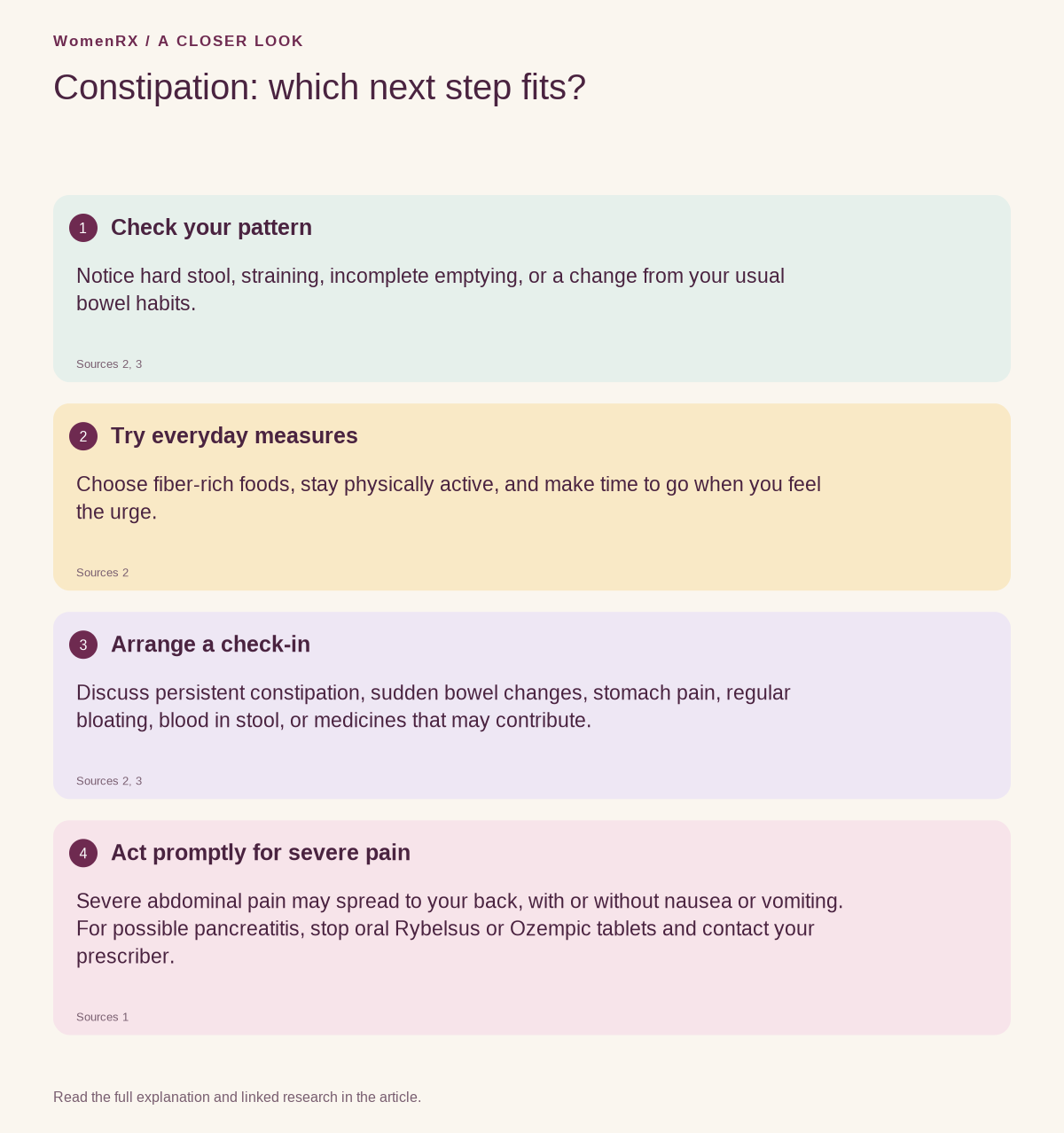
Constipation: which next step fits?
Check your pattern: Notice hard stool, straining, incomplete emptying, or a change from your usual bowel habits.23
Try everyday measures: Choose fiber-rich foods, stay physically active, and make time to go when you feel the urge.2
Arrange a check-in: Discuss persistent constipation, sudden bowel changes, stomach pain, regular bloating, blood in stool, or medicines that may contribute.23
Act promptly for severe pain: Severe abdominal pain may spread to your back, with or without nausea or vomiting. For possible pancreatitis, stop oral Rybelsus or Ozempic tablets and contact your prescriber.1
Read the figure as text
A quick distinction between mild symptoms, reasons to check in, and the oral-tablet instruction for possible pancreatitis.- Check your pattern: Notice hard stool, straining, incomplete emptying, or a change from your usual bowel habits.23
- Try everyday measures: Choose fiber-rich foods, stay physically active, and make time to go when you feel the urge.2
- Arrange a check-in: Discuss persistent constipation, sudden bowel changes, stomach pain, regular bloating, blood in stool, or medicines that may contribute.23
- Act promptly for severe pain: Severe abdominal pain may spread to your back, with or without nausea or vomiting. For possible pancreatitis, stop oral Rybelsus or Ozempic tablets and contact your prescriber.1
More questions, answered
Should I stop semaglutide because I’m constipated?
For constipation alone, discuss symptoms that persist or worry you with your prescriber rather than stopping a prescribed medicine without advice. There’s an important exception for a suspected serious side effect: the oral Rybelsus and Ozempic tablet instructions say to stop those tablets promptly and contact the prescriber if pancreatitis is suspected. 3 1
Sources you can check
- OZEMPIC (ORAL SEMAGLUTIDE) TABLET RYBELSUS (ORAL SEMAGLUTIDE) TABLET [NOVO NORDISK PHARMACEUTICAL INDUSTRIES, LP] | US prescribing information and patient instructionsAccessed 2026-09-25Return to first citation
- Constipation | MedlinePlusAccessed 2026-09-25Return to first citation
- Constipation - NHSAccessed 2026-09-25Return to first citation
- Exploring the rates of Gastrointestinal adverse effects among five GLP-1 receptor agonists: A systematic review and Meta-Analysis of randomized controlled trials.Joy B, Ramsamooj A, Ibrahim S, Wen J, Hsu N, Frezza E. · Endocrine · 2026Return to first citation