Constipation on Ozempic: What Helps and When to Call
Constipation can happen with semaglutide, but you don’t have to have a bowel movement every day to be regular.
Semaglutide is associated with constipation, though it doesn’t happen to everyone. If symptoms are mild, try fiber-rich foods, fluids, regular movement, and going when you feel the urge. Tell your prescriber if constipation is severe, persistent, or began around a dose change. Severe abdominal pain that won’t go away, with or without vomiting, needs prompt medical attention. 1 2 4
Why your bowel habits may change
Constipation can mean going less often than usual, passing hard or dry stool, straining, or feeling that you haven’t fully emptied. A bowel movement every day isn’t necessary; a noticeable change from your usual pattern is more useful to pay attention to. 2 3
Constipation is among the gastrointestinal side effects reported with semaglutide. A review of four randomized trials involving 3,613 adults with overweight or obesity without type 2 diabetes found gastrointestinal side effects were more frequent with semaglutide than with placebo; constipation was among the commonly reported effects. That doesn’t mean it will happen to everyone taking Ozempic. 4
A few things can overlap. Semaglutide can reduce appetite and energy intake. If you’re eating less, you may also be getting less fiber from fruits, vegetables, and whole grains. Not drinking enough fluids and being less active can contribute to constipation too. 2 3 4
If the change started after you began semaglutide or changed your dose, tell your prescriber when it began. The timing is useful context, but it doesn’t prove that a dose change caused the constipation. Other medicines may contribute as well; opioid pain medicines are one example. 2 3
Gentle steps to try first
If symptoms are mild, try a few manageable changes:
- Choose more fiber-rich foods. Fruits, vegetables, and whole grains are practical options. 2
- Drink enough fluids. This may help, particularly if you’ve been drinking less than usual. 2
- Move regularly if you can. A walk may help support more regular bowel movements. 3
- Go when you feel the urge. Try not to put it off. 2 3
- Change your toilet position. Resting your feet on a low stool can help raise your knees above your hips. 3
If these steps aren’t helping, ask your prescriber or pharmacist whether a constipation medicine is suitable for you. The right choice can depend on your symptoms and other medicines, so don’t assume every laxative is appropriate. 2 3
When to call for medical advice
Contact your prescriber if constipation is severe or doesn’t go away, if your bowel habits change suddenly, or if you have abdominal pain. The Ozempic patient information also says to report stomach problems that are severe or persistent. 1 3
Severe abdominal pain that won’t go away needs prompt medical attention while you’re taking Ozempic, whether or not you’re vomiting. The medication information identifies this as a possible sign of pancreatitis. Don’t treat severe, ongoing pain as routine constipation. 1
Pregnancy, postpartum, and sex differences
Constipation is common during pregnancy and after giving birth. General measures such as fiber-rich foods, fluids, and activity are described as safe to try during pregnancy. If you’re pregnant and considering a constipation medicine, ask your maternity-care team or pharmacist what is suitable; general self-care guidance doesn’t establish medication-specific safety. 3
A review of semaglutide trials in adults with overweight or obesity without diabetes reports constipation among common side effects, but its reported results don’t break constipation outcomes down by sex. Those results can’t tell us whether the risk differs between women and men. 4
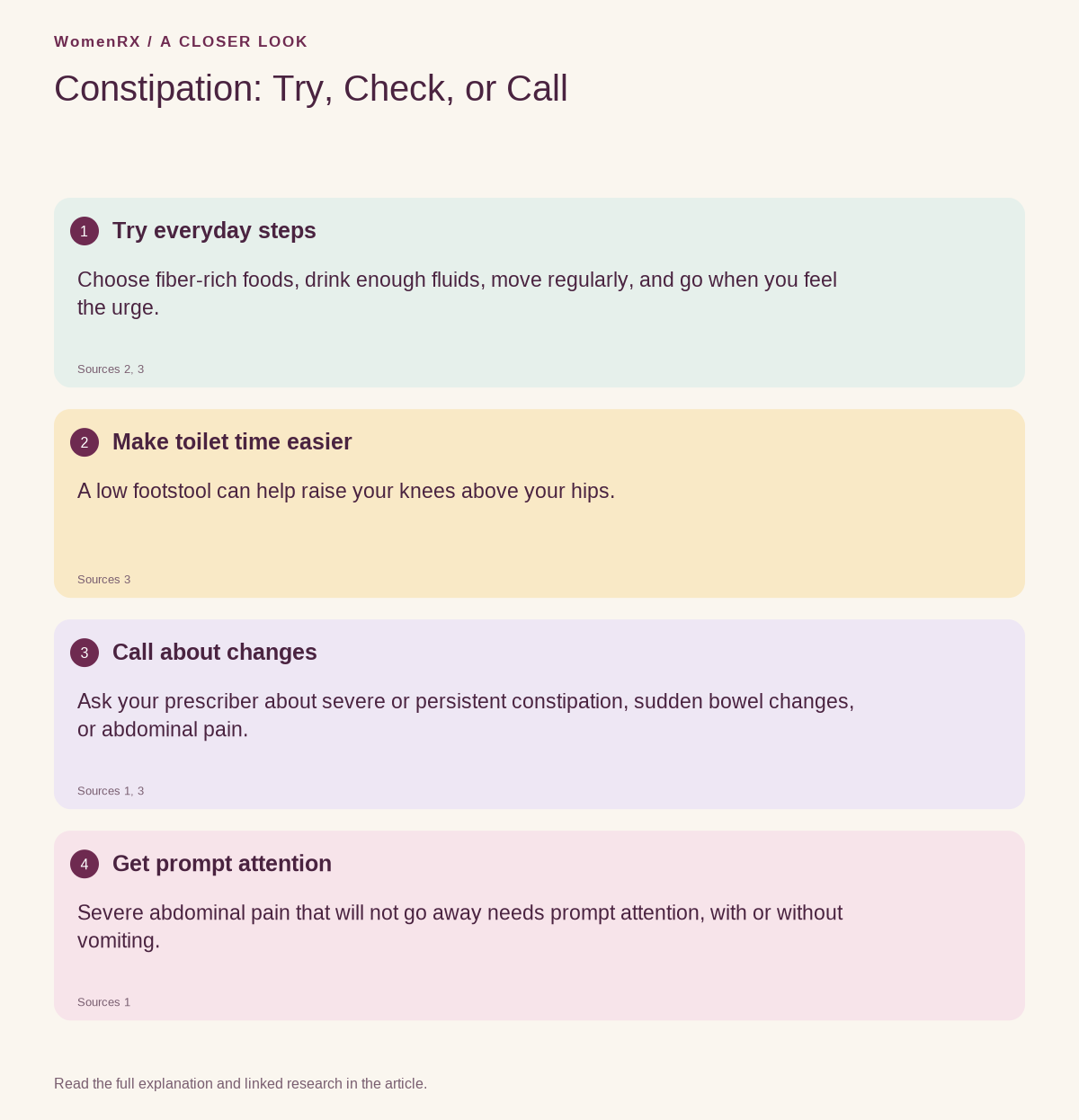
Constipation: Try, Check, or Call
Try everyday steps: Choose fiber-rich foods, drink enough fluids, move regularly, and go when you feel the urge.23
Make toilet time easier: A low footstool can help raise your knees above your hips.3
Call about changes: Ask your prescriber about severe or persistent constipation, sudden bowel changes, or abdominal pain.13
Get prompt attention: Severe abdominal pain that will not go away needs prompt attention, with or without vomiting.1
Read the figure as text
Separate gentle first steps from symptoms that need medical advice or prompt attention.- Try everyday steps: Choose fiber-rich foods, drink enough fluids, move regularly, and go when you feel the urge.23
- Make toilet time easier: A low footstool can help raise your knees above your hips.3
- Call about changes: Ask your prescriber about severe or persistent constipation, sudden bowel changes, or abdominal pain.13
- Get prompt attention: Severe abdominal pain that will not go away needs prompt attention, with or without vomiting.1
More questions, answered
Do I need to have a bowel movement every day?
No. Daily bowel movements aren’t necessary. Pay attention to a change from your usual pattern, hard or dry stool, straining, or discomfort. 2 3
Sources you can check
- OZEMPIC (SEMAGLUTIDE) INJECTION, SOLUTION [A-S MEDICATION SOLUTIONS] | US prescribing information and patient instructionsAccessed 2026-09-25Return to first citation
- Constipation | MedlinePlusAccessed 2026-09-25Return to first citation
- Constipation - NHSAccessed 2026-09-25Return to first citation
- Effectiveness & safety of semaglutide in weight reduction in obese nondiabetic patients: A systematic review and meta-analysis.Naz F, Qaiser F, Mumtaz A, Din SU, Mustafa A, Ullah A, Perveen A, Malik J. · Medicine · 2026Return to first citation