How to Respond to Constipation on Tirzepatide
A change in your usual bowel pattern can be a side effect, but severe pain, vomiting, or other warning signs call for a different response.
Constipation is a recognized side effect of tirzepatide. Note what’s changed from your usual pattern, including stool texture, straining, and when symptoms began. If symptoms are mild, hydration, fiber-rich foods, movement, and responding to the urge to go may help. Check with your prescriber about persistent or worsening symptoms and before using a laxative. Seek urgent care for severe abdominal warning signs. 1 2 4
Constipation can mean going less often than usual, passing hard or dry stool, straining, or feeling that you haven’t fully emptied your bowels. Fewer than three bowel movements a week is one common definition, but your usual pattern matters too. You don’t have to have a bowel movement every day. 2 3
Tirzepatide can affect gastrointestinal function, and constipation was reported in clinical trials. In two placebo-controlled trials in adults with overweight or obesity, constipation was reported by 5% of people taking placebo, compared with 17% taking 5 mg, 14% taking 10 mg, and 11% taking 15 mg. Those figures show that constipation occurred more often with the medicine than placebo in these trials; they don’t mean everyone will experience it or that an individual’s symptoms are necessarily caused by tirzepatide. 4 5
First, check the pattern and how you feel
Make a brief note of when the change started, how often you’re having bowel movements compared with usual, whether stools are hard or painful, and whether you’re straining or feeling bloated. Also notice abdominal pain, nausea, or vomiting. If symptoms began after starting tirzepatide or after a treatment change, tell your prescriber. A different medicine or a change in routine can also contribute, so mention other medicines you take rather than assuming tirzepatide is the only cause. If you have a known pelvic-floor condition, mention it to your prescriber as context. 2 3
Pregnancy and the period after giving birth can also be associated with constipation. If either is relevant to you, include it in the conversation about your symptoms. 3
If symptoms are mild, start with basics
If you feel otherwise well and can pass stool, consider supportive steps: drink fluids, choose fiber-rich foods such as fruits, vegetables, and grains, stay active as you’re able, and take time to use the bathroom when you feel the urge. Adjust fiber based on what you tolerate; adding fiber or a supplement such as psyllium is a consensus-supported option when you aren’t getting enough from food. 2 5
Don’t assume that more fiber or a laxative is always the right next step. Ask your prescriber or pharmacist before using a laxative, especially if symptoms are continuing, becoming more uncomfortable, or accompanied by other symptoms. MedlinePlus advises using laxatives only if your health care provider says you should. 2
Know when home care is not enough
Contact your prescriber about constipation that persists or worsens, a sudden change in your bowel habits, or constipation accompanied by abdominal pain. Severe constipation and fecal impaction have been reported after tirzepatide was approved for use, as have ileus and intestinal obstruction. These reports don’t show how likely any one complication is, but they make it worth taking significant or worsening symptoms seriously. 3 4
Seek urgent medical care for sudden, sharp abdominal pain; a hard, stiff, tender abdomen; blood in your stool or vomit; or being unable to move your bowels, particularly if you’re also vomiting. Persistent or severe abdominal pain, sometimes spreading to the back and with or without nausea or vomiting, can also be a sign of pancreatitis in the tirzepatide prescribing information. Don’t treat these warning signs as routine constipation. 1 4
The practical dividing line is how you feel overall: a mild change in bowel habits may be reasonable to discuss with your prescriber, while severe pain, vomiting with inability to pass stool, or other listed warning signs need prompt assessment. 1 3
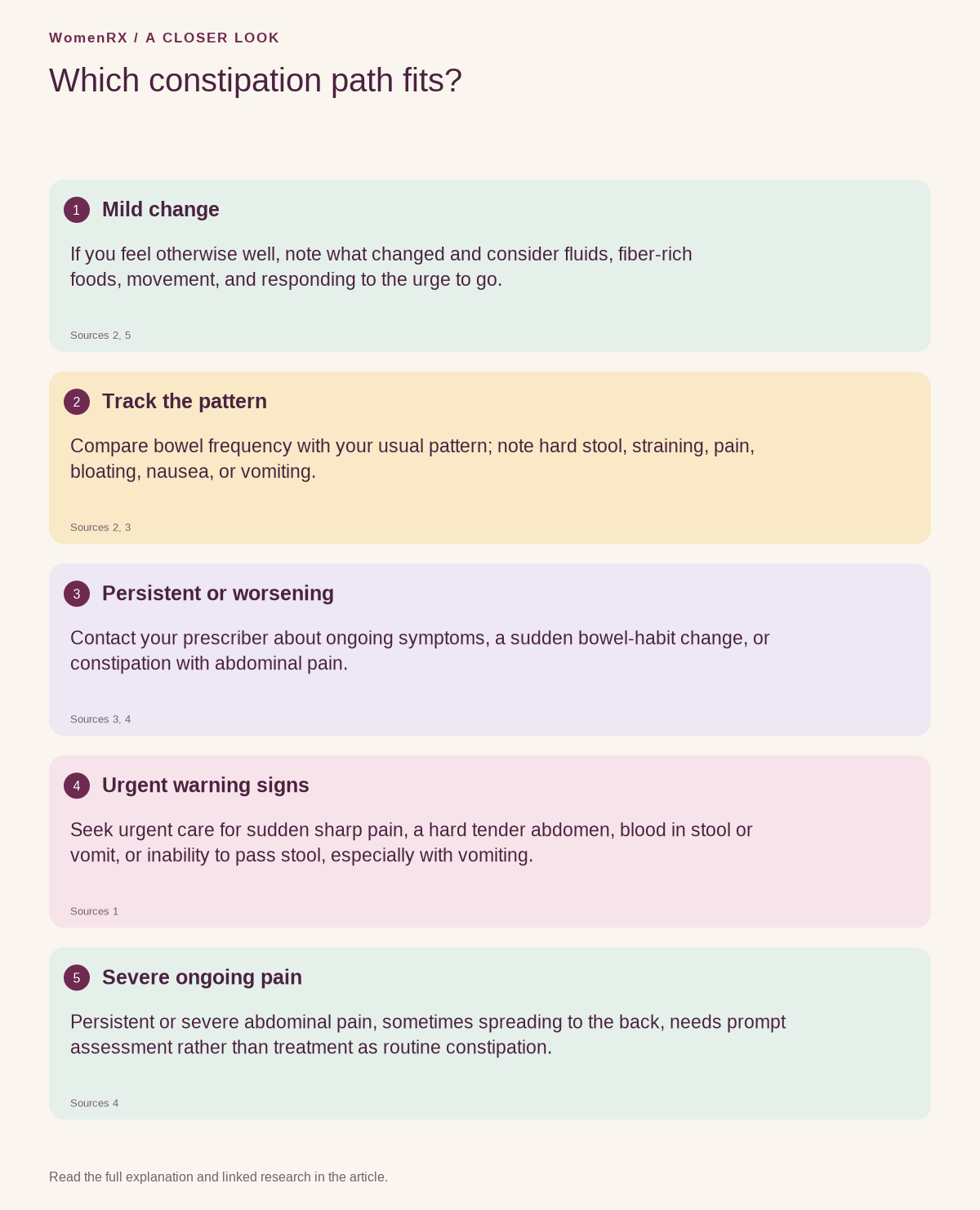
Which constipation path fits?
Mild change: If you feel otherwise well, note what changed and consider fluids, fiber-rich foods, movement, and responding to the urge to go.25
Track the pattern: Compare bowel frequency with your usual pattern; note hard stool, straining, pain, bloating, nausea, or vomiting.23
Persistent or worsening: Contact your prescriber about ongoing symptoms, a sudden bowel-habit change, or constipation with abdominal pain.34
Urgent warning signs: Seek urgent care for sudden sharp pain, a hard tender abdomen, blood in stool or vomit, or inability to pass stool, especially with vomiting.1
Severe ongoing pain: Persistent or severe abdominal pain, sometimes spreading to the back, needs prompt assessment rather than treatment as routine constipation.4
Read the figure as text
Use the pattern and how you feel to distinguish mild symptoms for discussion from symptoms that need urgent assessment.- Mild change: If you feel otherwise well, note what changed and consider fluids, fiber-rich foods, movement, and responding to the urge to go.25
- Track the pattern: Compare bowel frequency with your usual pattern; note hard stool, straining, pain, bloating, nausea, or vomiting.23
- Persistent or worsening: Contact your prescriber about ongoing symptoms, a sudden bowel-habit change, or constipation with abdominal pain.34
- Urgent warning signs: Seek urgent care for sudden sharp pain, a hard tender abdomen, blood in stool or vomit, or inability to pass stool, especially with vomiting.1
- Severe ongoing pain: Persistent or severe abdominal pain, sometimes spreading to the back, needs prompt assessment rather than treatment as routine constipation.4
More questions, answered
Do I need to have a bowel movement every day?
No. Daily bowel movements aren’t required. Pay attention to a change from your usual pattern, as well as hard or dry stool, pain, and straining. 2 3
Sources you can check
- Abdominal Pain | MedlinePlusAccessed 2026-09-25Return to first citation
- Constipation | MedlinePlusAccessed 2026-09-25Return to first citation
- Constipation - NHSAccessed 2026-09-25Return to first citation
- ZEPBOUND (TIRZEPATIDE) INJECTION, SOLUTION ZEPBOUND (TIRZEPATIDE) INJECTION, SOLUTION ZEPBOUND KWIKPEN (TIRZEPATIDE) INJECTION, SOLUTION [ELI LILLY AND COMPANY] | US prescribing information and patient instructionsAccessed 2026-09-25Return to first citation
- Nutritional and lifestyle supportive care recommendations for management of obesity with GLP-1 - based therapies: An expert consensus statement using a modified Delphi approach.Sievenpiper JL, Ard J, Blüher M, Chen W, Dixon JB, Fitch A, Gigliotti L, Khunti K, Lecube A, Lean MEJ, Mittendorfer B, Pfeiffer AFH, Ryan DH, Vilsbøll T, Van Gaal LF. · Obesity pillars · 2026Return to first citation