How to Respond to Nausea on Wegovy
Mild nausea may be manageable with smaller meals and fluids, but persistent symptoms, dehydration, or severe abdominal pain call for medical advice.
Nausea is a common side effect of Wegovy and gastrointestinal reactions are reported most often during dose escalation. 2 Try smaller, more frequent meals, drink fluids, and notice whether certain foods or smells make it worse. 1 4 Contact your prescriber if nausea continues, vomiting or diarrhea makes it hard to stay hydrated, or you have severe abdominal pain. 2
Start with how you feel, not just when it began
Nausea is one of the most frequently reported digestive side effects in adult Wegovy injection trials, and these reactions were reported most often during dose escalation. 2 That timing can be useful context, but it doesn’t prove the medicine is the only cause. Nausea can have other causes too, including pregnancy. 1
A helpful first distinction is whether you can keep drinking and whether the nausea is easing or sticking around. If it’s mild and you can drink, try a few practical changes while paying attention to the pattern. If symptoms persist or are stopping you from drinking, contact your prescriber rather than trying to manage it alone. The Wegovy prescribing information advises promptly reporting persistent nausea, vomiting, or diarrhea. 2
If you can drink and symptoms are mild
Try smaller, more frequent meals instead of larger ones. Drinking enough fluids matters, especially if you’re also vomiting or having diarrhea. Strong smells can trigger nausea for some people, so avoiding a smell that reliably sets it off may help. A clinical review of GLP-1 medicines also recommends smaller, more frequent meals, hydration, and avoiding high-fat or high-sugar foods. These steps may help, but they don’t guarantee nausea will stop. 1 4
Notice whether the nausea is related to a recent treatment change, a particular meal, or a strong smell. Keep it simple: jot down when it started, any recent treatment changes, whether you’ve vomited or had diarrhea, and whether you can eat and drink. That gives your prescriber concrete details if you need to check in.
Contact your prescriber if symptoms persist
Get in touch if nausea continues, keeps returning, or comes with ongoing vomiting or diarrhea. These symptoms can make it hard to replace lost fluids; dry mouth, infrequent urination, or dark urine can be signs of dehydration. 1 The Wegovy prescribing information specifically advises promptly reporting persistent nausea, vomiting, or diarrhea because fluid loss can also be associated with kidney problems. 2
If you can’t keep fluids down, or you’re urinating much less than usual, don’t wait for a routine follow-up to mention it. Ask for medical advice promptly. The right next step depends on what’s causing the symptoms and how severe they are; don’t change your treatment plan based only on a self-care tip.
Get urgent help for severe abdominal pain
Seek urgent medical assessment for persistent or severe abdominal pain, especially if it spreads toward your back. Wegovy’s prescribing information identifies this as a possible sign of acute pancreatitis; nausea or vomiting may or may not occur with the pain. 2
Confusion or signs of shock with dehydration also need immediate medical help. 3 Nausea by itself is not the same as these warning signs, but severe pain or a major change in how you feel deserves a different response than mild queasiness.
If pregnancy is possible
Nausea has many possible causes, and pregnancy is one of them. If pregnancy is possible, tell your clinician; a pregnancy test may be part of evaluating nausea. That context can help separate a possible medication side effect from another explanation. 1
The useful pattern to share is straightforward: when nausea began, how it relates to treatment changes, whether you’re vomiting or having diarrhea, and how well you can eat, drink, and urinate. Those details help make the conversation about your actual symptoms, not just the fact that you feel nauseated.
What to do about nausea on Wegovy
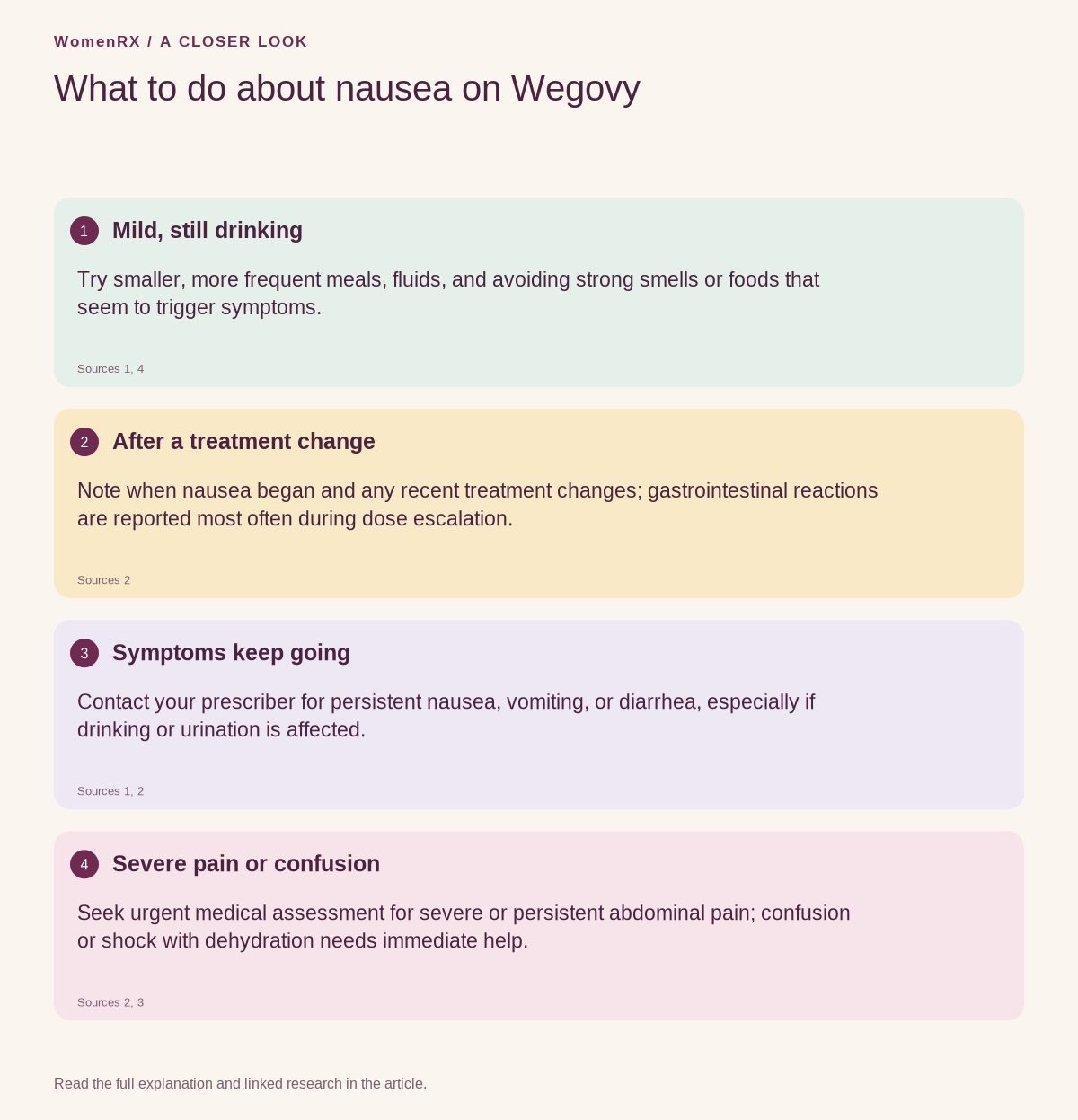
Mild, still drinking: Try smaller, more frequent meals, fluids, and avoiding strong smells or foods that seem to trigger symptoms.14
After a treatment change: Note when nausea began and any recent treatment changes; gastrointestinal reactions are reported most often during dose escalation.2
Symptoms keep going: Contact your prescriber for persistent nausea, vomiting, or diarrhea, especially if drinking or urination is affected.12
Severe pain or confusion: Seek urgent medical assessment for severe or persistent abdominal pain; confusion or shock with dehydration needs immediate help.23
Read the figure as text
Use symptom severity, ability to drink, and warning signs to choose a next step; this is a guide for responding, not a diagnosis.- Mild, still drinking: Try smaller, more frequent meals, fluids, and avoiding strong smells or foods that seem to trigger symptoms.14
- After a treatment change: Note when nausea began and any recent treatment changes; gastrointestinal reactions are reported most often during dose escalation.2
- Symptoms keep going: Contact your prescriber for persistent nausea, vomiting, or diarrhea, especially if drinking or urination is affected.12
- Severe pain or confusion: Seek urgent medical assessment for severe or persistent abdominal pain; confusion or shock with dehydration needs immediate help.23
Sources you can check
- Nausea | Vomiting | MedlinePlusAccessed 2026-09-25Return to first citation
- WEGOVY (SEMAGLUTIDE) INJECTION, SOLUTION WEGOVY (SEMAGLUTIDE) TABLET [NOVO NORDISK PHARMACEUTICAL INDUSTRIES, LP] | US prescribing information and patient instructionsAccessed 2026-09-25Return to first citation
- Dehydration: MedlinePlusAccessed 2026-09-25Return to first citation
- GLP1 and GIP Receptor Agonists: Effects on the Gastrointestinal Tract and Management Strategies for Primary Care Physicians.Saha B, Kamalumpundi V, Codipilly DC. · Mayo Clinic proceedings · 2025Return to first citation