Managing Nausea While Taking Ozempic
Nausea can happen with Ozempic, especially during dose increases, but persistent symptoms or severe pain deserve prompt attention.
Ozempic-related nausea is reported more often during dose escalation. Try smaller, more frequent meals, avoid smells that trigger nausea, and take small sips of fluid if you’re having trouble drinking. Keep track of when symptoms happen and whether you can keep fluids down. Contact your prescriber about nausea that persists. For severe abdominal pain that won’t go away, stop using Ozempic and call your healthcare provider right away. 123
Nausea can be a side effect of Ozempic (semaglutide), and the product information says nausea, vomiting, and diarrhea are reported most often during dose escalation. But nausea has many possible causes, so timing alone can’t confirm that Ozempic is responsible. 12
Try small, manageable changes
If nausea is mild and you can keep fluids down, start with simple steps. Smaller, more frequent meals may be easier to tolerate than larger meals. Strong smells can trigger nausea for some people, so avoiding a smell that reliably bothers you may help. These are general self-care measures for nausea, not strategies proven specifically in Ozempic trials. 2
Keep drinking what you can. If you’re having trouble keeping liquids down, try small sips of water or ice chips. Nausea, vomiting, or diarrhea can lead to fluid loss; dry mouth, urinating less often, and dark urine can be signs of dehydration. 13
For nausea that is not accompanied by severe, persistent abdominal pain, don’t change or skip your Ozempic dose on your own. If nausea is interfering with eating, drinking, or daily life, ask the prescriber managing your treatment whether the dose-escalation plan or treatment should be reviewed. A clinical review of gastrointestinal effects from obesity medicines describes slower escalation or dose adjustment as possible clinician-managed approaches for poor tolerability. 4
Keep a short symptom record
A few specific details can make it easier to decide what to do next. This is a practical note-taking tool, not a validated diary or a way to diagnose the cause.
- When it happens: Note when nausea began and whether it followed a recent dose increase.
- How it feels: Record whether it is occasional or persistent, and whether you’ve vomited or had diarrhea.
- Fluids and urination: Note whether you can keep fluids down and whether you’re urinating less often or seeing dark urine.
- Pain or other changes: Record where pain is, how severe it is, and whether it lasts or spreads to your back.
- Other possible context: Note new symptoms, other changes in health, and whether pregnancy is possible.
Dose escalation is a useful timing clue because the Ozempic prescribing information says most reports of nausea, vomiting, and diarrhea occurred during that period. It doesn’t prove the medicine caused a particular episode. 1
Know when to get help
Contact your prescriber promptly if nausea, vomiting, or diarrhea doesn’t go away, if stomach symptoms are severe or persistent, or if you’re struggling to keep fluids down. Ongoing fluid loss can cause dehydration and may affect the kidneys. Signs such as dry mouth, infrequent urination, or dark urine need attention; confusion with dehydration symptoms calls for immediate medical help. 123
If you have severe abdominal pain that doesn’t go away, stop using Ozempic and call your healthcare provider right away, with or without vomiting. The pain may radiate from your abdomen to your back. The Ozempic prescribing information identifies this as a possible sign of pancreatitis. 1
If pregnancy is possible
Pregnancy can cause nausea too, so it may be difficult to tell the cause from symptoms alone. If you’re pregnant or could be, tell the clinician who manages your Ozempic treatment. Pregnancy assessment may include a pregnancy test. 2
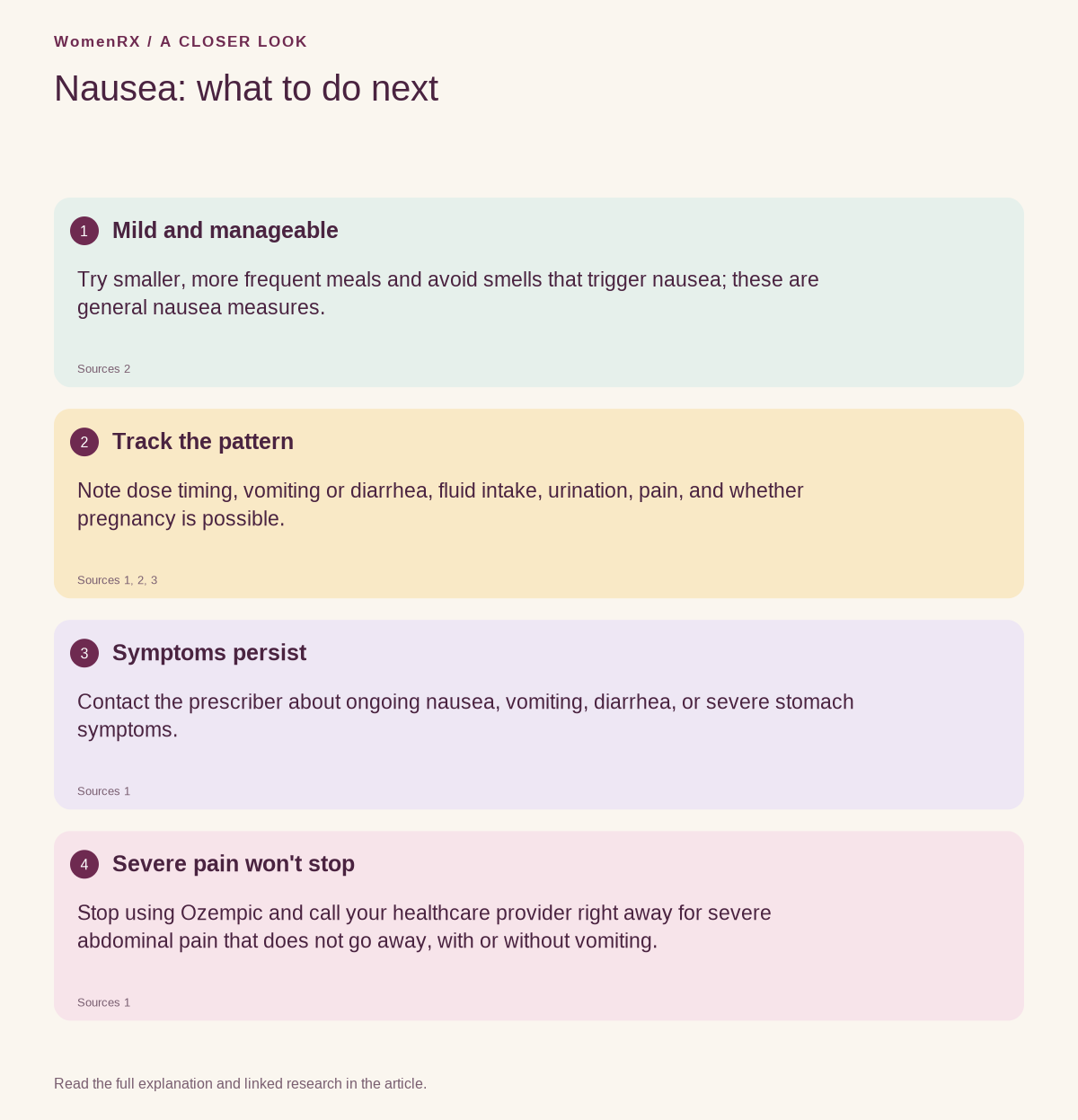
Nausea: what to do next
Mild and manageable: Try smaller, more frequent meals and avoid smells that trigger nausea; these are general nausea measures.2
Track the pattern: Note dose timing, vomiting or diarrhea, fluid intake, urination, pain, and whether pregnancy is possible.123
Symptoms persist: Contact the prescriber about ongoing nausea, vomiting, diarrhea, or severe stomach symptoms.1
Severe pain won't stop: Stop using Ozempic and call your healthcare provider right away for severe abdominal pain that does not go away, with or without vomiting.1
Read the figure as text
Use symptom severity, fluid intake, and pain as practical signals for whether to try simple measures, contact the prescriber, or act on a warning sign.- Mild and manageable: Try smaller, more frequent meals and avoid smells that trigger nausea; these are general nausea measures.2
- Track the pattern: Note dose timing, vomiting or diarrhea, fluid intake, urination, pain, and whether pregnancy is possible.123
- Symptoms persist: Contact the prescriber about ongoing nausea, vomiting, diarrhea, or severe stomach symptoms.1
- Severe pain won't stop: Stop using Ozempic and call your healthcare provider right away for severe abdominal pain that does not go away, with or without vomiting.1
More questions, answered
Should I change my Ozempic dose if I feel nauseated?
For nausea alone, don’t adjust or stop your dose on your own. Tell the prescriber managing your treatment how severe the nausea is and whether it affects eating or drinking; dose changes or slower escalation are clinician-managed options for poor tolerability. If you have severe abdominal pain that won’t go away, stop using Ozempic and call your healthcare provider right away. 14
How can I tell whether nausea is causing dehydration?
Dry mouth, urinating less often, and dark urine can be signs of dehydration. If you’re also confused, get medical help right away. 23
Sources you can check
- OZEMPIC (SEMAGLUTIDE) INJECTION, SOLUTION [A-S MEDICATION SOLUTIONS] | US prescribing information and patient instructionsAccessed 2026-09-25Return to first citation
- Nausea | Vomiting | MedlinePlusAccessed 2026-09-25Return to first citation
- Dehydration: MedlinePlusAccessed 2026-09-25Return to first citation
- Gastrointestinal Symptoms in Obesity Therapy: Mechanisms, Epidemiology, and Management Strategies.Witaszek T, Biesiada A, Iskra-Trifunović J, Babicki M, Mastalerz-Migas A, Kłoda K. · Biomedicines · 2025Return to first citation