What to Do About Nausea on Mounjaro
Mild nausea may ease with smaller, more frequent meals; contact your prescriber about symptoms that are persistent or severe.
Nausea is a common digestive side effect of Mounjaro (tirzepatide), especially during dose increases. For mild symptoms, try smaller, more frequent meals and avoid smells that trigger nausea. Contact your prescriber for persistent or severe symptoms rather than changing your dose yourself. Dry mouth, infrequent urination, or dark urine can signal dehydration and call for immediate medical contact. 1 2 3 4
First, check how the nausea is affecting you
Nausea can happen with Mounjaro, especially during dose escalation. In clinical trials, most reports of nausea, vomiting, or diarrhea occurred during escalation and decreased over time. That pattern can be reassuring, but it doesn’t mean you should ignore symptoms that are persistent or severe, or that make it hard to drink. 1
If the nausea is mild and you can keep fluids down, try smaller meals more often. Strong smells can trigger nausea for some people, so avoiding a smell you’ve noticed as a trigger may help. These are ways to manage symptoms, not a reason to put off getting help if you’re becoming unwell. 3
Keep fluids in view
Vomiting and diarrhea can cause fluid loss. Mounjaro’s prescribing information warns that dehydration from gastrointestinal symptoms has been associated with acute kidney injury, and advises patients to take precautions to avoid fluid depletion. 1
Pay attention to whether you’re drinking and urinating as usual. Very little or dark urine and a dry mouth can be signs of dehydration. MedlinePlus recommends contacting a healthcare provider immediately for signs such as these. Dizziness can also be a symptom of dehydration, but it isn’t listed as a reason for immediate contact on its own. Confusion alongside possible dehydration calls for immediate medical help. 3 4
Know when to contact your prescriber
Contact your prescriber promptly if nausea, vomiting, or diarrhea is persistent or extended, or if symptoms are severe. Get in touch promptly if you can’t keep fluids down; if you notice dry mouth, infrequent urination, or dark urine, contact a healthcare provider immediately. Your prescriber can help assess what’s going on and discuss your treatment; don’t skip, reduce, or otherwise change your prescribed dose without their guidance. 1 2 3
Severe abdominal pain, especially pain that may spread to your back, is different from mild nausea. The prescribing information identifies this as a possible symptom of pancreatitis and says to stop Mounjaro promptly and contact your physician if pancreatitis is suspected. Seek urgent medical assessment rather than trying to manage severe pain at home. 1
Make the conversation more useful
A brief note can help you describe the pattern without trying to diagnose the cause. Record when nausea starts, whether it follows an injection or dose increase, what you ate or smelled beforehand, whether you vomited or had diarrhea, and whether you could drink and urinate normally. These details may help your prescriber assess the symptoms and decide what to discuss next.
Nausea isn’t always caused by a medicine. If pregnancy is possible, mention that when you contact your care team; pregnancy is one possible cause of nausea, and a pregnancy test may be part of assessing it. 3
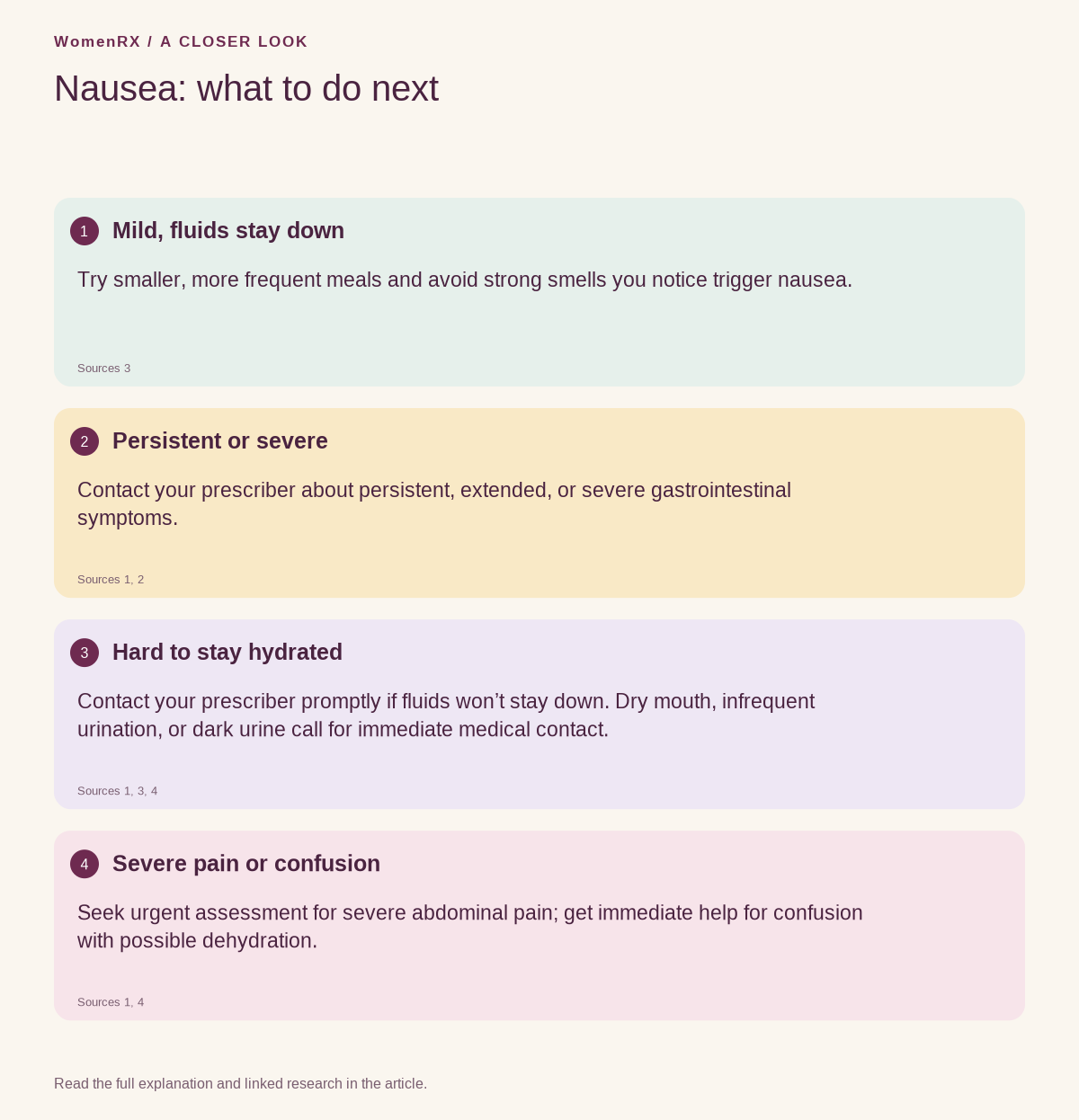
Nausea: what to do next
Mild, fluids stay down: Try smaller, more frequent meals and avoid strong smells you notice trigger nausea.3
Persistent or severe: Contact your prescriber about persistent, extended, or severe gastrointestinal symptoms.12
Hard to stay hydrated: Contact your prescriber promptly if fluids won’t stay down. Dry mouth, infrequent urination, or dark urine call for immediate medical contact.134
Severe pain or confusion: Seek urgent assessment for severe abdominal pain; get immediate help for confusion with possible dehydration.14
Read the figure as text
Use symptom severity and your ability to drink as practical cues for choosing a next step; this is not a diagnostic tool.- Mild, fluids stay down: Try smaller, more frequent meals and avoid strong smells you notice trigger nausea.3
- Persistent or severe: Contact your prescriber about persistent, extended, or severe gastrointestinal symptoms.12
- Hard to stay hydrated: Contact your prescriber promptly if fluids won’t stay down. Dry mouth, infrequent urination, or dark urine call for immediate medical contact.134
- Severe pain or confusion: Seek urgent assessment for severe abdominal pain; get immediate help for confusion with possible dehydration.14
More questions, answered
Should I change my Mounjaro dose because I feel nauseated?
Don’t change your prescribed dose on your own. Contact your prescriber if nausea is severe or persistent so you can discuss what to do. 1 2
When is nausea on Mounjaro urgent?
Seek urgent assessment for severe abdominal pain, particularly pain that spreads to your back. Contact a healthcare provider immediately for signs of dehydration, such as dry mouth or infrequent or dark urine; get immediate medical help for confusion with possible dehydration. Contact your prescriber promptly if persistent vomiting makes it hard to stay hydrated. 1 2 3 4
Sources you can check
- MOUNJARO (TIRZEPATIDE) INJECTION, SOLUTION MOUNJARO KWIKPEN (TIRZEPATIDE) INJECTION, SOLUTION [ELI LILLY AND COMPANY] | US prescribing information and patient instructionsAccessed 2026-09-25Return to first citation
- MOUNJARO (TIRZEPATIDE) INJECTION, SOLUTION [A-S MEDICATION SOLUTIONS] | US prescribing information and patient instructionsAccessed 2026-09-25Return to first citation
- Nausea | Vomiting | MedlinePlusAccessed 2026-09-25Return to first citation
- Dehydration: MedlinePlusAccessed 2026-09-25Return to first citation