Ozempic nausea: what to track and when to call
Nausea is common with Ozempic, especially during dose increases, but persistent symptoms or trouble keeping fluids down deserve a call to your prescriber.
Ozempic-related nausea often shows up during dose escalation. In placebo-controlled trials in adults with type 2 diabetes, nausea was reported by 15.8% taking 0.5 mg and 20.3% taking 1 mg, compared with 6.1% taking placebo; these are overall trial rates, not a prediction for you. Record when symptoms start, dose changes, vomiting, and how well you can eat and drink. Contact your prescriber about severe or persistent symptoms. 1
Start with the timing, not a guess
Nausea can be a side effect of Ozempic (semaglutide), and the timing can help your prescriber assess whether it may be related. In placebo-controlled trials in adults with type 2 diabetes, nausea was reported by 15.8% of people taking 0.5 mg and 20.3% taking 1 mg, compared with 6.1% taking placebo. These percentages describe trial groups, not your individual odds. The product information says most reports of nausea, vomiting, or diarrhea occurred during dose escalation. 1
Semaglutide can affect stomach emptying and signaling involved in nausea and vomiting. That makes a medication effect plausible, but it doesn’t prove that every bout of nausea is from Ozempic. 3
Make a short, useful record
You don’t need a complicated diary. Note the date nausea began or got worse, when your dose was most recently changed, and whether symptoms come and go or persist. Add whether you vomited, whether you could eat and drink as usual, and whether symptoms interfered with normal activities. Bring the notes to your prescriber or share them when you call.
The connection with a dose increase is worth mentioning, not a reason to change your dose on your own. If symptoms started after an increase, ask your prescriber what to do before changing or skipping a dose. A small randomized pilot study in people with type 2 diabetes found fewer nausea days and fewer withdrawals for gastrointestinal side effects with a flexible, slower titration approach than with the label-recommended schedule. It was a 104-person pilot, so it doesn’t establish a schedule for you or mean you should adjust your medication without guidance. 2
When to contact your prescriber
Contact your prescriber if nausea is severe or persistent. Call sooner if vomiting or diarrhea makes it hard to keep fluids down. Gastrointestinal symptoms that lead to dehydration have been linked to postmarketing reports of acute kidney injury in people taking semaglutide; the product information highlights monitoring during dose initiation and escalation. 1
If you feel unwell for another reason, don’t assume nausea must be a drug side effect. If pregnancy is possible, raise that separately with your prescriber; nausea alone can’t identify its cause. The available nausea figures are overall trial results, not results reported specifically for women, so they don’t show whether nausea rates differ by sex.
Keep the next step simple
When you contact the prescriber, a concise account is enough: when nausea began, whether it followed a dose change, whether you’ve vomited, and whether you can keep fluids down. Ask what to do about your next dose and whether your symptoms need assessment. That helps separate a symptom that may be manageable from one that needs attention, without treating every case of nausea as routine.
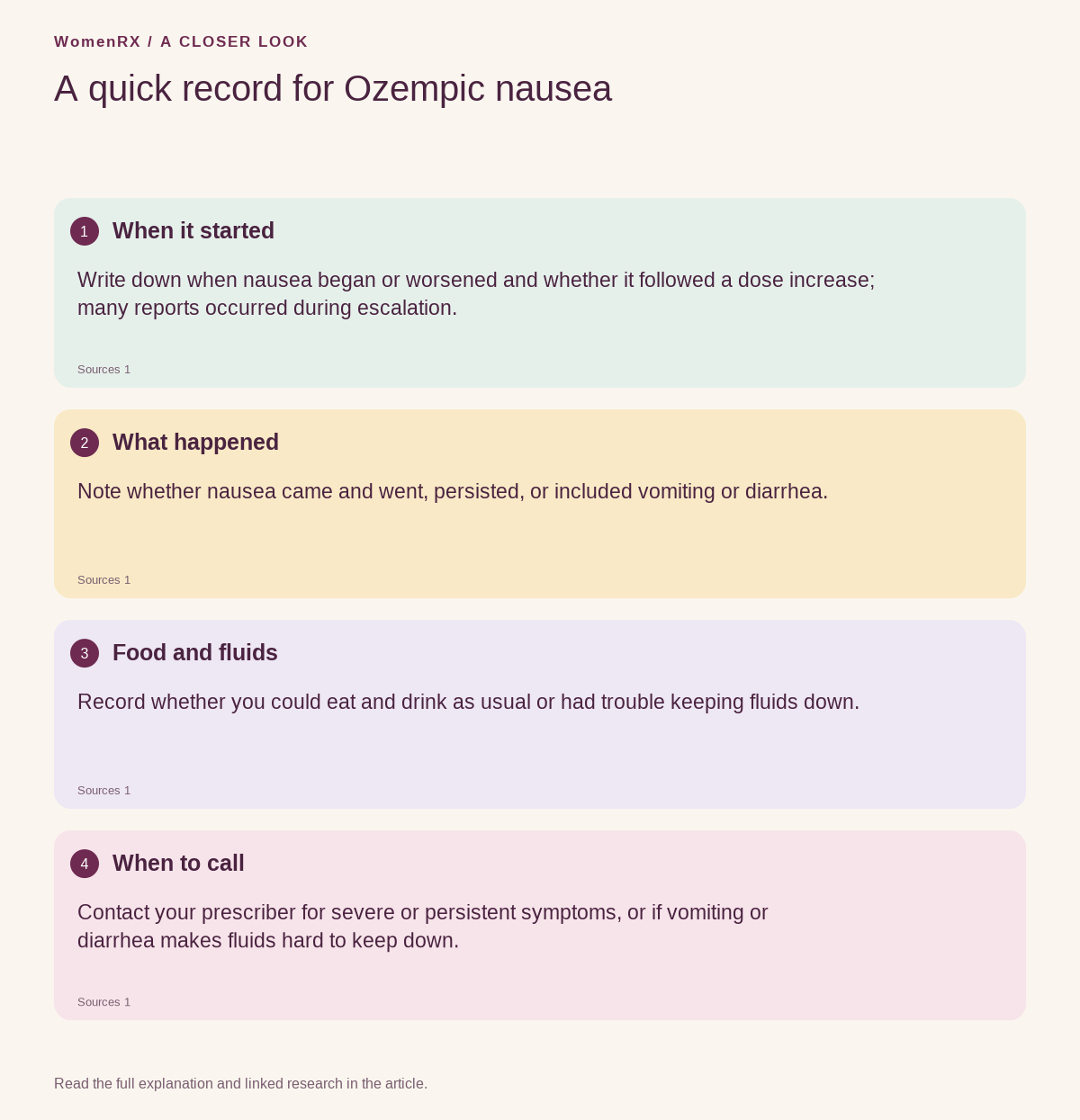
A quick record for Ozempic nausea
When it started: Write down when nausea began or worsened and whether it followed a dose increase; many reports occurred during escalation.1
What happened: Note whether nausea came and went, persisted, or included vomiting or diarrhea.1
Food and fluids: Record whether you could eat and drink as usual or had trouble keeping fluids down.1
When to call: Contact your prescriber for severe or persistent symptoms, or if vomiting or diarrhea makes fluids hard to keep down.1
Read the figure as text
These details can help you explain when nausea started, how it relates to a dose change, and whether symptoms are affecting fluid intake.- When it started: Write down when nausea began or worsened and whether it followed a dose increase; many reports occurred during escalation.1
- What happened: Note whether nausea came and went, persisted, or included vomiting or diarrhea.1
- Food and fluids: Record whether you could eat and drink as usual or had trouble keeping fluids down.1
- When to call: Contact your prescriber for severe or persistent symptoms, or if vomiting or diarrhea makes fluids hard to keep down.1
Sources you can check
- OZEMPIC (SEMAGLUTIDE) INJECTION, SOLUTION [A-S MEDICATION SOLUTIONS] | US prescribing information and patient instructionsAccessed 2026-09-25Return to first citation
- Gradual Titration of Semaglutide Results in Better Treatment Adherence and Fewer Adverse Events: A Randomized Controlled Open-Label Pilot Study Examining a 16-Week Flexible Titration Regimen Versus Label-Recommended 8-Week Semaglutide Titration Regimen.Eldor R, Avraham N, Rosenberg O, Shpigelman M, Golan-Cohen A, Cukierman-Yaffe T, Merzon E, Buch A. · Diabetes care · 2025Return to first citation
- Effectiveness & safety of semaglutide in weight reduction in obese nondiabetic patients: A systematic review and meta-analysis.Naz F, Qaiser F, Mumtaz A, Din SU, Mustafa A, Ullah A, Perveen A, Malik J. · Medicine · 2026Return to first citation