Diarrhea on Ozempic: What to Track and When to Call
Diarrhea can happen with Ozempic, especially during dose escalation, but symptoms that persist or make it hard to replace fluids deserve attention.
Diarrhea is a known gastrointestinal side effect of Ozempic, and reports of diarrhea along with nausea or vomiting were more common during dose escalation in clinical trials. Note when it began, how often you have loose stools, any recent treatment changes, and whether you can keep up with fluids. Contact your prescriber if it bothers you, persists, or raises concern about dehydration. 1
When diarrhea may be related to Ozempic
Diarrhea is one of several gastrointestinal symptoms reported with semaglutide. In Ozempic placebo-controlled trials, gastrointestinal reactions overall were more common with the medicine than with placebo. That figure includes different gastrointestinal symptoms; it is not a diarrhea-specific rate. The prescribing information says most reports of nausea, vomiting, and/or diarrhea occurred during dose escalation. If your symptoms began after starting treatment or a recent increase, that timing is useful to share with your prescriber. 1
Timing alone cannot prove Ozempic is the cause. Diarrhea also commonly occurs with infections, including those linked to contaminated food or water. Fever, chills, or blood in the stool can occur with infectious diarrhea, so mention these symptoms rather than assuming the medicine explains everything. 2
Keep a short, useful record
You don’t need a complicated diary. A brief note can make it easier to describe what is happening and whether it is settling or getting worse. Record:
- When it started and how long it has lasted. Note whether it followed starting Ozempic or a recent treatment change. Diarrhea means loose, watery stools; MedlinePlus defines it as three or more in a day. 12
- How often it is happening. Include whether it is occasional or recurring through the day, and whether it is improving.
- Other symptoms. Note nausea or vomiting, fever or chills, blood in the stool, and whether you feel very thirsty or dizzy. 23
- Fluids and your ability to drink. You don’t need to estimate an exact volume. Notice whether you’re drinking and keeping fluids down, or whether losses seem to be outpacing what you can take in. Diarrhea and vomiting can lead to dehydration. 3
- Recent treatment changes. Write down when you started or changed treatment, if applicable. The timing can help your prescriber assess a possible connection. 1
Fluids matter more than a perfect food plan
With diarrhea, replacing lost fluids is a practical first step. MedlinePlus lists water, broths, fruit juices, sports drinks, and caffeine-free soda as options for adults. As symptoms improve, soft, bland foods may feel easier to manage. If you’re having trouble keeping liquids down, MedlinePlus suggests trying small sips of water or ice chips. 23
Pay attention to signs that fluid loss may be affecting you. In adults, MedlinePlus lists feeling very thirsty and dizziness as dehydration symptoms. Confusion or shock calls for immediate medical help. The Ozempic prescribing information also warns that gastrointestinal reactions leading to dehydration, including diarrhea and vomiting, have been associated with postmarketing reports of acute kidney injury. 13
When to contact your prescriber
Contact your prescriber if diarrhea bothers you or does not go away; the Ozempic information for patients specifically advises discussing side effects that are bothersome or persistent. A call is also sensible if symptoms are continuing for more than a few days, you are struggling to replace fluids, or you feel very thirsty or dizzy. MedlinePlus notes that diarrhea lasting more than a few days may signal a more serious problem. 123
Seek medical help right away for confusion or shock. MedlinePlus also lists black, tarry stools as a reason to see a provider. If you see blood in your stool, mention it to a clinician, especially if you also have fever or chills. These symptoms should not automatically be attributed to Ozempic. 23
Don’t try to solve persistent symptoms by guessing at a dose change. Share your symptom notes with the clinician managing your treatment so you can decide together what to do next. The prescribing information advises discussing side effects that bother you or do not go away. 1
Pregnancy deserves a separate medication review
If you’re pregnant while taking Ozempic, contact your prescriber to review the treatment. The product information says available data in pregnant women are limited and that Ozempic should be used during pregnancy only if the potential benefit justifies the potential risk. That is a medication-safety issue to review individually, not an explanation for diarrhea. 1
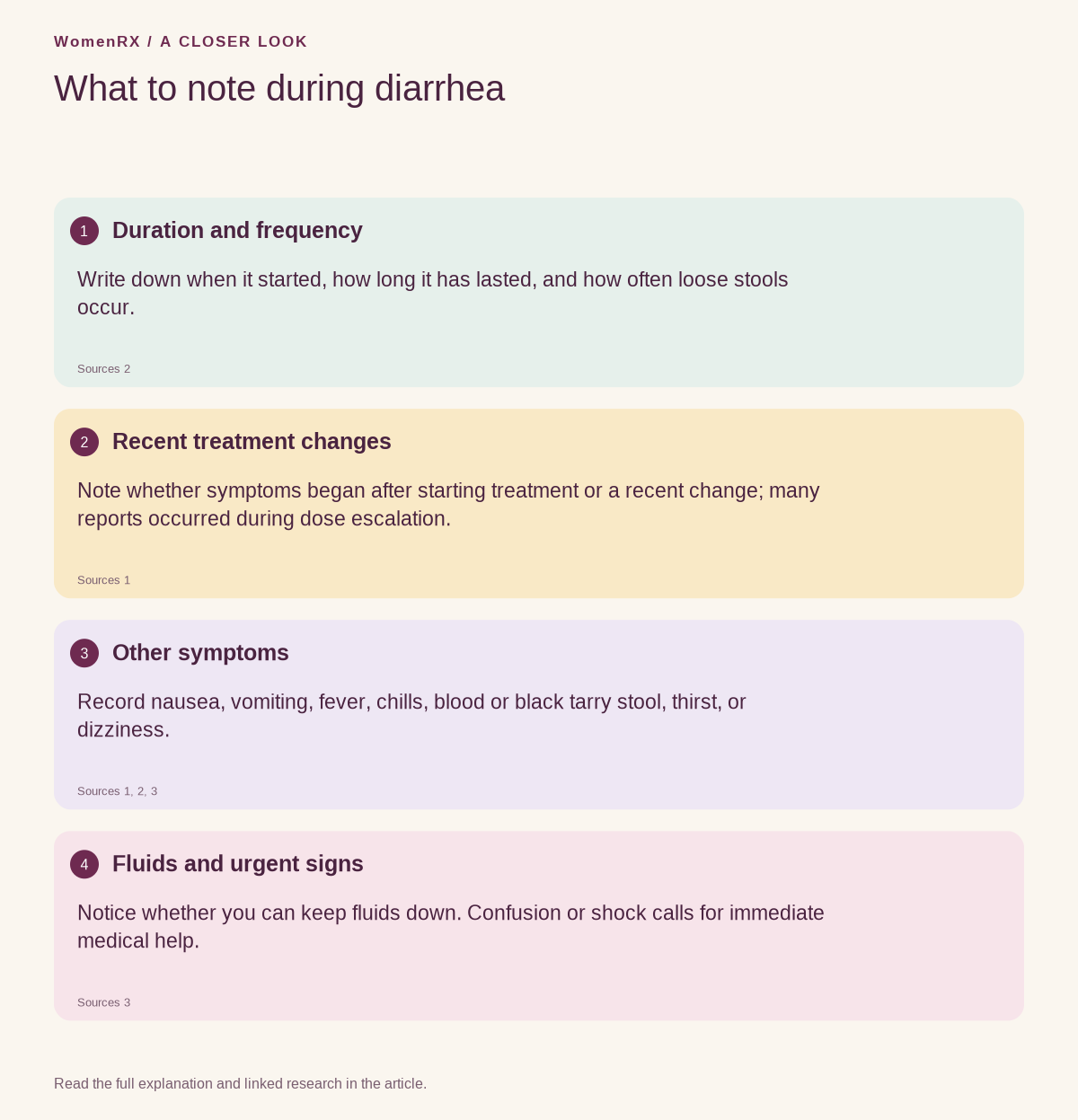
What to note during diarrhea
Duration and frequency: Write down when it started, how long it has lasted, and how often loose stools occur.2
Recent treatment changes: Note whether symptoms began after starting treatment or a recent change; many reports occurred during dose escalation.1
Other symptoms: Record nausea, vomiting, fever, chills, blood or black tarry stool, thirst, or dizziness.123
Fluids and urgent signs: Notice whether you can keep fluids down. Confusion or shock calls for immediate medical help.3
Read the figure as text
A few details can help you and your prescriber assess the pattern, possible treatment timing, and whether fluid loss is becoming a concern.- Duration and frequency: Write down when it started, how long it has lasted, and how often loose stools occur.2
- Recent treatment changes: Note whether symptoms began after starting treatment or a recent change; many reports occurred during dose escalation.1
- Other symptoms: Record nausea, vomiting, fever, chills, blood or black tarry stool, thirst, or dizziness.123
- Fluids and urgent signs: Notice whether you can keep fluids down. Confusion or shock calls for immediate medical help.3
More questions, answered
Does diarrhea mean Ozempic is definitely the cause?
No. Diarrhea is a known gastrointestinal side effect, and it was often reported during dose escalation, but infections and other causes can also lead to diarrhea. Timing is helpful context, not proof of cause. 12