Diarrhea on GLP-1 Medicines: What to Track and When to Call
Diarrhea can happen on a GLP-1 medicine, but its duration, your ability to replace fluids, and any other symptoms matter more than the medication timing alone.
If diarrhea starts while you’re taking a GLP-1 medicine, note how often it happens, what you’re able to drink, and any recent dose change. Replace lost fluids and electrolytes. Contact your care team if diarrhea lasts more than two days, you’re dizzy or urinating less, or symptoms are severe. Blood or black, tarry stool also needs medical assessment. 167
First, don’t assume the medicine is the only cause
Diarrhea is a recognized side effect of GLP-1 medicines. In adult weight-reduction trials of Wegovy injection, for example, diarrhea was reported by 30% of people receiving semaglutide and 16% receiving placebo. Gastrointestinal reactions in those trials were reported most often during dose escalation. Those figures describe one product and trial population, not your personal risk or the rate for every GLP-1 medicine. 6
Timing offers a clue, not a diagnosis. Diarrhea that begins soon after you start treatment or increase a dose may fit a medication side effect. It can also have another cause. An infection may come with fever, chills, or bloody stool; other medicines, including antibiotics and magnesium-containing antacids, can cause diarrhea too. 51
A short log can answer the useful questions
You don’t need an elaborate tracker. For each day you have symptoms, jot down when the loose stools began, how many you’ve had, whether they’re watery, and whether the pattern is improving or getting worse. MedlinePlus defines diarrhea as three or more loose, watery stools in a day, but you can still describe a meaningful change from your usual pattern even if you haven’t counted three. 1
Add the date of your most recent medication start or dose change, plus any vomiting, abdominal pain, fever, blood, or black, tarry stool. Note what you’ve been able to drink and whether diarrhea or vomiting is making it hard to replace fluids. Include other medicines you take, particularly if one was recently started. This record helps your care team weigh medication timing against other possible causes without asking you to reconstruct a difficult couple of days from memory. 156
For example, “four watery stools today, started the day after a dose increase, drinking normally, no pain or blood” gives a different picture from “frequent watery stools and vomiting, struggling to drink.” The point isn’t to score yourself. It’s to notice whether fluid loss or another symptom changes what you need to do.
Protect your fluids while you watch the pattern
Diarrhea means losing fluid and electrolytes, so replacing both is the immediate priority. If you’re drinking comfortably, pay attention to keeping up with those losses. If vomiting is happening too, or you can’t keep up with what you’re losing, don’t wait for a stool count to reach a particular number before asking for advice. 16
That distinction matters with GLP-1 treatment. The Wegovy prescribing information warns that dehydration associated with gastrointestinal side effects can lead to acute kidney injury and asks patients to report persistent or extended diarrhea, nausea, or vomiting promptly. Liraglutide prescribing information also describes kidney-injury reports in which most affected patients had gastrointestinal symptoms leading to dehydration. It recommends monitoring kidney function when patients report side effects that could cause fluid loss, especially when starting treatment or increasing the dose. This doesn’t mean a brief episode will injure your kidneys. It explains why worsening fluid loss deserves attention. 62
If symptoms repeatedly follow a dose change, let your prescriber know rather than changing the medication schedule on your own. Wegovy’s prescribing information uses gradual dose escalation to reduce gastrointestinal reactions, so the timing and severity of your symptoms are useful information for a treatment decision. 6
When to call, and when not to wait
Contact your care team if diarrhea lasts more than two days, even if you suspect the medication. Also contact them if you have signs of dehydration, such as unusual thirst, a dry mouth, dark urine, peeing less than usual, or dizziness. Diarrhea or vomiting that’s persistent, severe, or making it difficult to replace fluids is another reason to call. These are reasons to assess the fluid loss and the cause, not simply wait for your body to adjust. 167
Get medical help right away if you’re confused, faint, or stop urinating. These can be signs of severe dehydration. 7
Seek prompt medical assessment for blood or pus in the stool, or stool that’s black and tarry. Fever or chills alongside diarrhea can point toward an infection, especially when stool is bloody; tell the clinician about those symptoms rather than assuming they’re a medication effect. 1
Don’t dismiss persistent or severe abdominal pain, particularly pain that may spread toward your back, whether or not you’re also vomiting. Liraglutide prescribing information identifies that pattern as a possible sign of acute pancreatitis that needs prompt assessment. Severe pain calls for attention rather than another day of logging. 23
What about women specifically?
An umbrella review finds increased odds of diarrhea with GLP-1 medicines, but its reported results do not establish whether the risk differs by sex. 4 If you’re pregnant or might be, mention that when you seek advice so your situation can be assessed individually. Zepbound’s patient information specifically asks people to tell their care team if they become pregnant during treatment. 8
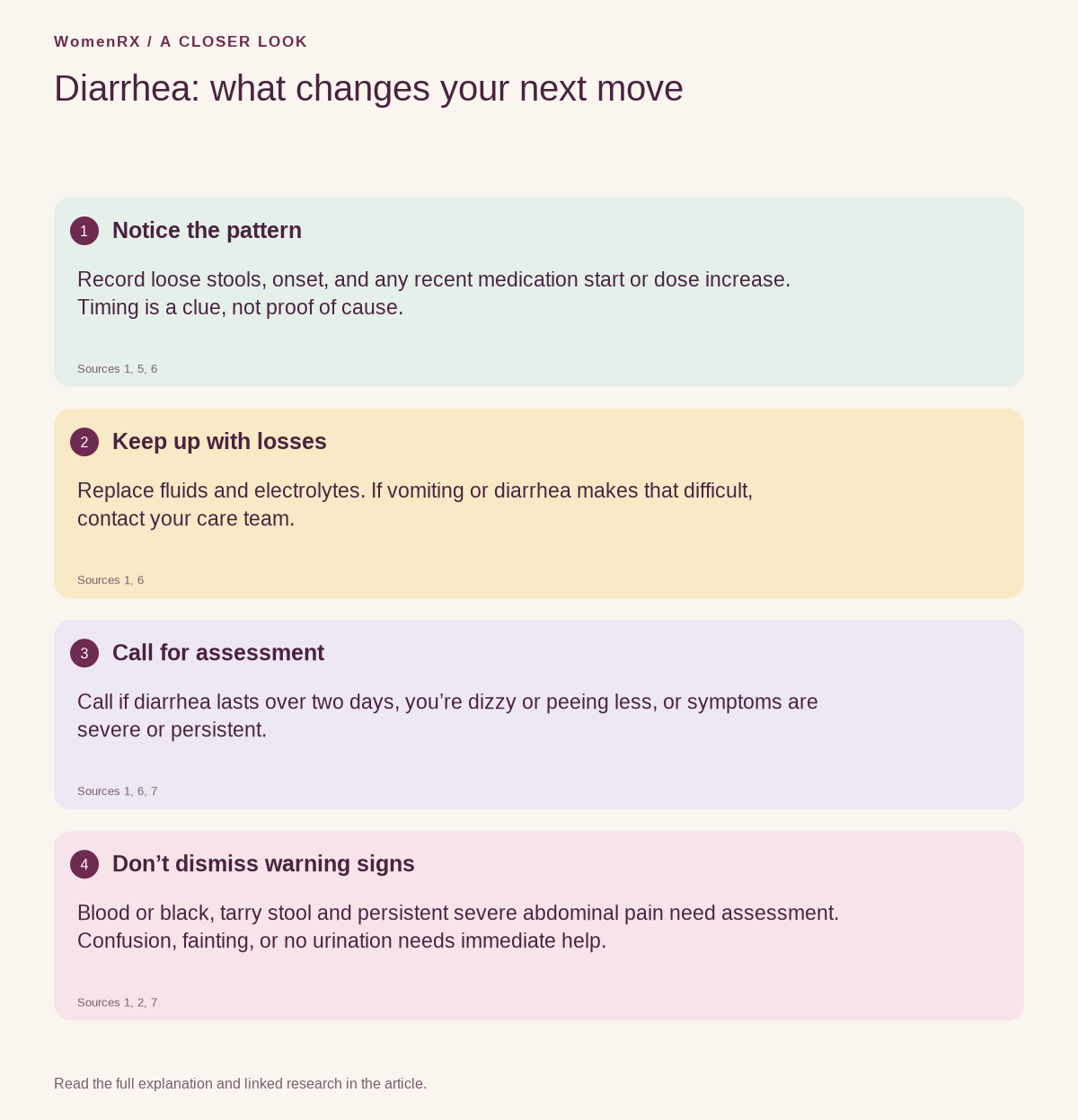
Diarrhea: what changes your next move
Notice the pattern: Record loose stools, onset, and any recent medication start or dose increase. Timing is a clue, not proof of cause.156
Keep up with losses: Replace fluids and electrolytes. If vomiting or diarrhea makes that difficult, contact your care team.16
Call for assessment: Call if diarrhea lasts over two days, you’re dizzy or peeing less, or symptoms are severe or persistent.167
Don’t dismiss warning signs: Blood or black, tarry stool and persistent severe abdominal pain need assessment. Confusion, fainting, or no urination needs immediate help.127
Read the figure as text
Start with fluid loss and accompanying symptoms, not just whether diarrhea followed a dose change.- Notice the pattern: Record loose stools, onset, and any recent medication start or dose increase. Timing is a clue, not proof of cause.156
- Keep up with losses: Replace fluids and electrolytes. If vomiting or diarrhea makes that difficult, contact your care team.16
- Call for assessment: Call if diarrhea lasts over two days, you’re dizzy or peeing less, or symptoms are severe or persistent.167
- Don’t dismiss warning signs: Blood or black, tarry stool and persistent severe abdominal pain need assessment. Confusion, fainting, or no urination needs immediate help.127
More questions, answered
Does diarrhea after a dose increase mean I have to stop treatment?
Not necessarily. Gastrointestinal symptoms are reported most often during dose escalation in Wegovy’s adult weight-reduction trials, but timing alone doesn’t establish the cause or tell you whether treatment should change. Report symptoms that are severe, persistent, or making it hard to replace fluids, and share when the dose changed. 6
Sources you can check
- Diarrhea | MedlinePlusAccessed 2026-09-25Return to first citation
- SAXENDA (LIRAGLUTIDE) INJECTION, SOLUTION [NOVO NORDISK PHARMACEUTICAL INDUSTRIES, LP] | US prescribing information and patient instructionsAccessed 2026-09-25Return to first citation
- VICTOZA (LIRAGLUTIDE) INJECTION [NOVO NORDISK] | US prescribing information and patient instructionsAccessed 2026-09-25Return to first citation
- GLP-1 Receptor Agonists and Noncardiometabolic Outcomes: An Umbrella Review of Meta-Analyses.Yang K, Liu C, Guo Q, Li Y. · JAMA network open · 2026Return to first citation
- Gastrointestinal Adverse Effects of GLP-1 and Dual GLP-1/GIP Receptor Agonists: A Comprehensive Update in Diabetic and Obese Populations.Yılmaz N, Bastemir M. · Diabetes, metabolic syndrome and obesity : targets and therapy · 2026Return to first citation
- WEGOVY (SEMAGLUTIDE) INJECTION, SOLUTION WEGOVY (SEMAGLUTIDE) TABLET [NOVO NORDISK PHARMACEUTICAL INDUSTRIES, LP] | US prescribing information and patient instructionsAccessed 2026-09-25Return to first citation
- Dehydration: MedlinePlusAccessed 2026-09-25Return to first citation
- ZEPBOUND (TIRZEPATIDE) INJECTION, SOLUTION ZEPBOUND (TIRZEPATIDE) INJECTION, SOLUTION ZEPBOUND KWIKPEN (TIRZEPATIDE) INJECTION, SOLUTION [ELI LILLY AND COMPANY] | US prescribing information and patient instructionsAccessed 2026-09-25Return to first citation