GLP-1 Nausea: What to Monitor and When to Call
Mild nausea can happen with GLP-1 treatment, but symptoms that persist, limit fluids, or come with strong abdominal pain deserve prompt attention.
Nausea is a recognized gastrointestinal effect associated with GLP-1 medicines, and it can range from mild to severe. Note when it began, whether treatment had recently changed, how often you vomit, and what fluids you can keep down. Contact your prescriber about persistent nausea or vomiting or signs of dehydration. Seek urgent assessment for persistent or severe abdominal pain, especially pain that spreads to your back. 2 3
Start with what the nausea is doing
Feeling queasy is different from repeatedly vomiting or being unable to keep fluids down. With liraglutide products, US prescribing information describes gastrointestinal reactions that can sometimes be severe and warns that nausea, vomiting, or diarrhea can lead to dehydration. That makes the effect on drinking and urination more useful to track than nausea alone. 2 3
A short log can help you and your prescriber see whether symptoms are easing, continuing, or interfering with basic intake. Record:
- When nausea began and whether it followed starting treatment or a treatment change.
- Whether you vomited, and how often.
- What you were able to drink and keep down.
- Whether you urinated less often than usual or noticed dark urine or a dry mouth.
- Any abdominal pain, including where it is and whether it spreads to your back.
These details don’t diagnose the cause. They make the change in symptoms and hydration easier to explain.
When monitoring may be enough
If nausea is mild, you’re not vomiting repeatedly, and you can drink, keep track of whether it improves or begins to affect your usual eating and drinking. Smaller, more frequent meals and avoiding strong smells may help with nausea generally. 1
Make a note of any recent treatment change rather than changing your dose or schedule on your own. The liraglutide prescribing information specifically highlights dehydration-related kidney concerns during dosage initiation and escalation; it also advises reporting persistent or extended nausea, vomiting, or diarrhea. 2 3
When to contact your prescriber
Get in touch if nausea or vomiting persists, is getting worse, or makes it difficult to keep fluids down. Also report signs that can point to dehydration, such as dry mouth, urinating infrequently, or dark urine. Dehydration from gastrointestinal symptoms can affect the kidneys, and product information advises prompt reporting of persistent symptoms. 1 2 3
If nausea is new and pregnancy is possible, don’t automatically attribute it to treatment. Pregnancy is one of many possible causes of nausea, and pregnancy testing may be part of an evaluation. 1
Severe abdominal pain changes the picture
Seek urgent medical assessment for persistent or severe abdominal pain, particularly if it spreads to your back. Liraglutide product information identifies this as a possible sign of pancreatitis, whether or not nausea or vomiting is also present. Don’t treat this combination as routine nausea to wait out. 2 3
Nausea and vomiting can have causes other than medication, too. A symptom log is a practical way to communicate what’s changed, but it shouldn’t delay care when you have signs of dehydration or severe, persistent pain.
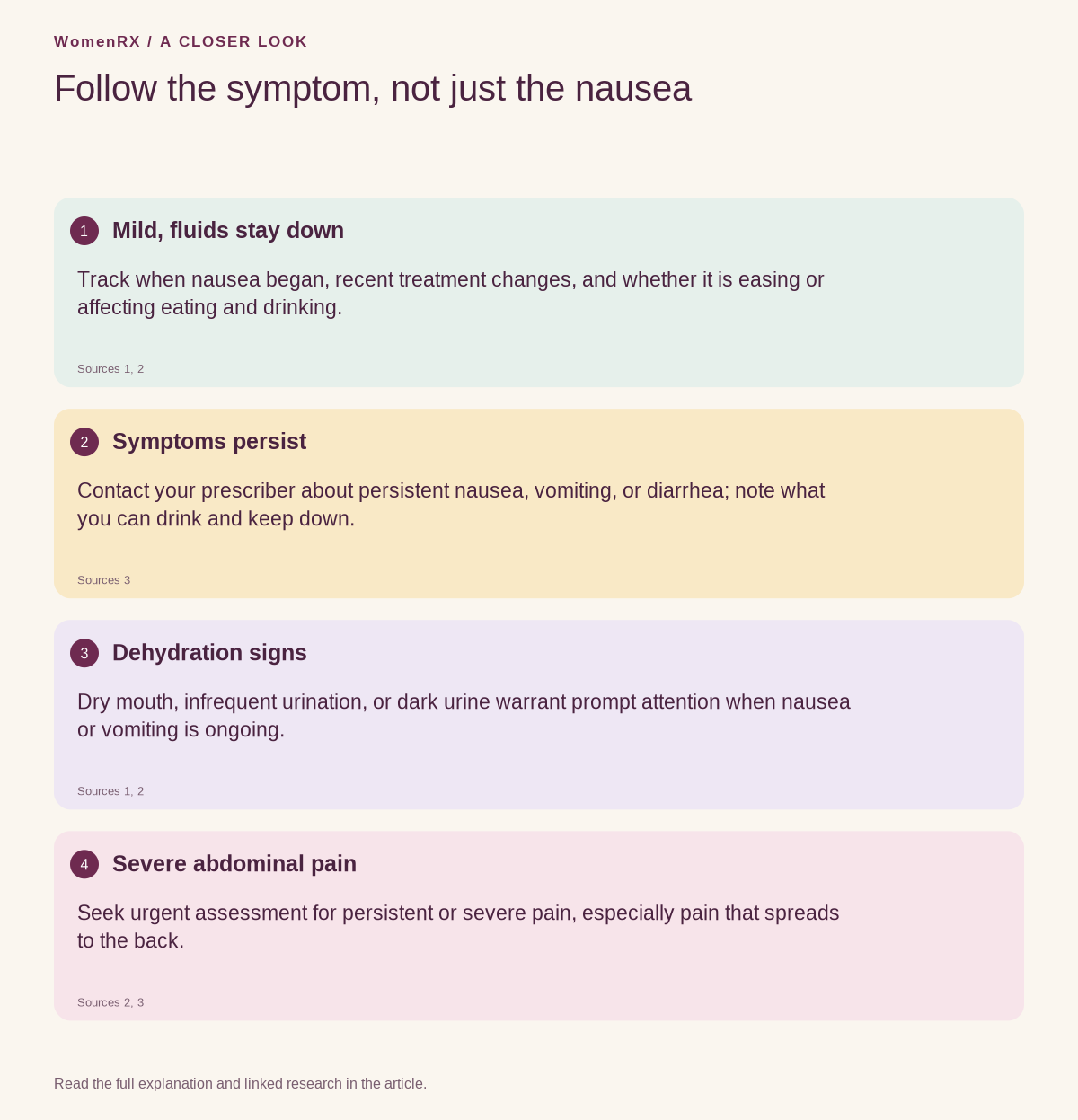
Follow the symptom, not just the nausea
Mild, fluids stay down: Track when nausea began, recent treatment changes, and whether it is easing or affecting eating and drinking.12
Symptoms persist: Contact your prescriber about persistent nausea, vomiting, or diarrhea; note what you can drink and keep down.3
Dehydration signs: Dry mouth, infrequent urination, or dark urine warrant prompt attention when nausea or vomiting is ongoing.12
Severe abdominal pain: Seek urgent assessment for persistent or severe pain, especially pain that spreads to the back.23
Read the figure as text
Use symptom severity, fluid intake, and abdominal pain to decide what information to track and when to seek help.- Mild, fluids stay down: Track when nausea began, recent treatment changes, and whether it is easing or affecting eating and drinking.12
- Symptoms persist: Contact your prescriber about persistent nausea, vomiting, or diarrhea; note what you can drink and keep down.3
- Dehydration signs: Dry mouth, infrequent urination, or dark urine warrant prompt attention when nausea or vomiting is ongoing.12
- Severe abdominal pain: Seek urgent assessment for persistent or severe pain, especially pain that spreads to the back.23
More questions, answered
Should I change my dose if nausea gets worse?
Don’t change the dose or schedule on your own. Record when symptoms worsened and contact your prescriber; liraglutide product information advises reporting persistent nausea, vomiting, or diarrhea. 3
Could new nausea be pregnancy-related?
It could be. Pregnancy is one possible cause of nausea, and a pregnancy test may be part of checking the cause. 1
Sources you can check
- Nausea | Vomiting | MedlinePlusAccessed 2026-09-25Return to first citation
- SAXENDA (LIRAGLUTIDE) INJECTION, SOLUTION [NOVO NORDISK PHARMACEUTICAL INDUSTRIES, LP] | US prescribing information and patient instructionsAccessed 2026-09-25Return to first citation
- VICTOZA (LIRAGLUTIDE) INJECTION [NOVO NORDISK] | US prescribing information and patient instructionsAccessed 2026-09-25Return to first citation