Zepbound Nausea: When to Call Your Care Team
Nausea is common with Zepbound, but dehydration signs or severe, persistent abdominal pain call for prompt attention.
Nausea is common with Zepbound and often happens during dose escalation, though it tends to ease over time for many people. Track when it starts, how long it lasts, vomiting, and whether you can drink and urinate normally. Contact your care team if symptoms persist, worsen, or make it hard to stay hydrated; severe, persistent abdominal pain needs prompt medical assessment. 1 2
What nausea on Zepbound can look like
In two placebo-controlled trials of adults with obesity or overweight, nausea was reported by 25% of people taking Zepbound 5 mg, 29% taking 10 mg, and 28% taking 15 mg, compared with 8% taking placebo. Vomiting was reported by 8%, 11%, and 13% at those respective doses, compared with 2% on placebo. These are trial-group results, not a prediction of what you’ll experience. 1
Most nausea, vomiting, and diarrhea events in those trials occurred during dose escalation and decreased over time. That pattern can be reassuring, but it doesn’t mean you should ignore symptoms that are severe, worsening, or getting in the way of drinking. Some trial participants stopped treatment because of gastrointestinal side effects. 1
Keep a short, useful symptom record
When nausea starts, note the date and how it relates to your injection and any recent dose increase. Record how long it lasts, whether you vomit, what you can drink, and whether your urine becomes unusually dark or infrequent. Add any abdominal pain, including where it is and whether it spreads toward your back. These details can help your prescriber judge whether symptoms fit a common side effect or need a closer look.
If symptoms are persistent, getting worse, or interfering with fluids or meals, contact your prescriber to discuss what to do, including whether the dose plan needs review. Don’t make a dose change based on a symptom checklist alone.
Know which changes need prompt attention
Vomiting or diarrhea can make it harder to replace fluids. Contact a care provider promptly if you have signs of dehydration such as a dry mouth, urinating less often than usual, or dark urine. 2
Severe or persistent abdominal pain, sometimes spreading to the back, needs prompt medical assessment. The pain may occur with or without nausea or vomiting; don’t assume it is just a medication side effect. 1
Pregnancy is a separate possibility
If pregnancy is possible, mention it when you report nausea. Pregnancy is one of several possible causes of nausea, and a pregnancy test may be part of figuring out the cause. 2
What the evidence says about women
The Zepbound trial side-effect percentages above are reported for the overall study groups, not separately for women and men. A retrospective study did compare men and women taking tirzepatide, but it involved people with obesity and heart failure with preserved ejection fraction, and it measured coded outcomes in medical records. Men had fewer recorded nausea and vomiting events in that group; the study doesn’t establish that women generally respond differently to Zepbound. 1 3
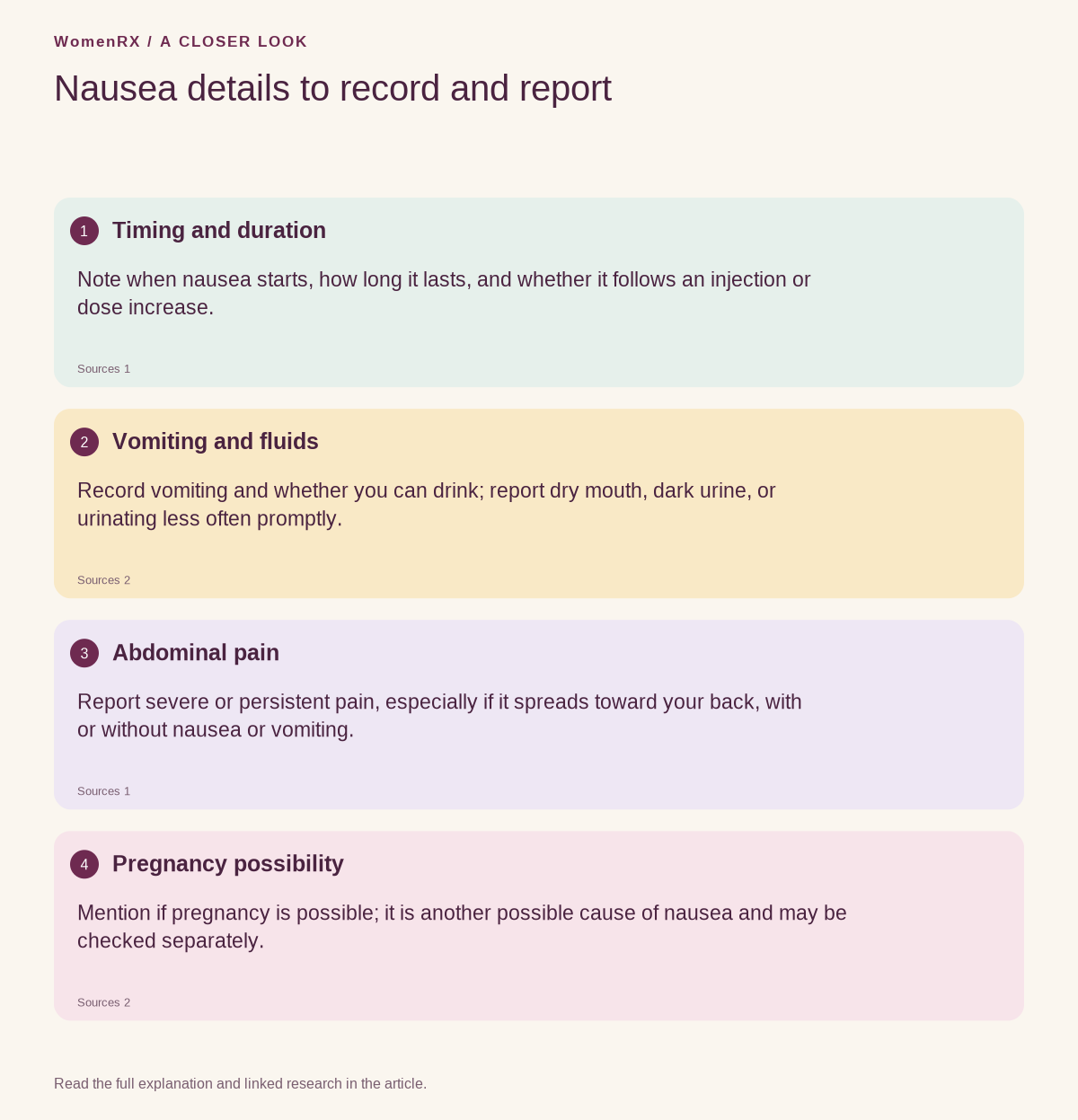
Nausea details to record and report
Timing and duration: Note when nausea starts, how long it lasts, and whether it follows an injection or dose increase.1
Vomiting and fluids: Record vomiting and whether you can drink; report dry mouth, dark urine, or urinating less often promptly.2
Abdominal pain: Report severe or persistent pain, especially if it spreads toward your back, with or without nausea or vomiting.1
Pregnancy possibility: Mention if pregnancy is possible; it is another possible cause of nausea and may be checked separately.2
Read the figure as text
Use these details to describe how nausea is changing and distinguish routine tracking from symptoms that need prompt attention.- Timing and duration: Note when nausea starts, how long it lasts, and whether it follows an injection or dose increase.1
- Vomiting and fluids: Record vomiting and whether you can drink; report dry mouth, dark urine, or urinating less often promptly.2
- Abdominal pain: Report severe or persistent pain, especially if it spreads toward your back, with or without nausea or vomiting.1
- Pregnancy possibility: Mention if pregnancy is possible; it is another possible cause of nausea and may be checked separately.2
More questions, answered
Does nausea mean Zepbound isn’t right for me?
Not by itself. Nausea was common in the trials, and some people stopped treatment because of gastrointestinal side effects. If it persists, worsens, or affects your ability to drink, contact your prescriber to discuss your symptoms and dose plan rather than deciding on your own. 1
What should I do if nausea comes with severe abdominal pain?
Seek prompt medical assessment for severe or persistent abdominal pain, particularly if it spreads toward your back. Pancreatitis can involve this kind of pain, with or without nausea or vomiting. 1
Sources you can check
- ZEPBOUND (TIRZEPATIDE) INJECTION, SOLUTION ZEPBOUND (TIRZEPATIDE) INJECTION, SOLUTION ZEPBOUND KWIKPEN (TIRZEPATIDE) INJECTION, SOLUTION [ELI LILLY AND COMPANY] | US prescribing information and patient instructionsAccessed 2026-09-25Return to first citation
- Nausea | Vomiting | MedlinePlusAccessed 2026-09-25Return to first citation
- Sex-based differences in clinical outcomes among patients with obesity and heart failure with preserved ejection fraction treated with tirzepatide.Mortada I, Lee AW, Buckingham D, Quach V, Rice J, Mansour S, Chatila K, Shalaby M, Jehle D, Boyars MC, Blackwell TA, Jneid H. · Therapeutic advances in cardiovascular disease · 2026Return to first citation