Eating Around GLP-1 Nausea, Reflux, and Fullness
Smaller meals and lighter food choices may make eating easier, without turning your diet into a list of forbidden foods.
There isn’t one food everyone needs to avoid on a GLP-1 medicine. If a large or heavy meal leaves you nauseated or uncomfortably full, try a smaller meal. If eating enough is difficult, yogurt, eggs, soup, or a smoothie can offer more than simply skipping food. These are practical options, not proven fixes for every symptom. 1
GLP-1 medicines can make eating feel different. You might feel full sooner, lose interest in a meal halfway through, or find that nausea, reflux, or diarrhea gets in the way. Liraglutide delays stomach emptying, and its US prescribing information lists nausea, diarrhea, reflux, and abdominal discomfort among reported gastrointestinal effects. 45 That helps explain why meal size may matter, but it doesn’t tell you that a particular food is off-limits. 15
Match the adjustment to the problem
Use this as a starting point, not an avoid list. The four-society nutrition advisory offers these as practical options; it does not compare the meals as treatments for GLP-1 side effects. 1
| If this is happening | What you could change | An example that still offers nourishment |
|---|---|---|
| A big meal leaves you nauseated or too full | Try a smaller portion and save the rest if you feel comfortably full. | Instead of a large dinner, try a smaller serving of fish or eggs with vegetables and save the rest for another meal. 1 |
| Heavier foods sound unappealing | If red meat, cold cuts, or hard cheese feel unappealing to you, try another option rather than dropping the meal altogether. | Yogurt with fruit, cottage cheese, or soup may be easier to consider than a heavy plate of food. 1 |
| Reflux shows up after eating | Notice whether a large meal is part of the pattern and try a smaller one. | For example, swap one large fast-food meal for a smaller meal with lean protein and produce that you enjoy. This is a meal-size experiment, not a proven reflux remedy. 14 |
| Diarrhea makes eating difficult | Put fluids first. As symptoms improve, soft, bland food may be easier to eat. | Broth and a simple soft meal are options; return to a varied diet as you feel able. Don’t assume the last food you ate caused the diarrhea. 3 |
The distinction matters: guidance favors smaller, regular meals and nutrient-rich foods during GLP-1 treatment, but it doesn’t establish that everyone must cut out fried food, dairy, beans, or any other single category to control side effects. If you notice the same meal repeatedly makes you feel worse, changing that meal is more useful than following a blanket rule. 1
When your appetite is small, make the food count
Eating less can make it harder to get enough protein and other nutrients. The four-society GLP-1 nutrition advisory suggests putting protein-rich food first when appetite is limited and offers eggs, fish, Greek yogurt, cottage cheese, nuts, and seeds as relatively compact choices. These are examples, not a protein target or a required menu. 1
For example, if a full lunch is unappealing, you might try a smaller bowl of soup with an egg on the side. If you’d rather drink something, a smoothie made with yogurt and fruit is another option in the advisory. Prefer plant foods? Tofu, tempeh, beans, and lentils are protein sources too. Choose among them based on what you can comfortably eat, not on the idea that one food is uniquely suited to a GLP-1 medicine. 12
Know when food swaps aren’t enough
Contact your prescribing clinician if nausea, vomiting, or diarrhea persists or keeps you from drinking enough. Diarrhea lasting more than two days in an adult, signs of dehydration, or severe abdominal pain also warrant medical attention. Persistent or severe abdominal pain, sometimes spreading to the back and with or without vomiting, needs prompt assessment rather than another change to your meals. 345
Pregnant or planning pregnancy? Food swaps can’t settle whether your particular medicine is appropriate. The prescribing information for Saxenda, a liraglutide product for weight management, says weight loss offers no benefit during pregnancy and may cause fetal harm; it directs discontinuation when pregnancy is recognized. Victoza, a liraglutide product used for diabetes, has different pregnancy language: use only if the potential benefit justifies the potential risk to the fetus. If you’re planning pregnancy or learn you’re pregnant, make a plan for your exact product with your prescriber, particularly if you’re taking it for diabetes. 45 If you’re breastfeeding, the prescribing information for both products says there are no human data on liraglutide in breast milk or its effects on a breastfed infant or milk production. It calls for weighing the benefits of breastfeeding alongside the mother’s clinical need for treatment. 45 In perimenopause or postmenopause, don’t assume you need a different food-trigger list because of your life stage. The practical nutrition question remains whether a smaller appetite is leaving room for enough nourishing food, including protein. 1
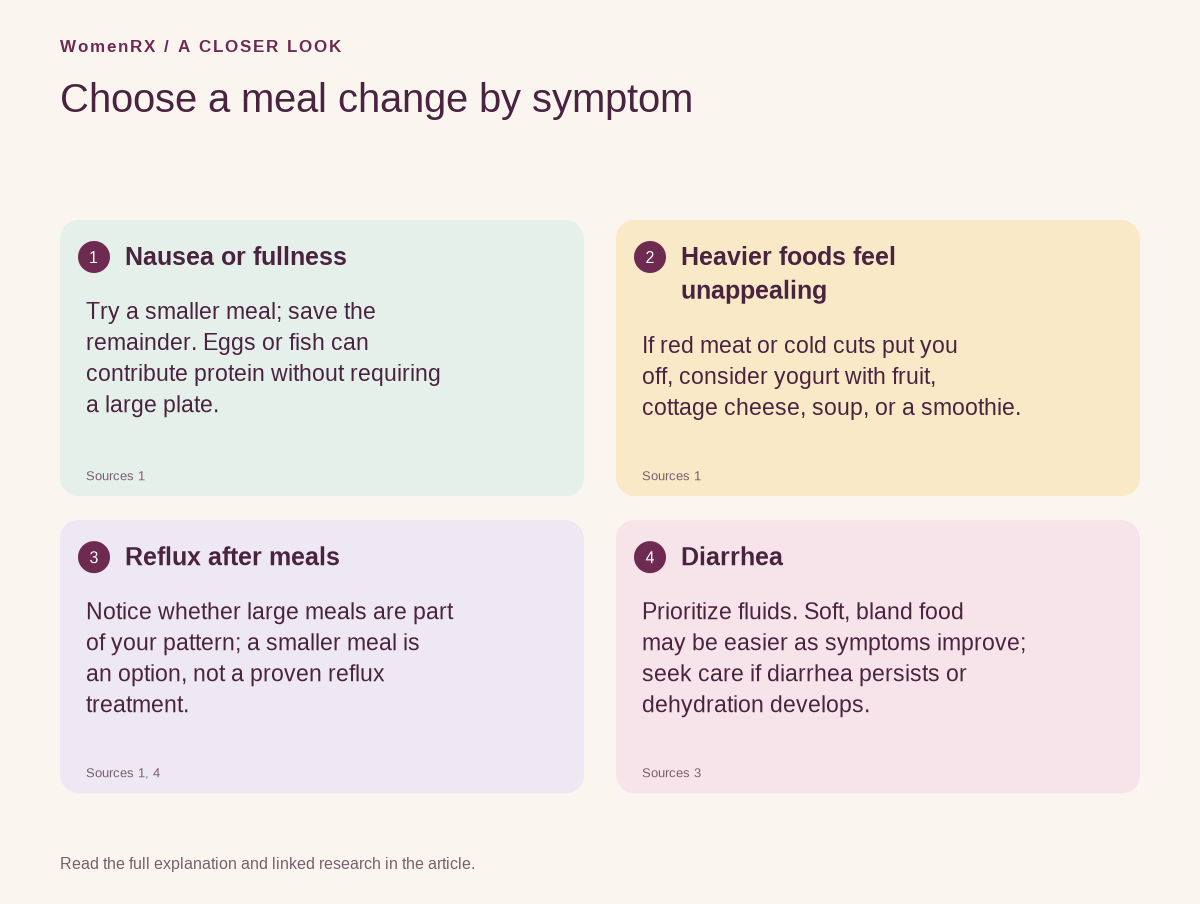
Choose a meal change by symptom
Nausea or fullness: Try a smaller meal; save the remainder. Eggs or fish can contribute protein without requiring a large plate.1
Heavier foods feel unappealing: If red meat or cold cuts put you off, consider yogurt with fruit, cottage cheese, soup, or a smoothie.1
Reflux after meals: Notice whether large meals are part of your pattern; a smaller meal is an option, not a proven reflux treatment.14
Diarrhea: Prioritize fluids. Soft, bland food may be easier as symptoms improve; seek care if diarrhea persists or dehydration develops.3
Read the figure as text
These are options to try, not foods everyone must avoid or remedies proven to prevent side effects.- Nausea or fullness: Try a smaller meal; save the remainder. Eggs or fish can contribute protein without requiring a large plate.1
- Heavier foods feel unappealing: If red meat or cold cuts put you off, consider yogurt with fruit, cottage cheese, soup, or a smoothie.1
- Reflux after meals: Notice whether large meals are part of your pattern; a smaller meal is an option, not a proven reflux treatment.14
- Diarrhea: Prioritize fluids. Soft, bland food may be easier as symptoms improve; seek care if diarrhea persists or dehydration develops.3
More questions, answered
Should I stop eating fat entirely if a meal makes me nauseated?
No blanket fat ban follows from the guidance. Smaller portions and less-heavy meals are reasonable things to try; nuts, seeds, and plant oils also appear among its encouraged foods. Pay attention to the meal and portion that bother you rather than eliminating an entire nutrient category. 1
Could diarrhea be from something other than my GLP-1 medicine?
Yes. Medicines are one possible cause, but infections and other conditions can cause diarrhea too. If it lasts more than two days, you have signs of dehydration, or you have severe abdominal pain, get medical advice rather than assuming it’s a food intolerance. 34
Sources you can check
- Nutritional priorities to support GLP-1 therapy for obesity: four-society joint advisory2025Return to first citation
- MedlinePlus: Protein in diet, including tofu and other plant sourcesAccessed 2026-09-25Return to first citation
- Diarrhea | MedlinePlusAccessed 2026-09-25Return to first citation
- SAXENDA (LIRAGLUTIDE) INJECTION, SOLUTION [NOVO NORDISK PHARMACEUTICAL INDUSTRIES, LP] | US prescribing information and patient instructionsAccessed 2026-09-25Return to first citation
- VICTOZA (LIRAGLUTIDE) INJECTION [NOVO NORDISK] | US prescribing information and patient instructionsAccessed 2026-09-25Return to first citation